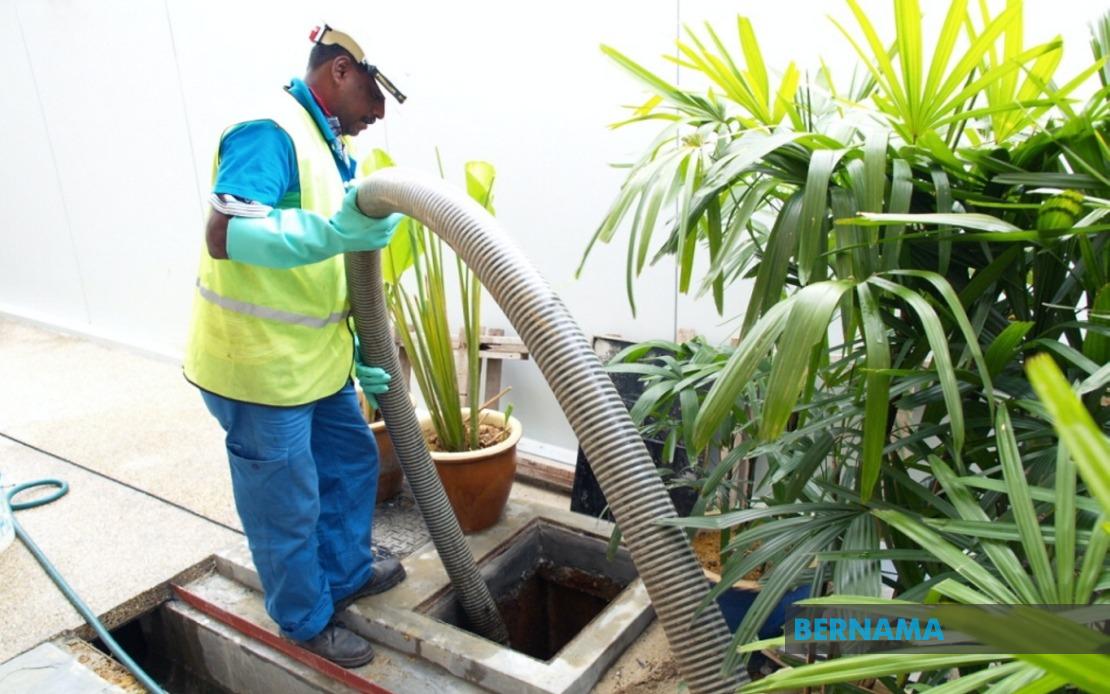
The National Water Services Commission (SPAN) launched an aggressive enforcement drive in Sungai Petani this week, issuing 270 compliance notices to property owners who have neglected their septic tank maintenance obligations. The action came during a three-day operation that inspected 341 premises across the town's business district, revealing a troubling pattern of environmental and regulatory non-compliance that extends back decades in some cases.
The enforcement sweep, designated Ops Padi 2 and carried out between August 4 and 6, targeted commercial and residential properties that had received earlier notices from Indah Water Konsortium Sdn Bhd (IWK) to arrange septic tank emptying but failed to act. According to Ainal Yusman Mohamad Yusop, director of SPAN's Operations Division Enforcement Section, the inspection uncovered 242 non-compliant commercial premises and 99 domestic properties, all of which had disregarded mandatory maintenance schedules.
What made the findings particularly alarming was the age and condition of the infrastructure involved. Most of the inspected properties date from the 1970s and 1980s, a period when Sungai Petani experienced significant development as a commercial hub. However, the septic systems serving these buildings had not received proper maintenance for extended periods. Some facilities had gone without desludging for more than 10 to 15 years, while records indicated certain tanks had last been serviced in 1997 or 1999—more than two decades ago. This degree of neglect creates serious risks for both public health and environmental integrity.
Under Malaysian law, specifically Section 65(1)(c) of the Water Services Industry Act 2006, property owners bear the legal responsibility for maintaining their septic systems. The requirement mandates engaging a licensed service provider or permit holder to conduct regular desludging work. Despite this clear statutory obligation, widespread non-compliance in Sungai Petani suggests that many business and property owners either remained unaware of their duties or deliberately ignored them. The enforcement operation represents SPAN's attempt to restore compliance through escalating pressure.
The compliance notices issued during the operation provide property owners with a 14-day window to respond and take corrective action by emptying their septic tanks. This grace period allows businesses and householders to arrange for licensed contractors to perform the necessary desludging without immediately facing formal charges. However, SPAN made clear that failure to respond within this timeframe would trigger additional enforcement measures, including formal notices of offence and potential investigations.
The regulatory penalties for non-compliance are substantial enough to warrant serious consideration. Violations of the septic tank maintenance requirement carry maximum fines of RM50,000 upon conviction. For small and medium enterprises already operating on thin margins, or for individual property owners, such financial exposure presents a compelling incentive to comply promptly. Beyond financial penalties, extended non-compliance could result in criminal records that damage business reputation and relationships with financial institutions and government agencies.
The Sungai Petani operation highlights a broader infrastructure challenge across Malaysia's commercial districts. Many older business premises, constructed when building codes and environmental awareness differed substantially from today's standards, house aging septic systems that receive minimal oversight. As these towns have evolved and densified, the cumulative effect of thousands of inadequately maintained tanks creates environmental pollution risks, potential groundwater contamination, and public health hazards. Sungai Petani's experience likely reflects conditions replicated in other established commercial areas nationwide.
For Malaysian business owners and property managers, the Sungai Petani enforcement action serves as a clear warning. Regulatory agencies are increasingly prioritizing environmental compliance and public health protections, and ignorance of statutory obligations provides no legal defense. Companies operating aging commercial properties should conduct immediate audits of their septic system maintenance histories and engage licensed contractors if necessary to bring their facilities into compliance. Failure to act proactively risks not only substantial financial penalties but also operational disruption during enforcement actions.
The operation also demonstrates SPAN's evolving enforcement posture. Rather than relying solely on reactive complaints, the agency is conducting targeted compliance sweeps in identified problem areas. This proactive approach, combined with clear timelines and proportionate penalties, creates accountability while allowing good-faith property owners opportunity to correct deficiencies. For businesses and householders in other towns, similar operations may follow, suggesting that regulatory attention to infrastructure maintenance will intensify across the country.

