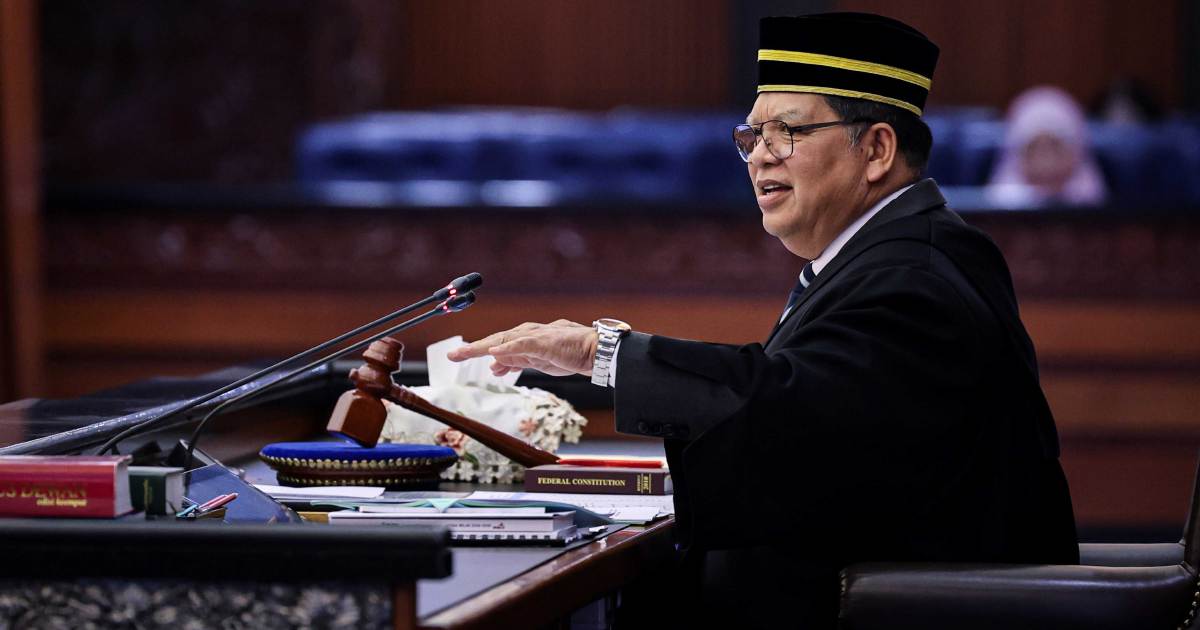
Dewan Rakyat Speaker Tan Sri Johari Abdul has underscored the constitutional responsibility of members of parliament to maintain consistent attendance at legislative sessions, warning against unauthorised absences that undermine the functioning of the House. The reminder comes as parliamentary accountability remains a persistent concern in Malaysia's legislative framework, where the presence of all elected representatives is vital for the legitimacy and effectiveness of lawmaking.
Parliamentary attendance forms the cornerstone of democratic representation, and the Speaker's intervention reflects broader concerns about institutional discipline and the commitment of elected officials to their constituents. When MPs shirk their obligations to participate in parliamentary business, they effectively deprive their constituents of representation during critical debates, committee work, and legislative votes. This absence becomes particularly problematic during sessions addressing issues of national significance or budgetary matters where every voice matters for proper legislative scrutiny.
Malaysia's Parliament operates under established standing orders that outline grounds for valid absences, which typically include documented illness, official government duty, bereavement, and other circumstances approved by the Speaker. However, the distinction between legitimate and unjustified absences has occasionally become contentious, with some MPs claiming parliamentary privilege or citing scheduling conflicts while critics argue that such reasons lack substance. The Speaker's latest directive aims to clarify expectations and reinforce that casual or unexplained non-attendance will not be tolerated.
The issue of parliamentary absenteeism resonates across Southeast Asia, where several legislatures have grappled with similar challenges. Indonesia, Thailand, and the Philippines have all implemented attendance-tracking systems and imposed sanctions for chronic non-attendance. Malaysia, while maintaining records, has historically relied more on institutional pressure and peer accountability rather than formal penalties. The Speaker's public statement signals a shift towards more active enforcement of attendance norms through explicit communication.
From a practical standpoint, repeated absences disrupt parliamentary scheduling and efficiency. When MPs do not attend, committees lack quorum, debates lack crucial voices, and legislative processes become delayed or compromised. This cascades into delays in bills being read, scrutiny of government policies becoming less robust, and the overall legislative calendar becoming increasingly congested. For a parliament managing both routine administration and complex policy challenges, this inefficiency directly impacts the nation's governance capacity.
The statement also carries implications for constituent services and representation quality. Voters expect their elected representatives to be present and active in parliament, participating in debates that affect their livelihoods, proposing amendments, and holding the government accountable. When MPs systematically absent themselves, they essentially breach an implicit social contract with their voters. The Speaker's reminder thus reinforces that absenteeism is not merely an internal parliamentary issue but a matter affecting the relationship between elected officials and the public they serve.
From a constitutional perspective, the Dewan Rakyat's legitimacy partly derives from the regular engagement of all 222 members. While the House can function with a quorum, full or near-full attendance demonstrates that all regions and constituencies are meaningfully represented in decision-making. This symbolic dimension, alongside practical legislative functions, makes the Speaker's emphasis on attendance a matter of institutional integrity. When the Speaker publicly addresses the issue, it reinforces that parliament is not a secondary obligation for elected officials but a primary responsibility.
The practical enforcement of attendance rules varies across constituencies and political parties. Government-linked MPs may face greater pressure or face scheduling coordination through their party machinery, while opposition members sometimes cite constraints in accessing parliamentary resources. The Speaker's address implicitly calls for uniformity in application—that all members, regardless of political affiliation, are expected to maintain the same attendance standards. This consistency is essential for maintaining the Speaker's impartiality and the institution's credibility.
Looking forward, the Speaker's intervention may prompt parliamentary authorities to review whether current mechanisms for tracking and addressing absenteeism are sufficiently robust. Some legislatures have implemented public attendance records that shame members into better participation, while others have tied attendance to committee assignments or speaking privileges. Malaysia might consider whether enhanced transparency or graduated consequences could further improve attendance rates without appearing punitive. The goal would be to foster a culture where attendance is seen as both a duty and a privilege of parliamentary membership.
The broader context includes increasing public scrutiny of parliamentary performance and growing calls for greater legislative accountability. Social media and news coverage now regularly highlight parliamentary debates and, increasingly, the absences of particular members. This heightened visibility makes the Speaker's message timely and likely to resonate with an electorate that expects their representatives to be engaged and present. The statement thus operates on multiple levels—institutional discipline, constitutional principle, and democratic accountability.
Ultimately, the Speaker's caution reflects an understanding that parliament's power and legitimacy depend on its members showing up. In Malaysia's context, where politics remains intensely contested and constituencies are fiercely competitive, consistent parliamentary presence serves as a tangible measure of an MP's commitment to their role. The reminder to avoid absences without valid reason restores focus to this fundamental principle as the nation navigates its legislative agenda.

