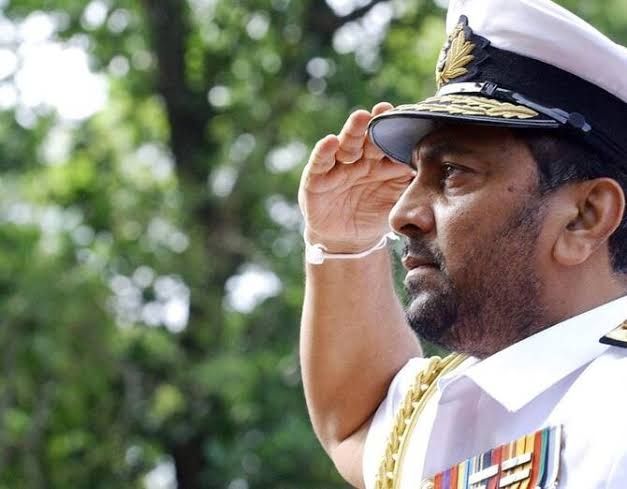
Sri Lanka has arrested former navy chief Admiral of the Fleet Wasantha Karannagoda on corruption charges stemming from what authorities describe as illegal assistance in recruiting and training Yoshitha Rajapaksa, the son of ex-president Mahinda Rajapaksa. The 73-year-old was detained by the country's Bribery Commission following an investigation into the 2006 enlistment of the younger Rajapaksa, who allegedly lacked the necessary qualifications for naval service at the time.
Karannagoda's arrest represents a significant moment in Sri Lanka's recent political upheaval. As navy commander, he oversaw operations during the final stages of the country's civil conflict with Tamil separatists, which concluded in 2009. He was later promoted to admiral of the fleet in 2019 but has held no active military position in recent years. The Bribery Commission released a statement asserting that Karannagoda had "committed the offence of corruption in the recruitment and training of Yoshitha Rajapaksa," establishing a formal basis for his detention and anticipated prosecution.
The case against Karannagoda extends well beyond questions of military recruitment procedures. British authorities sanctioned the retired admiral in March 2025 after concluding he bore responsibility for serious human rights violations and extrajudicial killings during the final years of the Tamil conflict. He additionally faces charges of conspiracy to murder in connection with the deaths of eleven young men killed between 2008 and 2009. These charges had previously been dismissed in October 2021 when Gotabaya Rajapaksa, Mahinda's younger brother, served as president, but they were revived following the election of President Anura Kumara Dissanayake in September 2024.
The timing of these prosecutions reflects a dramatic shift in Sri Lanka's political landscape. Dissanayake campaigned explicitly on a platform of combating corruption and investigating unresolved high-profile crimes, pledging a departure from what many voters perceived as impunity for connected figures. Since taking office, his administration has moved decisively against members of the Rajapaksa dynasty and their associates, breathing new life into cases that had languished under previous governments sympathetic to the family's political interests.
Meanwhile, Yoshitha Rajapaksa remains at the centre of multiple legal investigations. Released on bail following his arrest last month, he faces separate allegations of misappropriating public funds to finance his own training at Dartmouth Naval College in Britain. The younger Rajapaksa has struggled to provide credible explanations for the sources of wealth he has accumulated, most notably when questioned about funding used to purchase property during his father's presidency from 2005 to 2015. In one implausible account offered to investigators, Yoshitha claimed he had sold gemstones gifted to him by his great-aunt, though that relative subsequently could not clarify how she had originally obtained the valuable stones.
The broader crackdown extends throughout the Rajapaksa family network. Multiple family members and close political associates have been charged with various offences over recent years, with their cases remaining pending in the courts. This sustained legal pressure represents a notable reversal from the period when Gotabaya Rajapaksa held presidential power and could shield allies from accountability. The family's political dominance, which extended over decades, has eroded considerably in recent months as investigative and prosecutorial momentum builds.
Gotabaya Rajapaksa himself has become subject to severe restrictions, having been issued a ban on foreign travel last month. Authorities link him to alleged connections with the 2019 Easter Sunday bombings, a series of coordinated attacks on churches and hotels that claimed 279 lives and shocked the nation. The travel prohibition effectively constrains his movements while investigations proceed into his potential involvement in the security failures that preceded the attacks.
For regional observers and Malaysia particularly, the Rajapaksa prosecutions underscore enduring challenges in post-conflict accountability and the vulnerability of ruling families to dramatic reversals in fortune. Sri Lanka's experience demonstrates how transitional justice mechanisms can languish or be weaponised depending on which faction controls state power, a cautionary pattern familiar to Southeast Asian political analysts. The cases also illustrate the intersection of military misconduct, family nepotism, and security failures in ways that resonate across the region.
The investigations reveal systemic patterns of resource misallocation and unequal access to opportunity that characterised governance during the Rajapaksa era. Military institutions were instrumentalised to advance family interests rather than serve public purposes, while public funds financed private advantages for connected individuals. Such conduct, while perhaps more brazen in the Rajapaksa case, reflects dynamics present in many South Asian political systems where family networks and military establishments become insufficiently separate.
Karannagoda's detention signals that even high-ranking military figures cannot rely indefinitely on institutional loyalty or the passage of time to shield them from accountability. His promotion to admiral of the fleet in 2019 did not afford protection once the political environment shifted. This outcome may have reverberations for military officers elsewhere in the region who have facilitated irregular practices for political superiors, creating uncertainty about future security and legal exposure.
The cascade of prosecutions remains incomplete, and how thoroughly the Dissanayake administration pursues accountability will shape perceptions of whether institutional reform represents genuine commitment or selective persecution of the previous regime. The cases currently pending before Sri Lankan courts will test the independence of the judiciary and whether legal processes can operate insulated from new political pressures. For regional governance standards, the trajectory of these prosecutions carries implications extending well beyond Sri Lanka's borders.

