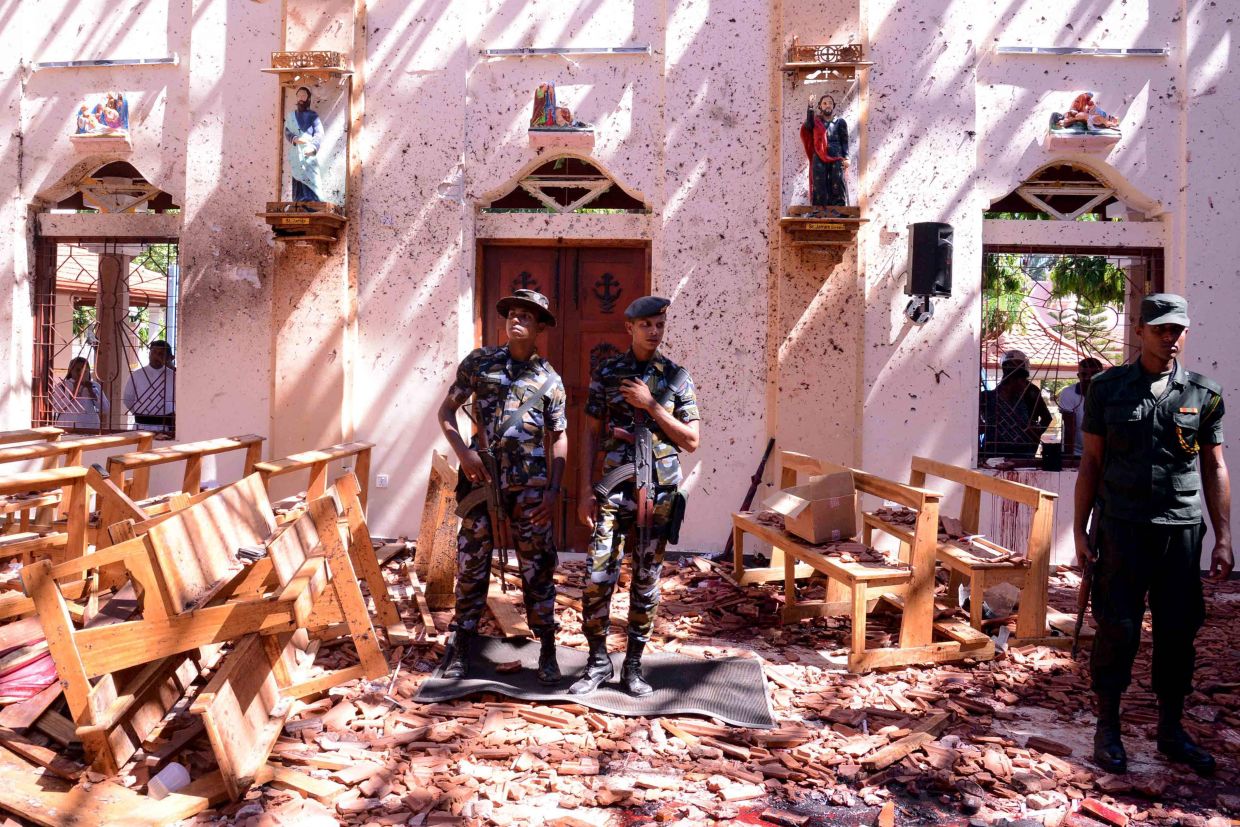
Sri Lanka has taken the extraordinary step of arresting its former spy chief and internationally recognised counterterrorism expert on suspicion of masterminding the country's deadliest attack on civilians. Suresh Sallay, a retired major general who spent decades as a security establishment insider and has addressed both the Pentagon and the United Nations on the dangers of extremism, now faces arrest under anti-terrorism laws. His detention marks a startling reversal in how the government has explained the devastating coordinated bombings of April 21, 2019, which claimed 279 lives and injured more than 500 people across the island nation.
The Easter attacks targeted three luxury hotels and three churches in what authorities initially described as a coordinated strike inspired by the Islamic State group, carried out by seven Sunni Muslim suicide bombers. Among those killed were 45 foreign nationals—tourists and visitors from Australia, Britain, China, Denmark, the Netherlands, Japan and the United States—making the bombings a tragedy with significant international dimensions. The attacks shocked a country that had already endured decades of civil conflict and cast a shadow over Sri Lanka's tourism industry and international reputation during a critical period of post-war recovery.
Yet the government's explanation for how such a significant security breach occurred has undergone a fundamental transformation. Initially framed as an intelligence failure—Indian security agencies had warned of potential attacks before the bombings—the narrative has shifted dramatically toward allegations of deliberate conspiracy involving senior state actors. Sallay, who was appointed to head the State Intelligence Service in 2019 after Gotabaya Rajapaksa's electoral victory, now stands accused of having "strategically directed" the attacks themselves. Public Security Minister Ananda Wijepala told parliament in June that Sallay was the "mastermind" who "conspired with and strategically directed Islamic extremists until they carried out the attacks." Wijepala further claimed that "just three weeks prior to the attack, Sallay met Muslim men to obtain details of the locations."
Sallay has not been formally charged with any offence and maintains his innocence, with court proceedings continuing as of July 2024. However, his arrest represents a dramatic fall from his position as one of South Asia's most respected security voices. Before his detention in February, Sallay had built an international reputation as a thoughtful analyst of terrorism and radicalisation. He delivered a 2003 speech at the Pentagon titled "Suicide Terrorism and its Impact" and spoke at United Nations headquarters in 2023 about how social media and digital platforms amplified extremism—remarks that have taken on an ironic dimension given his current legal predicament. His academic credentials were equally impressive, including studies at India's prestigious National Defence College in New Delhi, Madras University and the University of Bradford in Britain, alongside postings in Sri Lanka's diplomatic missions in France and Malaysia.
The accusations against Sallay point toward a theory gaining currency among critics and investigators: that the bombings were facilitated by elements within the security apparatus to create a security crisis that would help propel Rajapaksa to power on a hardline law-and-order platform. According to this narrative, investigators have told the court that the alleged conspiracy aimed to generate chaos and position Rajapaksa as the decisive leader capable of crushing militancy—a theme that resonated with voters still conscious of his military victory over Tamil rebels a decade earlier in 2009. Britain's Channel 4 reported in 2023 that a whistleblower alleged the attacks were deliberately permitted to proceed to boost Rajapaksa's electoral prospects. This theory suggests the violence was not simply an intelligence failure but potentially an operation designed and executed from within the state security apparatus itself.
The allegations gain additional credibility when viewed against Sri Lanka's historical track record in this domain. During the 1983-2009 civil war, Rajapaksa administrations openly acknowledged funding jihadist groups to gather intelligence on Tamil rebel movements—an acknowledged counterintelligence practice in a prolonged conflict. The government's explanation at the time was that these militants were controlled assets who could be managed and directed. However, according to official accounts, these same groups subsequently escaped state control and carried out the Easter bombings independently. Critics contend this explanation strains credulity, arguing instead that a network cultivated specifically to create an enemy threat was used to justify enhanced state powers and support for radical Buddhist organisations aligned with the Rajapaksa political dynasty.
The case of Sallay cannot be separated from his earlier actions as State Intelligence Service chief. In 2020, while leading that agency, Sallay ordered the arrest of Muslim human rights lawyer Hejaaz Hizbullah, accusing him of being the "mastermind" of the previous year's attacks. Hizbullah remained in custody for 22 months before authorities released him after failing to produce substantive evidence to support the charges. The reversal now sees the spy chief who made that questionable arrest finding himself in the dock facing similar accusations—a pattern that raises troubling questions about judicial independence and the politicisation of the security apparatus.
Sallay's personal background illustrates Sri Lanka's ethnic and religious pluralism in ways that stand in sharp contrast to the communal undertones of the current accusations. A Muslim married to a Buddhist, with a Catholic mother who has appealed to the Pope for his release, Sallay embodies the diversity that characterises the island's 22 million inhabitants. Sri Lanka's population is approximately 70 percent Buddhist, with 12 percent Hindu, 10 percent Sunni Muslim and seven percent Christian communities. Yet the political narrative around the Easter bombings and subsequent investigations has increasingly emphasised Muslim-Buddhist divisions, with the government implicitly suggesting that an Islamist threat required a strong military figure to contain it.
The implications of the Sallay case extend far beyond Sri Lanka's borders. For Southeast Asian nations grappling with balancing security concerns against democratic accountability, the case raises uncomfortable questions about how security forces can be held responsible when power becomes concentrated. It also illustrates how narratives about terrorism and security threats can be weaponised to consolidate political power. If the allegations against Sallay prove correct, they would represent an extraordinary betrayal by a security establishment figure. If they prove false, they would demonstrate how a state can weaponise its own security apparatus against perceived opponents, using terrorism allegations as a tool of political control.
The next court hearing will offer fresh insights into whether prosecutors can substantiate their case beyond the provocative claims already made in parliament. Sallay's legal team maintains his innocence, and the lack of formal charges despite months of detention suggests the evidence may remain circumstantial. Meanwhile, questions persist about why senior government figures have made such specific accusations in parliament before formal charges have been filed—a practice that may itself reflect the political nature of the prosecution. The case will ultimately reveal whether Sri Lanka's judiciary retains sufficient independence to fairly evaluate evidence, or whether the security establishment's narrative about the Easter bombings continues to serve primarily political rather than justice-seeking purposes.

