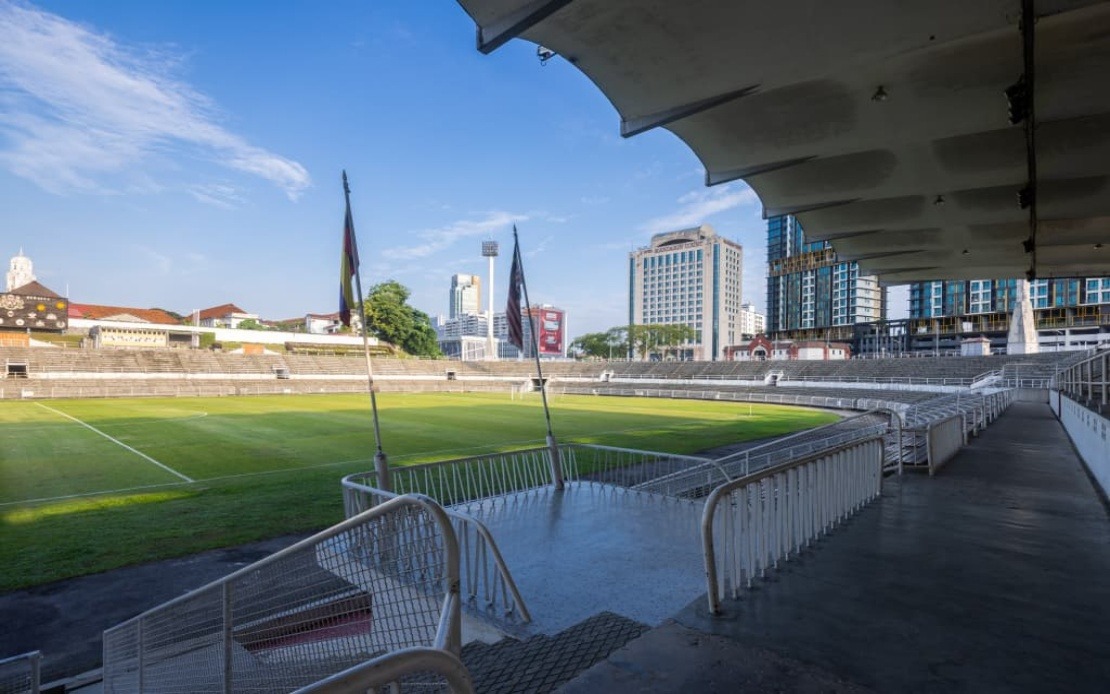
Nearly seven decades have passed since Stadium Merdeka witnessed one of humanity's defining moments, yet the venue remains far more than a relic of history. The structure that hosted the proclamation of Malaya's independence on 31 August 1957 continues to pulse with purpose today, anchoring the nation's collective memory even as modern Kuala Lumpur transforms around it. Flanked by the soaring Merdeka 118 tower, the stadium represents a conscious choice by Malaysians to preserve the physical space where sovereignty was seized from colonial powers, ensuring that freedom's declaration remains tangible rather than merely textual.
The stadium's construction itself was an act of nation-building optimism. Completed within a single year at a cost of approximately RM2.3 million, the venue was purpose-built to accommodate the momentous independence ceremony. When Tunku Abdul Rahman Putra Al-Haj, Malaysia's first Prime Minister, delivered seven resounding cries of "Merdeka" and the Negaraku played for the first time as the anthem of a free nation, Stadium Merdeka became crystallized in the national consciousness as the birthplace of statehood. This was not incidental pageantry; the choice of venue itself communicated that independence belonged to ordinary Malaysians who could gather in a public space, not confined to colonial palaces or administrative offices.
Prof Dr Sarjit Singh Gill, a social anthropology expert from Universiti Putra Malaysia, articulates the deeper significance embedded in the stadium's role. As Chairman of the National Council of Professors' National Unity Cluster, he emphasises that Stadium Merdeka transcends its function as a sports venue, embodying instead the nation's identity, dignity and heritage during a transformative historical juncture. The proclamation event marked not merely the administrative transfer of power but a psychological rupture from colonial subordination, fundamentally altering how Malaysians understood themselves and their place in the world. The stadium, therefore, functions as a physical embodiment of that rupture—a space where collective national identity was forged.
The venue's historical significance expanded in 1957 when it again hosted a pivotal moment: the proclamation of the Malaysian Federation in 1963, which extended sovereignty to Sabah, Sarawak and Singapore (though Singapore later departed the federation). This dual historical resonance positioned Stadium Merdeka as the ceremonial stage for Malaysia's evolution from colonial territory to federal nation, making its preservation essential to how contemporary Malaysians understand their recent past. Unlike monuments designed specifically to commemorate events, Stadium Merdeka was the actual stage of transformation, lending it an authenticity that architectural recreations cannot replicate.
Yet preservation of this national treasure was not inevitable. During the late 1990s, the stadium faced redevelopment threats that could have erased it entirely, replaced by commercial structures more economically productive in a rapidly modernizing city. Public opposition and government intervention proved decisive, demonstrating that significant segments of Malaysian society recognised irreplaceable heritage value transcending market calculation. When Permodalan Nasional Berhad (PNB) assumed stewardship of the site in 2000, the organisation accepted custodianship of Malaysia's most politically charged real estate, requiring an approach that honoured historical authenticity while maintaining contemporary relevance.
Datuk Dr Izwan Ibrahim, Chief Executive Officer of PNB Merdeka Ventures Sdn Bhd, articulates the philosophical foundation guiding the preservation strategy. Rather than merely freezing Stadium Merdeka as a museum piece disconnected from daily life, the approach prioritises maintaining authenticity while ensuring the space remains accessible and meaningful to contemporary Malaysians. This distinction matters profoundly: heritage sites that become ossified reliquaries risk irrelevance to living communities, whereas spaces that continue serving public purposes maintain vitality. Conservation works, guided meticulously by original Public Works Department construction drawings, involved removing later additions like upper seating tiers to restore the original 20,000-seat capacity, while carefully restoring original features including the scoreboard, washrooms, intricate mosaic tiles and distinctive cantilevered roof.
The stadium's contemporary evolution reflects this philosophy of active preservation. Having transitioned from its primary role hosting National Day celebrations, Stadium Merdeka now functions as a genuine national landmark open to public engagement. The refurbished track serves community sporting purposes, while cultural events like the Bazram Merdeka bazaar during Ramadan demonstrate the venue's capacity to generate continued civic participation. When the Ramadan bazaar attracted over 250,000 visitors this year, those attendees experienced Stadium Merdeka not as frozen memorial but as living public space, creating new memories and associations within its heritage fabric.
A particularly strategic dimension of PNB's stewardship involves deliberately engaging younger Malaysians who possess only textbook familiarity with 1957 independence. Izwan emphasises that for contemporary youth, the independence proclamation occupies an abstract historical category, taught through curricula but lacking visceral connection. By encouraging young people to physically experience Stadium Merdeka, participate in activities within its space, and form their own emotional relationships with the site, PNB recognises that heritage transmission requires more than passive information transfer. Schools are increasingly visiting the stadium, with students not merely learning facts but physically standing where their nation's founding proclamation echoed through the crowd. This embodied learning creates neurological and emotional pathways that textbooks alone cannot generate, potentially cultivating deeper national consciousness among Malaysia's rising generation.
The stadium's international recognition reinforces its position within global heritage frameworks. Receipt of the UNESCO Asia-Pacific Heritage Award in 2008 positioned Stadium Merdeka within transnational architectural and historical discourse, validating preservation investments while attracting international scholarly attention. The 2009 gazetting as a National Heritage site embedded the stadium within Malaysian legal frameworks protecting against future development threats. These dual recognitions—international and domestic—provide Stadium Merdeka insulation against purely commercial pressures, establishing clear institutional commitments to perpetual preservation.
For Alias Daud, a long-serving member of the PNB team who dedicated 35 years to the organisation and the final decade exclusively to Stadium Merdeka's maintenance and operations, the site embodies profound personal meaning transcending professional obligation. His account of experiencing the stadium as simultaneously workplace and home captures how institutional heritage sites generate emotional significance for those entrusted with their care. Alias describes walking through Stadium Merdeka as summoning a complex emotional texture combining pride, gratitude and nostalgia—an affective response testifying to the space's capacity to generate genuine connection. His observations that visitors representing all social backgrounds traverse its gates, each carrying individual narratives and memories, suggests the stadium functions as a democratic gathering place where diverse Malaysians can encounter shared national history.
Alias particularly notes how the stadium becomes especially meaningful during August's national month, when government agencies, schools and universities intensify visitation, treating the space as pedagogical resource and memory site simultaneously. The observation that visitors, particularly younger attendees, frequently express genuine amazement at learning that Stadium Merdeka was independence's actual proclamation venue, suggests many Malaysians had possessed only abstract awareness. These moments of discovery—when historical knowledge suddenly acquires spatial specificity—represent the precise value preserved spaces generate, transforming generic historical information into embodied understanding connected to particular geography.
As ultramodern skyscrapers increasingly populate Kuala Lumpur's skyline, Stadium Merdeka's modest yet dignified presence acquires intensified symbolic resonance. The contrast between the stadium's mid-century architecture and surrounding glass towers inverts conventional modernisation narratives; here, preservation of the older structure becomes the more progressive choice, deliberately maintaining physical traces of the moment when Malaysian sovereignty emerged from colonial darkness. This architectural juxtaposition literally embodies the relationship between present and past that PNB and national custodians have chosen: not replacement of old with new, but coexistence that allows each era to illuminate the other. The stadium thus continues serving as Malaysia's most significant anti-forgetting mechanism, preserving the spirit of Merdeka for future generations who will inherit both the freedom won in 1957 and the institutional commitment to remember how that freedom was gained.

