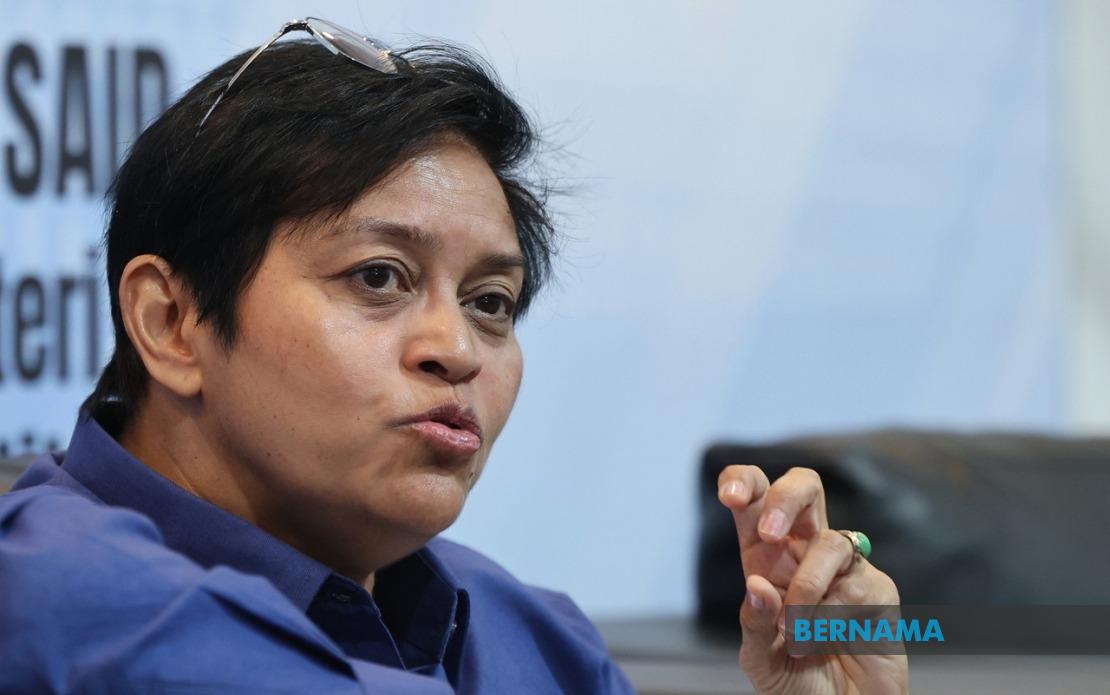
The federal government's commitment to the Unity Government remains unwavering despite Barisan Nasional's willingness to forge pragmatic alliances with various parties at the state level, according to Minister in the Prime Minister's Department (Law and Institutional Reform) Datuk Seri Azalina Othman Said. Speaking in Putrajaya on August 3, the UMNO information chief sought to clarify what she characterized as a misunderstanding about the relationship between state-level political cooperation and the broader federal administration, emphasizing that these operate within fundamentally different institutional frameworks.
Azalina's comments arrived in response to remarks made by former UMNO Supreme Council member Datuk Dr Mohd Puad Zarkashi, who had publicly suggested that Barisan Nasional ought to reconsider its continued participation in the Unity Government at the federal level. The timing of such statements has occasionally generated speculation among political observers about potential fractures within the ruling coalition, particularly when state-level outcomes appear to create tension with federal arrangements. However, Azalina moved to address this head-on, stressing the categorical distinction between national and regional political dynamics.
The constitutional architecture of Malaysia's federal system creates distinct legal and political spheres for state governments and the national administration. Each of Malaysia's thirteen states and three federal territories operates under its own state constitution, governing structure, and leadership hierarchy distinct from federal mechanisms. This constitutional separation means that political cooperation arrangements made at the state level operate within constraints and incentives that differ substantially from those operating at the national tier. Azalina underscored this point by noting that states possess their own elected leaderships, constitutional provisions, and in the case of monarchical states, their respective Sultans or Rulers who exercise constitutionally-defined powers.
The minister's intervention reflects an important clarification needed in Malaysian political discourse, particularly as federal coalitions become increasingly complex and multi-layered. The Unity Government, established following the 2022 general election, brought together Barisan Nasional, Pakatan Harapan, and several other political entities under Prime Minister Datuk Seri Anwar Ibrahim's leadership. This federal arrangement represents a significant departure from Malaysia's post-independence political norm of clear two-coalition competition. Simultaneously, state elections have produced varied outcomes across the federation, with different states governed by different political combinations. The potential for these state-level configurations to be misinterpreted as signals of instability at the federal level necessitates periodic clarification from senior government figures.
Azalina emphasized that Barisan Nasional's decision to remain part of the Unity Government reflects settled party strategy determined by UMNO's highest decision-making bodies. She referenced multiple prior public statements issued by UMNO's senior leadership, as well as pronouncements from Prime Minister Anwar Ibrahim himself, all reaffirming the party's federal commitment. These repeated affirmations suggest that despite occasional dissenting voices from individual senior figures within the party, the formal institutional position of UMNO has remained consistent. The distinction between individual criticism and collective party policy represents an important feature of Malaysia's political landscape, where statements by senior personalities sometimes differ from officially-sanctioned positions.
The flexibility that Barisan Nasional has demonstrated in forging state-level arrangements with different partners reflects pragmatic political calculation rather than ideological realignment. Across various Malaysian states, the party has demonstrated willingness to cooperate with Pakatan Harapan, Perikatan Nasional, and independent or smaller political entities depending on local political mathematics and voter preferences. This tactical approach to state governance allows the party to maintain relevance across diverse regional contexts while the federal architecture remains stable. For Malaysian voters and observers attempting to understand the country's increasingly complex political landscape, recognizing this distinction between state and federal political arrangements is essential to interpreting political developments accurately.
The Unity Government framework itself reflects Malaysia's evolving political culture, where bygone assumptions about permanent two-coalition dominance have given way to more fluid arrangements. The federal coalition encompasses ideologically and organizationally distinct partners who cooperate on national governance while maintaining separate identities and pursuing divergent interests at state level. This model, while potentially unstable, has thus far proven durable through Malaysia's significant post-2020 political transitions. Azalina's clarification serves to reinforce that despite surface-level complexity, the institutional moorings of the current federal administration rest on deliberate choices by coalition partners rather than fragile temporary arrangements subject to imminent collapse.
For Southeast Asian observers tracking Malaysian political developments, the clarification also illuminates how federal systems navigate the tension between national coalitions and regional political autonomy. Malaysia's experience suggests that such arrangements can coexist when political actors maintain clear distinctions between institutional levels and when senior figures proactively manage perceptions about coalition stability. The regional context matters significantly here—Southeast Asia's developing democracies often grapple with whether federal or quasi-federal arrangements can accommodate diverse local political preferences while maintaining national coherence. Malaysia's Unity Government represents one institutional solution to this enduring challenge.
Azalina's intervention also reflects the broader communications challenge facing Malaysia's ruling coalition in an era of instant information circulation and vigorous political commentary. Individual statements by senior figures, whether formally authorized or personal observations, circulate widely and can generate interpretations at odds with official positions. The minister's decision to publicly address Zarkashi's remarks and the broader question of state-level cooperation represents an effort to establish clarity about institutional continuity. This proactive approach to managing political narratives has become increasingly important as Malaysia's media ecosystem becomes more diffuse and as social media amplifies individual political voices.
Looking forward, the sustainability of the federal Unity Government likely depends partly on maintaining this conceptual and practical separation between state and federal political arrangements. As Malaysian states continue holding elections over coming years, the results will inevitably generate headlines and speculation about federal implications. However, if coalition partners maintain discipline in distinguishing between state-level pragmatism and federal commitment, the current arrangement could persist. Azalina's remarks provide a template for how senior figures might frame such inevitable state-level political shifts as consistent with federal stability rather than harbingers of national coalition collapse.

