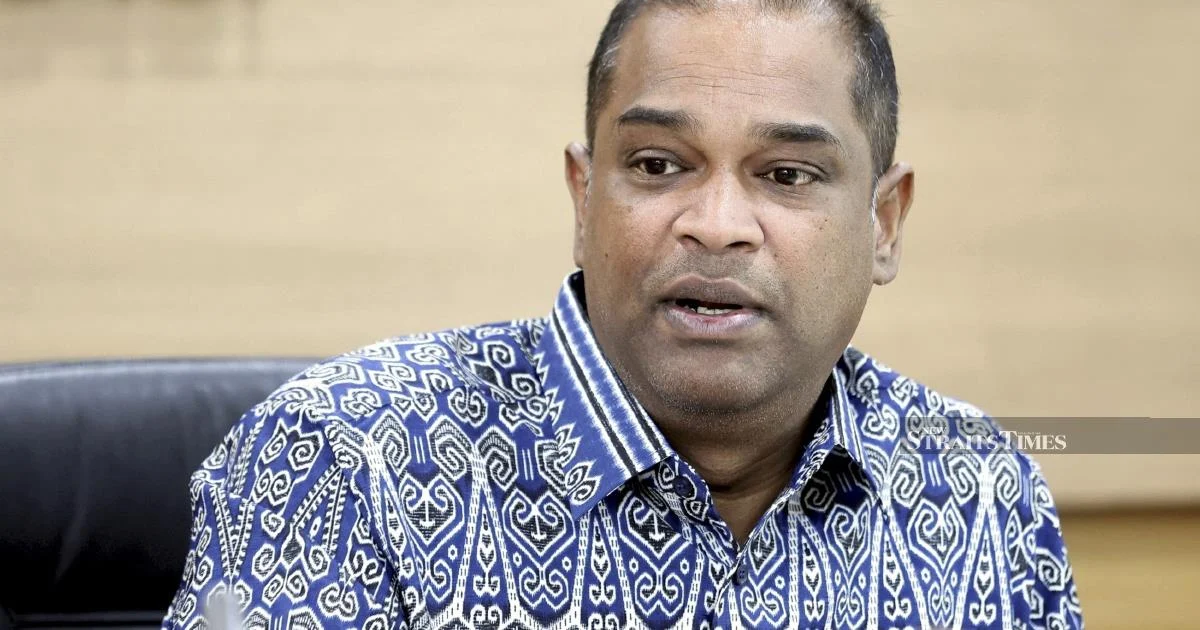
As campaigning intensifies for the 16th Johor state election, PKR vice-president Datuk Seri R. Ramanan has issued a sharp rebuke to political parties for weaponising the monarchy in their pursuit of electoral advantage. Speaking in Johor Baru, Ramanan stressed that the royal institution deserves protection from the machinations of factional politics, underscoring what many observers view as a troubling trend in Malaysian electoral contests.
The warning reflects deeper anxieties about the boundaries between constitutional monarchy and electoral competition in Malaysia's political system. The royal families of Malaysia's states occupy a unique constitutional position, serving as symbols of continuity and stability while remaining formally above the fray of partisan politics. When political parties invoke royal authority or attempt to align themselves with royal preferences—real or perceived—they risk compromising this delicate separation and potentially damaging public confidence in both democratic institutions and the monarchy itself.
Johor's electoral landscape has become particularly fraught in recent years, with competing alliances vying for dominance and seeking legitimacy through various means. The state, Malaysia's second-largest by economic output and home to a significant portion of the nation's manufacturing base, represents a crucial prize in the broader struggle for political supremacy at federal and state levels. For PKR, which has positioned itself as part of a broader reformist coalition, the stakes extend beyond state-level governance to shape national political momentum heading into potential future federal elections.
Ramanan's intervention suggests that multiple parties may have crossed perceived lines in their campaign strategies. While he did not name specific parties or incidents, the public nature of his statement indicates that the issue has become visible and concerning enough to warrant high-level attention from opposition leadership. In Malaysia's intensely competitive electoral environment, where regional power bases remain crucial to success, the temptation to invoke royal sanction or to suggest royal preference for particular candidates or coalitions has proven difficult for many political operators to resist.
The timing of Ramanan's remarks is significant given that Johor has been a traditional stronghold for Umno and the Barisan Nasional coalition, though recent elections have demonstrated growing electoral volatility and the capacity of opposition parties to make significant inroads. The fractionalisation of Malay-Muslim politics following political earthquakes at the federal level has created competing claims about which parties best represent traditional constituencies. In this context, appeals to royal authority—whether explicit or implicit—become a potent rhetorical tool.
Historically, Malaysia's sultans have worked carefully to maintain their constitutional role while also reflecting the sentiments and aspirations of their subjects. The monarchy's strength derives partly from this careful calibration and the widespread public perception that the institution stands above partisan contestation. When political parties attempt to manipulate royal symbols or to suggest royal endorsement of particular electoral outcomes, they risk eroding the very legitimacy that makes the institution valuable to democratic stability.
For the broader Malaysian electorate, particularly in Johor, the monarchy represents more than ceremonial symbolism. The Sultan of Johor carries historical significance dating to the state's founding and serves as a focal point for civic identity and state pride. Attempts to instrumentalise this institution for electoral gain can generate backlash among voters who view such tactics as disrespectful and divisive. The state's economic importance and its historical role in Malaysian federalism mean that political instability or institutional damage in Johor resonates throughout the wider federation.
PKR's explicit warning should be understood partly as an attempt to set ground rules for an increasingly heated electoral campaign. By publicly staking out this position, Ramanan has signalled that his party considers the matter serious enough to merit preemptive action and broader coalition awareness. Whether this intervention proves effective depends partly on whether other political actors view the reputational costs of royal-related controversy as substantial enough to warrant restraint, and partly on whether the media and civil society amplify the message sufficiently to make political parties conscious of public sentiment.
The challenge facing Malaysia's electoral system extends beyond this single state contest. As partisan divisions deepen and electoral margins narrow, the temptation for political strategists to exploit institutional symbols and venerable traditions grows correspondingly. The monarchy's constitutional and symbolic importance to Malaysian governance means that the health of this institution should concern all political actors, regardless of partisan affiliation. A weakened monarchy—one that becomes entangled in partisan politics or seen as captured by particular factions—ultimately serves no party's long-term interests.
Moving forward, Johor voters will be watching not only what political leaders say about the monarchy but how they behave during the campaign. Their response to Ramanan's warning, and the conduct of all parties during this crucial election, may signal whether Malaysian politics can maintain the institutional guardrails that have enabled competitive democracy to coexist with stable constitutional monarchy. The outcome of this test carries implications well beyond Johor's borders.

