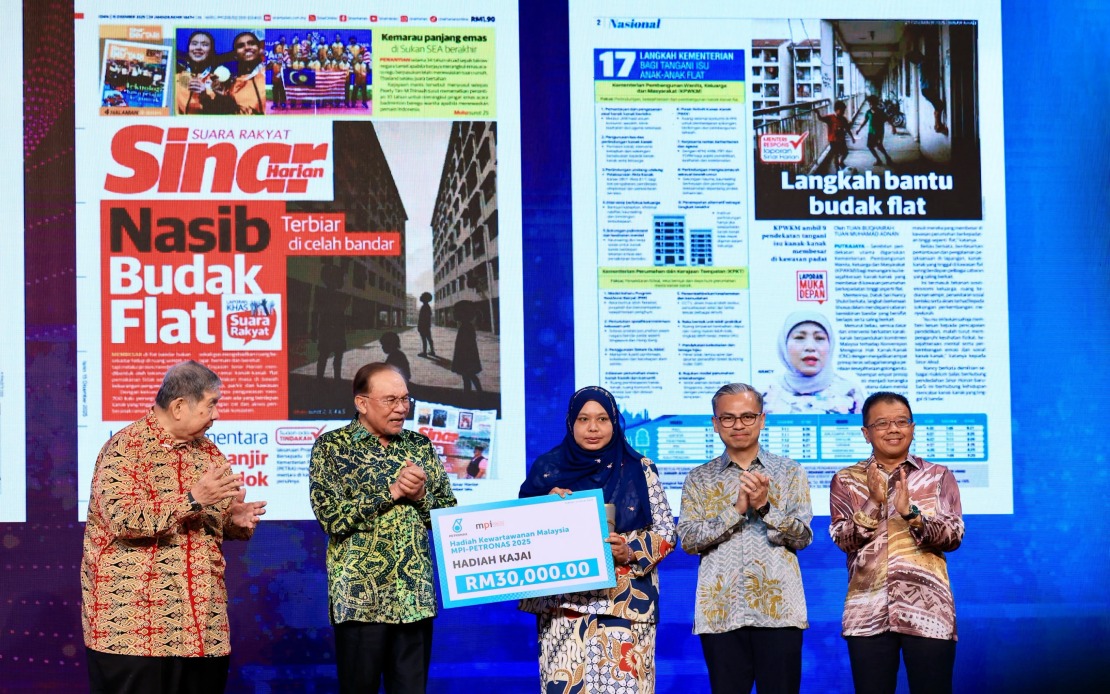
Malaysia's Communications Minister Datuk Seri Fahmi Fadzil has stressed the indispensable role that ethical and responsible journalism plays in safeguarding democratic institutions and fostering an informed citizenry. Speaking at a major gathering of media professionals, Fahmi acknowledged the mounting pressure faced by the journalism industry as the volume and velocity of information continues to accelerate across traditional and digital platforms.
The minister's remarks underscored a growing recognition within government circles that media integrity forms the bedrock of democratic governance. In an era where information floods across multiple channels simultaneously, the ability of newsrooms to distinguish fact from fiction has become not merely a professional obligation but a public necessity. Fahmi's emphasis on the media's role reflects broader concerns across Southeast Asia about the destabilising effects of misinformation campaigns on public discourse and electoral processes.
Fahmi made these comments whilst accompanying Prime Minister Datuk Seri Anwar Ibrahim to the Malaysian Journalists' Night (MWM) 2026, a marquee event that brought together approximately 1,000 participants from across Malaysia's media ecosystem. The gathering assembled editors, journalists, and representatives from government ministries, corporate entities, universities, and media organisations. The occasion also featured the presentation of the MPI-PETRONAS Malaysian Journalism Awards 2025, honouring outstanding journalistic work and professional contributions throughout the year.
The Malaysian Journalists' Night, organised annually by the Malaysian Press Institute, has become an established fixture in recognising excellence within the profession and fostering dialogue between media practitioners, government officials, and business leaders. The event functions as more than a ceremonial acknowledgement of achievement; it serves as a strategic platform where the media industry, government apparatus, and corporate sector can strengthen collaborative relationships and address shared challenges facing public communication.
Fahmi's public commendation of media practitioners signals official recognition of journalism's demanding circumstances. The minister specifically praised the commitment and dedication demonstrated by news professionals, whilst calling upon them to maintain unwavering dedication to truth-telling and integrity. Such endorsements from senior government figures carry particular significance in a regional context where media independence and press freedom remain subject to ongoing scrutiny and occasional constraint.
The challenges posed by misinformation and deliberately fabricated news have intensified across Malaysia and the broader Southeast Asian region. Coordinated disinformation campaigns, amplified through social media platforms and messaging applications, have increasingly targeted political processes, public health initiatives, and social cohesion. Professional journalists, operating under established ethical codes and editorial standards, serve as essential countervailing forces against such systematic falsehoods.
In Malaysia specifically, the media landscape encompasses both established print and broadcast outlets alongside a burgeoning digital news sector. The proliferation of online news sites and independent journalists has democratised information production, yet simultaneously created conditions where quality control and editorial accountability have become more difficult to maintain uniformly across the industry. The Malaysian Journalists' Night represents an attempt to strengthen professional standards and reinforce shared commitments to ethical practice.
The participation of Prime Minister Anwar Ibrahim at the event demonstrates executive-level commitment to supporting media independence and professional journalism. The Prime Minister's presence alongside government delegations and corporate representatives sends a message about the perceived importance of media-government relations, particularly as Malaysia navigates complex governance challenges and seeks to strengthen institutional performance across various sectors.
For Malaysian readers and regional observers, the emphasis on ethical journalism carries implications beyond the journalism profession itself. Reliable information systems directly affect public health responses, economic decision-making by citizens and investors, and the quality of democratic participation. When misinformation circulates unchecked, it creates asymmetries in public understanding that undermine the ability of voters to make informed electoral choices and citizens to hold governments accountable for policy outcomes.
The Malaysian context reflects broader regional patterns where digital transformation has outpaced the evolution of regulatory frameworks governing online information. Countries throughout Southeast Asia struggle to balance protecting media freedom with addressing genuine harms from coordinated disinformation. Malaysia's approach, emphasised through forums like the Malaysian Journalists' Night, privileges professional self-regulation and industry collaboration over statutory control mechanisms.
The recognition of journalism excellence through the MPI-PETRONAS awards scheme also serves an important cultural function. By celebrating rigorous reporting and professional achievement, the awards help sustain commitment to demanding journalistic standards within newsrooms that increasingly face economic pressure from declining advertising revenue and changing consumption patterns. Such recognition strengthens the professional identity and morale of journalists navigating difficult working conditions.
Looking forward, the intersection of technology and journalism will continue reshaping Malaysia's information ecosystem. Artificial intelligence, data journalism, investigative techniques, and multimedia storytelling present both opportunities and risks. Media professionals capable of wielding these tools ethically and responsibly represent vital national assets. Fahmi's remarks implicitly acknowledge this reality by emphasising the continued relevance of journalism characterised by integrity and truth-seeking rather than sensationalism or partisan agenda.

