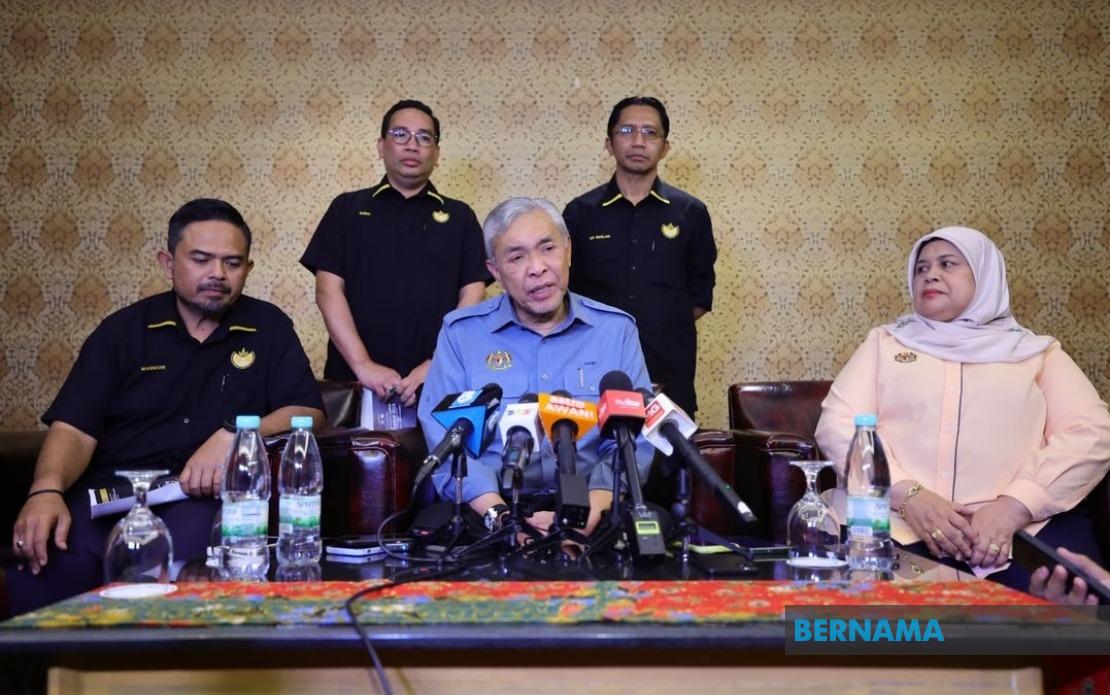
Barisan Nasional leadership is cautiously optimistic that the exceptionally high early voter participation in the Negeri Sembilan state election will translate into robust turnout when polling stations open on Saturday, signalling what could be a pivotal moment for the coalition in the contest. BN chairman Datuk Seri Dr Ahmad Zahid Hamidi pointed to the early voting figures as evidence of healthy democratic engagement among the electorate, noting that such enthusiasm from voters willing to participate ahead of the official polling day reflects positively on the state's political culture. The Election Commission reported that early voting reached 88.97 per cent as of 3 pm, a figure that substantially exceeded typical participation rates for advance balloting and underscores the level of interest among voters in the 16th state election.
The early voting exercise accommodated a total of 22,339 participants, comprising military personnel and their spouses, along with police officers and their families who cast ballots in person, supplemented by postal votes from voters unable to attend polling stations during the advance period. Of this figure, 16,467 individuals voted in person on the designated early voting day, with 11,293 coming from military backgrounds and 5,174 from the police force. The postal voting component accounted for the remaining ballots, indicating that the Election Commission had successfully facilitated participation across multiple voting channels. This logistical achievement demonstrates the commission's capacity to manage a dispersed electorate across varying demographics and professional categories.
With approximately 867,151 eligible voters registered to cast ballots on Saturday, the Election Commission has established a target range of 72 to 75 per cent overall voter turnout for the polling day itself, as articulated by EC chairman Datuk Seri Ramlan Harun. Should this projection materialise, coupled with the momentum established through early voting, the state election could witness one of the more substantial voter engagements seen in recent Negeri Sembilan electoral contests. The commission's realistic forecasting suggests confidence in its operational readiness while acknowledging the variables that typically influence day-of turnout, including weather conditions and competing demands on voter time.
Ahmad Zahid's characterisation of BN as the underdog in this particular state election provides revealing insight into the political landscape confronting the coalition in Negeri Sembilan. Rather than projecting dominance, the BN chairman was positioning the party as the challenger, a stance that underscores the competitive nature of the race and the genuine uncertainty surrounding the outcome. This framing also serves a strategic purpose within the BN campaign apparatus, potentially galvanising ground-level activists and volunteers who may respond with heightened effort when perceiving the contest as genuinely contested rather than a foregone conclusion.
The remaining three campaign days before Saturday's voting represented a crucial window for BN's election machinery to intensify outreach and consolidate support among persuadable segments of the electorate. Ahmad Zahid's explicit instruction to continue voter engagement during this period reflected the campaign team's recognition that momentum could shift in final days and that sustained organisational effort remained necessary to convert latent interest into actual votes cast for BN candidates. The timeline pressure meant that any messaging or mobilisation strategies would need to be executed with precision to maximise impact before the window closed.
The strong early voting performance carries distinct implications for Malaysian electoral participation more broadly. Across Southeast Asia and globally, voter turnout has been declining in many jurisdictions, making Negeri Sembilan's demonstrated enthusiasm noteworthy. The state's ability to mobilise 88 per cent of early voters suggests effective communication channels and voter awareness campaigns, factors that election management bodies throughout Malaysia and the region could examine for lessons applicable to their own contexts. The success indicates that when voting mechanisms are accessible and convenient—as early voting arrangements are designed to be—segments of the electorate respond positively.
The early voting framework's prominence in this election also reflects evolving voter behaviour and expectations around electoral convenience. Military and police personnel, who constituted the majority of early voters, represent professional cohorts with constrained schedules on ordinary polling days. By accommodating their advance participation, the electoral system acknowledges practical realities while simultaneously capturing votes that might otherwise be lost to scheduling conflicts. This inclusive approach strengthens democratic legitimacy by ensuring that all eligible citizens, regardless of professional obligations, can meaningfully exercise their franchise.
For BN specifically, the coalition's positioning in Negeri Sembilan carries broader ramifications for its national standing and ability to govern. State-level elections function as bellwethers for federal performance, and voting patterns in Negeri Sembilan could provide indicators about voter sentiment toward the national coalition government. A strong turnout that favours BN would reinforce the party's claim to represent mainstream Malaysian electoral preferences, while disappointing results could signal erosion of support among constituencies traditionally aligned with the coalition.
The convergence of high early voter participation and Ahmad Zahid's underdog framing creates an interesting dynamic in the final campaign phase. Should Saturday's polling day turnout approach the commission's 72 to 75 per cent target range, the cumulative voter participation across both early and regular voting would represent substantial democratic engagement. However, the ultimate significance depends not merely on turnout volume but on which candidates and parties benefit from those votes, a question that will be resolved once counting concludes Saturday evening. Until then, BN's campaign strategy remains focused on converting the demonstrated electoral enthusiasm into party support at the ballot box.

