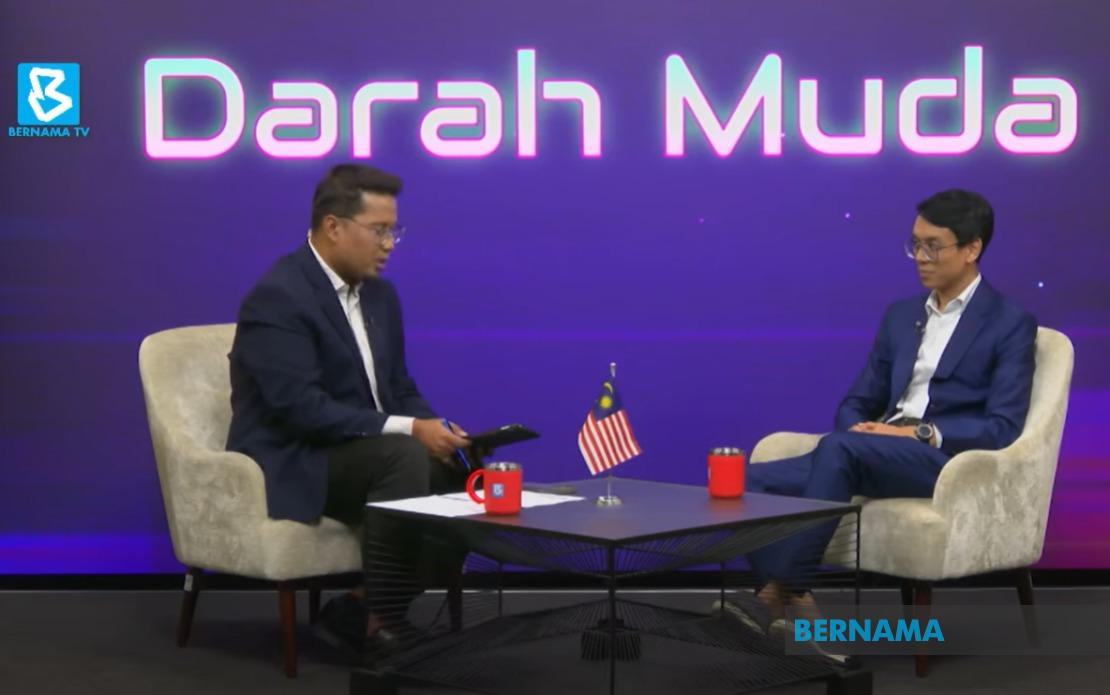
The path to restoring public confidence in Tabung Haji requires far more than surface-level reforms. According to Mohamad Ikmal Ahmad Nordin, a data analyst with IKRAM Malaysia's Economic Agenda Team, the institution must embrace a fundamental transformation centred on robust governance frameworks and leadership appointments grounded in genuine financial and investment expertise. Speaking on a Bernama TV programme examining the Royal Commission of Inquiry findings, Mohamad Ikmal underscored that addressing the root causes of previous institutional failures is essential to preventing history from repeating itself, even as Tabung Haji continues its ongoing recovery efforts.
At the heart of his analysis lies a critical observation about institutional role confusion. Tabung Haji operates simultaneously as a religious and administrative body managing Hajj affairs while functioning as a sophisticated financial institution overseeing billions in depositor savings. This dual mandate creates inherent tensions that demand leadership capable of navigating both domains competently. Mohamad Ikmal argues that senior management positions must be filled by individuals with demonstrable expertise in fund management, accounting, and actuarial science—professionals equipped to interpret financial statements, assess investment portfolios, and manage complex asset allocations with sophistication.
The analyst proposes a structural reconfiguration that could clarify institutional responsibilities. Religious and Hajj management functions, he suggests, might be more effectively overseen by dedicated religious authorities such as the Department of Islamic Development Malaysia (JAKIM) or relevant ministerial departments. This separation would allow Tabung Haji's leadership to concentrate exclusively on financial stewardship and investment management, enabling specialists in those domains to exercise undivided attention on capital preservation and growth. Such a reorganisation could eliminate the risk of qualified financial professionals being sidelined by considerations unrelated to sound monetary management.
For Malaysia's younger generation, the stakes in Tabung Haji's governance renaissance are particularly high. Young Muslims aspiring to perform the Hajj face formidable financial hurdles; the pilgrimage represents one of the largest single expenditures many will undertake. Mohamad Ikmal emphasises that improved governance directly translates to innovative schemes and pathways that could make Hajj savings more accessible and achievable. Forward-thinking, progressive leadership would explore instruments and programmes tailored specifically to younger savers, recognising their distinct economic circumstances and constraints. Without such vision, the institution risks becoming increasingly irrelevant to a generation seeking contemporary financial solutions.
The analyst stresses that institutional credibility cannot be rebuilt through selective accountability. The forensic audits already underway examining Tabung Haji-related companies represent a necessary mechanism for identifying precisely how institutional resources were misallocated and which entities or individuals benefited improperly from fund flows. Continuing these investigations thoroughly—rather than suppressing uncomfortable findings—demonstrates commitment to genuine transparency. Mohamad Ikmal cautions that overlooking secondary issues in pursuit of a headline settlement would inevitably create conditions for future malfeasance, as unaddressed vulnerabilities invite exploitation.
The institutional trust deficit remains profound among depositors, particularly as revelations from the RCI continue shaping public perception. Rebuilding this trust demands that leadership articulate a compelling refocus on Tabung Haji's original mandate: facilitating affordable, accessible Hajj participation for Malaysian Muslims. This renewed purpose must underpin every strategic decision, from investment philosophy to product innovation. When depositors perceive that their savings are managed by qualified professionals operating within transparent governance structures explicitly designed to serve their interests, confidence gradually returns.
Investment management expertise proves essential given the scale of capital Tabung Haji commands. The institution holds substantial asset portfolios requiring astute deployment across domestic and international markets. Leadership lacking investment acumen cannot effectively evaluate manager performance, assess portfolio risk, or make informed decisions about capital allocation. This expertise gap has historically created opportunities for poor investments, unexplained losses, and strategic drift. Appointing individuals with proven track records in fund management would introduce rigorous analytical standards to decision-making processes.
Accountancy and actuarial knowledge constitute another critical competency set. Tabung Haji must manage complex financial projections, liabilities, and reserve requirements. Professionals trained in actuarial science understand how to model long-term demographic trends, assess sustainability of benefit structures, and ensure regulatory compliance. Accountants ensure that financial reporting is accurate, timely, and comprehensible to both regulators and depositors. These technical capacities cannot be improvised or acquired through on-the-job learning in an institution managing public deposits.
The governance dimension extends beyond individual competence to encompassing systematic checks, balances, and accountability mechanisms. Robust audit committees, independent oversight, transparent reporting, and clear authority demarcation prevent concentration of decision-making power in individual hands. Such structures have proven their worth across successful financial institutions globally. Implementing comparable governance protocols at Tabung Haji would signal institutional maturity and commitment to professional standards.
Younger Malaysians, according to Mohamad Ikmal, must recognise their stake in these reforms and advocate for change. They understand intimately the expense and difficulty of Hajj preparation; their voices demanding institutional excellence carry moral weight and credibility. Youth engagement in governance improvement processes—whether through depositor forums, advisory panels, or public advocacy—creates accountability pressure on institutional leadership while ensuring that products and services genuinely reflect generational needs.
The broader implications for Malaysia's financial ecosystem extend beyond Tabung Haji. How effectively this institution recovers from its challenges will influence confidence in other government-linked entities managing public resources. Successful institutional rehabilitation demonstrates that governance failures can be remedied through systematic reform, expert appointment, and transparent accountability. Conversely, superficial fixes that preserve discredited approaches would undermine faith in public financial stewardship across multiple institutions.
Moving forward, Mohamad Ikmal's analysis points toward a vision of Tabung Haji as a professionally managed, governance-conscious financial institution serving depositors' interests with technical excellence. This transformation requires neither abandonment of the institution's religious mission nor diminishment of its Islamic character. Rather, it demands recognition that fulfilling that sacred trust necessitates appointing leaders whose qualifications and expertise genuinely match institutional responsibilities.

