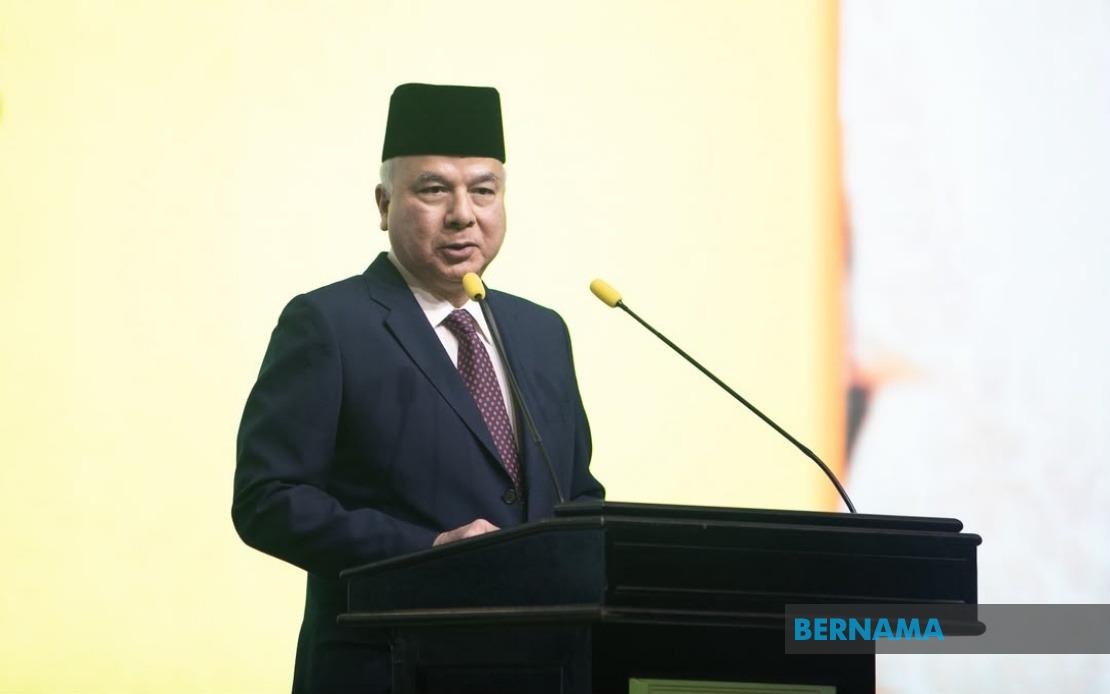
Sultan Nazrin Shah, the Sultan of Perak, has delivered a forceful message about the foundations of national success: that even countries blessed with natural wealth, skilled populations and cultural richness will ultimately disappoint their citizens unless they build robust institutions and demand accountability from their leaders. Speaking at the 8th World Conference on Islamic Thought and Civilisation in Ipoh, the Sultan drew a sharp distinction between possessing material advantages and translating those advantages into genuine prosperity and stability for ordinary people. His remarks carry particular weight in Southeast Asia, where rapid economic growth has sometimes masked governance gaps and where the durability of institutional frameworks remains a live concern across the region.
The Sultan articulated a vision of good governance that moves beyond abstract principle into concrete mechanics. Strong institutions, he argued, must be constructed to transcend individual administrations and leaders, ensuring continuity and resilience even as political actors change. This emphasis on institutional permanence over personality-driven leadership reflects lessons from comparable democracies, where legal and bureaucratic structures have proven more durable than charismatic individuals. For Malaysia, which has navigated multiple transitions of power in recent years, the Sultan's focus on institutional strength offers a framework for evaluating the quality of governance changes rather than merely celebrating their occurrence. The institutional approach also addresses a common challenge in developing economies: the tendency for resources and authority to concentrate around personalities rather than being distributed through reliable, predictable processes.
Transparency in the management of public finances emerged as a cornerstone of the Sultan's conception of good governance. When governments openly account for how they raise and spend resources, citizens develop confidence that their tax contributions and economic participation serve collective rather than narrow interests. This principle resonates in Malaysia's context, where transparency initiatives and anti-corruption efforts have become increasingly central to public discourse. The Sultan's framing positions financial transparency not merely as an anti-corruption tool but as a trust-building mechanism fundamental to social cohesion. Without such openness, he suggested, even well-intentioned policies lack legitimacy because people cannot verify that resources intended for public benefit are actually deployed as promised. This observation has implications for Malaysia's development spending, infrastructure projects, and social programmes, all of which depend on public understanding and acceptance.
Equally essential to the Sultan's framework is the impartial application of law and the principle that no individual, regardless of power or status, stands beyond accountability. This principle of universal accountability distinguishes functioning states from those where rule of law becomes selective or situational. The Sultan's emphasis on protection for the humble alongside restraint of the powerful addresses a fundamental anxiety in many societies: that legal systems reflect and reinforce existing inequalities rather than mitigating them. In the Malaysian context, where concerns about judicial independence and fair process have periodically surfaced, the Sultan's call for impartial justice carries institutional weight and offers guidance for reformers. The credibility of courts, police, and enforcement agencies ultimately depends on the perception that they serve all citizens equitably, not that they function as instruments of particular interests.
The Sultan reframed political stability in a way that challenges common assumptions. Rather than equating stability with consensus or absence of disagreement, he argued that the most stable nations often accommodate vigorous debate and contestation, channelling these through legitimate institutions rather than allowing them to erupt into street violence or authoritarian suppression. This distinction matters enormously in Southeast Asia, where rapid social change, economic inequality, and competing visions of national identity generate substantial disagreement. The Sultan's framework suggests that the danger lies not in disagreement itself but in the deterioration of shared rules for managing it. When citizens lose faith in elections, courts, or the integrity of public office, the implicit social contract frays. This diagnosis applies across the region, where concerns about electoral integrity, judicial independence, and corruption periodically challenge political stability.
The Sultan specifically highlighted the plight of vulnerable populations as the first victims of institutional erosion. The poor, marginalised, and voiceless face the sharpest consequences when rules break down and power operates without restraint. This observation broadens the appeal of institutional strength beyond abstract governance principles to concrete material consequences. In Malaysia, where development has created both opportunities and widening inequality, the Sultan's emphasis on how budgets reflect moral choices about whose needs governments prioritise offers a lens for evaluating policy. Every budget allocation represents a choice about values and priorities, revealing whether governments genuinely commit to universal welfare or whether resources flow primarily to favoured constituencies. Leaders who govern with humility, listen to diverse perspectives before acting, and remember that their authority is temporary and borrowed rather than absolute, build durable loyalty and genuine national pride that rhetoric cannot manufacture.
On the international stage, the Sultan articulated a vision of development that rejects insularity and embraces strategic openness. Trade, investment, knowledge exchange, and technological transfer form the currents on which modern prosperity travels, he suggested. No nation, however talented or resource-abundant, can thrive in isolation. Yet this openness must be balanced: cooperation should not become a mechanism for dependency, nor should openness undermine a nation's capacity for independent strategic decision-making. This perspective speaks directly to Southeast Asian nations navigating great power competition and globalisation while attempting to maintain policy autonomy. The Sultan's emphasis on balance reflects the region's challenge of welcoming foreign investment and technology while building domestic capacity and protecting national interests.
The Sultan devoted particular attention to Islamic finance as an underutilised instrument for development and cooperation. Malaysia's two-decade evolution into a global hub for Islamic finance—spanning sukuk issuance, takaful, and Syariah-compliant asset management—represents a distinctive achievement. Yet, the Sultan argued, the true potential of Islamic finance extends far beyond formal compliance with religious prohibitions. The philosophical foundations of Islamic finance—risk-sharing, asset-backing, equitable participation in economic gains—offer a distinctive economic framework suited to development challenges across the Organisation of Islamic Cooperation. Applied with seriousness, Islamic finance could mobilise patient capital for infrastructure investment, small and medium enterprise financing, and transitions toward clean energy and water security across Muslim-majority economies. This framing positions Islamic finance not as a niche product category but as a comprehensive alternative economic model with practical applications to genuine development needs.
The Sultan's address to the World Conference on Islamic Thought and Civilisation conveyed a vision in which institutional strength, democratic probity, and economic openness support rather than contradict Islamic values and aspirations. His emphasis on protecting the vulnerable, ensuring impartial justice, and demanding accountability from leaders aligns with Islamic principles of justice and community welfare. The notion that leaders govern as trustees rather than proprietors echoes Islamic concepts of stewardship and divine accountability. By connecting governance principles, institutional reform, and economic cooperation to Islamic thought, the Sultan situated Malaysia's institutional challenges and opportunities within a broader philosophical and religious framework. This integration carries particular resonance for Muslim-majority societies grappling with questions of modern governance and traditional values.
The Sultan's remarks also carried implicit guidance for political leaders and policymakers. The emphasis on institutions over personalities suggests caution against concentration of authority or reliance on individual leaders. The focus on transparency and accountability implies that opacity and patronage networks, however politically advantageous in the short term, ultimately undermine national resilience. The framework positioning vulnerable populations as primary victims of institutional decay argues that good governance is not merely about efficiency or order but about justice and inclusion. For Malaysia specifically, the Sultan's vision offers benchmarks against which current institutional performance can be measured and aspirational targets for reform. Whether regarding judicial independence, civil service integrity, electoral fairness, or budget allocation toward the marginalised, the Sultan articulated principles that invite ongoing assessment and improvement.

