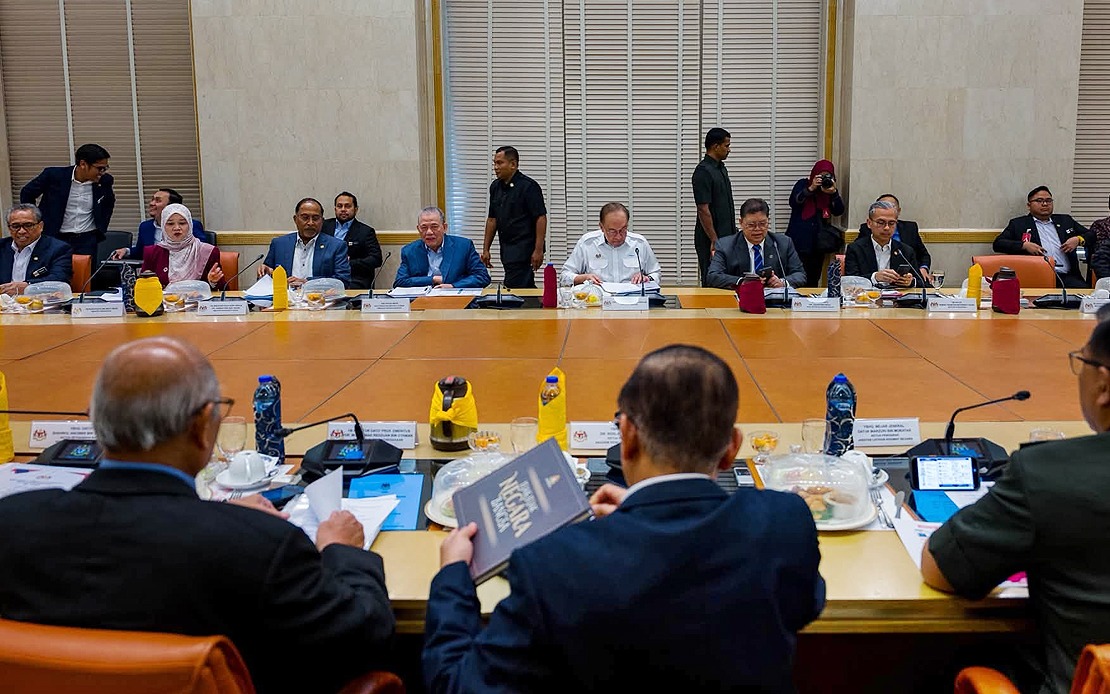
Prime Minister Datuk Seri Anwar Ibrahim has called for sustained efforts to deepen nationhood values among Malaysians, arguing that such values form the bedrock of a unified nation capable of achieving shared aspirations. Speaking after chairing a Dewan Kenegaraan Board of Governance Meeting, Anwar stressed that cultivating these principles across society would develop individuals embodying strong identity, integrity and moral character—qualities he believes are fundamental to elevating Malaysia's standing on the global stage.
The Prime Minister's remarks reflect a deliberate pivot towards what might be termed civic nation-building, an approach that transcends ethnic and religious divisions by emphasising shared commitment to the Malaysian project. By anchoring his message in nationhood values rather than communal identity markers, Anwar signals a governance philosophy centred on inclusive patriotism. This framing is particularly significant in Malaysia's plural context, where competing narratives about national identity have historically sparked tension. His emphasis suggests the administration views reinforcement of common civic values as instrumental to social cohesion.
According to Anwar, fostering love for the country constitutes a central pillar of this nation-building agenda. The mechanism through which such affection is cultivated, he indicated, requires deliberate institutional support and grassroots engagement. This represents more than rhetorical flourish—it signals recognition that patriotism and civic consciousness do not emerge spontaneously but demand intentional cultivation through education, programmes and public messaging. In the Malaysian context, where rapid urbanisation, economic pressures and generational shifts have sometimes diluted traditional community bonds, such institutional reinforcement takes on heightened importance.
Central to this agenda is the National Service Training Programme (PLKN), which Anwar highlighted as a promising platform for inculcating discipline, resilience and national consciousness among participants. The Prime Minister noted that the programme has generated positive responses from both trainees and their families, suggesting its potential as a vehicle for nation-building beyond ceremonial patriotism. PLKN's structured approach—bringing together young Malaysians from diverse backgrounds in shared experience—positions it as a practical tool for fostering interpersonal understanding and collective identity. Anwar's emphasis on strengthening the programme implies recognition of its utility in addressing perceived deficits in civic education among younger cohorts.
The meeting also spotlighted the Nationhood Fellows initiative, a body tasked with convening prominent figures, intellectuals and former statesmen to contribute expertise towards advancing the nation-building agenda. This institutional mechanism reveals Anwar's strategy of engaging Malaysia's thought leadership in articulating and promoting nationhood values. By drawing on diverse voices across generational and professional boundaries, the initiative aims to construct narratives about national identity that resonate across society's pluralistic segments. The inclusion of statesmen from various backgrounds suggests an attempt to depoliticise nation-building discourse, positioning it as a non-partisan endeavour transcending factional interests.
Anwar's framing of nationhood values as foundational to Malaysia's trajectory resonates with long-standing tensions in Malaysian political discourse. Since independence, successive administrations have grappled with constructing a national identity accommodating diverse ethnic, religious and linguistic communities. Earlier articulations—the Rukunegara in 1970 and subsequent constitutional frameworks—attempted similar syntheses. However, intervening decades have witnessed persistent contestation over what constitutes authentic Malaysian identity, with different political actors advancing competing visions. Anwar's recent statements suggest a return to emphasising overarching civic principles as a mechanism for transcending such divisiveness.
The Prime Minister's emphasis on integrity and moral character alongside identity and discipline carries particular weight given Malaysia's historical struggles with corruption and institutional credibility. By intertwining ethical conduct with nationhood values, Anwar implicitly argues that nation-building requires not merely symbolic patriotism but substantive commitment to principled governance and personal conduct. This positioning potentially signals his administration's intention to leverage nationalist sentiment in support of anti-corruption and institutional reform agendas—linking patriotism to accountability and good governance.
For ordinary Malaysians, such emphasis on nationhood values carries practical implications spanning education policy, civil service training, youth programming and public discourse. Schools may intensify civic education curricula; government agencies might revise induction programmes to forefront nationhood principles; media narratives could increasingly reflect nation-building themes. These shifts, though seemingly technical, shape the values and aspirations internalised by rising generations, potentially influencing their political participation, community engagement and conception of citizenship.
Regionally, Malaysia's nation-building emphasis also carries significance. Southeast Asia encompasses multiple states grappling with integrating ethnically and religiously diverse populations while maintaining political stability. Malaysia's evolving approach to constructing shared nationhood may offer lessons—positive or cautionary—for neighbours facing similar challenges. Success in deepening civic consciousness across communal lines could strengthen Malaysian resilience and model alternative pathways to national cohesion; conversely, perceived instrumentalisation of nation-building for partisan purposes could reinforce scepticism about state-sponsored identity construction.
The sustainability of Anwar's nation-building initiative hinges substantially on whether values articulated at the highest levels translate into institutional practice and lived experience. PLKN's expansion, the Nationhood Fellows' productive engagement and educational sector reforms will prove crucial indicators. Equally important is whether competing political actors and civil society voices engage constructively with this framework or view it as merely another administrative programme lacking transformative potential. True nation-building requires not merely elite pronouncements but sustained civic participation and bottom-up engagement with shared values.

