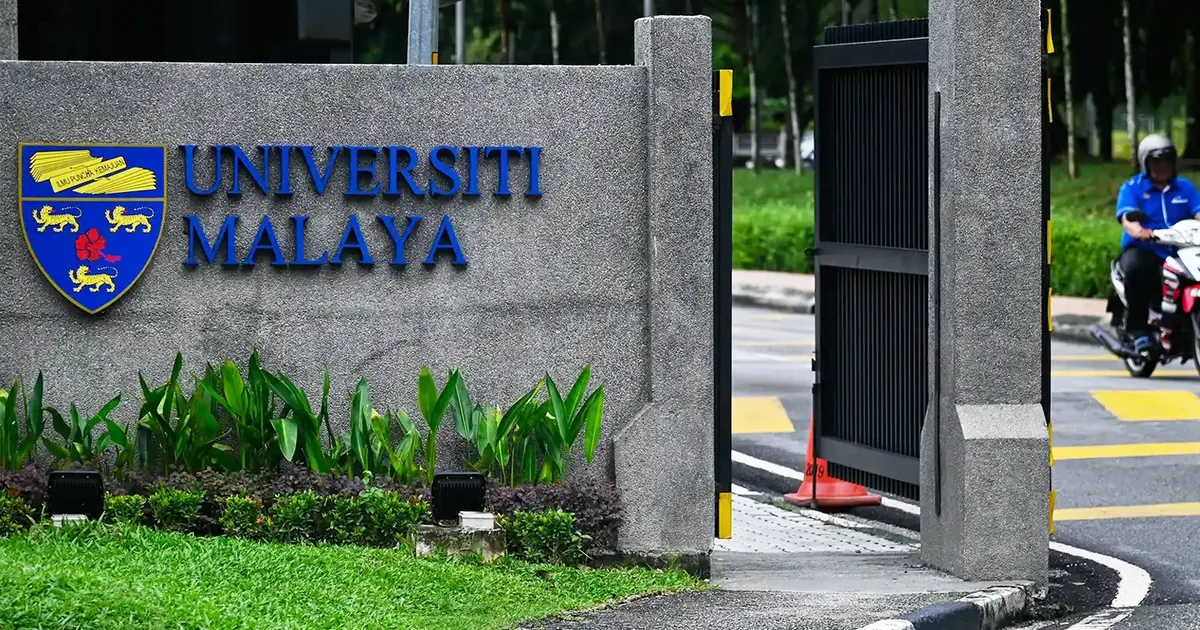
The University of Malaya faces mounting pressure from student activists to disclose the results of a sexual harassment investigation into one of its professors, with the institution having made no public announcement despite previously signalling the inquiry would reach its conclusion by September last year. NewGen UM, a student-led advocacy organisation focused on governance and accountability at the university, has become increasingly vocal in calling for transparency and action, arguing that the prolonged silence raises serious questions about the institution's commitment to protecting its community from misconduct.
The investigation itself centres on allegations of sexual harassment involving a member of the university's academic staff, a matter that carries significant weight within Malaysia's higher education landscape. Sexual misconduct cases at major universities have drawn increasing public scrutiny in recent years, particularly as student movements across Southeast Asia have amplified demands for safer campuses and stricter institutional accountability. For the University of Malaya, one of the nation's most prominent research institutions, the handling of such cases carries implications that extend beyond its own corridors to influence how other Malaysian universities approach similar matters.
NewGen UM's insistence on receiving concrete updates reflects a broader shift among Malaysian university students toward demanding institutional transparency on sensitive matters. The student group has characterised the university's silence as problematic, suggesting that failing to communicate the investigation's outcome—whether to announce disciplinary action, clearance of charges, or recommendations for institutional reform—undermines trust between the administration and the student body. This dynamic has become particularly important in Malaysian university settings, where student participation in governance has historically been constrained, making advocacy efforts like those of NewGen UM increasingly significant.
The stated timeline from September last year placed the investigation firmly within the window of completion, making the absence of any formal announcement particularly notable. Universities typically face expectations to resolve misconduct investigations within reasonable timeframes, both to support complainants seeking resolution and to protect the accused from indefinite uncertainty. When such processes extend beyond announced deadlines without public explanation, questions inevitably arise about whether institutional inertia, resource constraints, or other complications have derailed progress.
Context surrounding sexual harassment on Malaysian campuses has evolved considerably over the past few years. Numerous cases have emerged across public and private universities, with students and staff increasingly willing to come forward about their experiences. However, institutional responses have been inconsistent, with some universities implementing clear grievance procedures and transparent investigation protocols while others have been criticised for opacity and inadequate support for complainants. The University of Malaya, as the nation's flagship university, is expected to demonstrate best practices in such matters.
NewGen UM's activism reflects a maturation of student movements at Malaysian universities beyond traditional concerns. While student organisations have historically focused on academic matters and broader political advocacy, contemporary groups increasingly engage with institutional governance issues, demanding that universities function as accountable organisations subject to scrutiny from those they serve. This shift places pressure on university administrations to operate with greater openness regarding internal processes that previously might have remained largely shielded from external view.
The investigation's delay also raises practical concerns for the individuals directly involved. Complainants in harassment cases typically expect resolution processes to proceed with reasonable urgency, as prolonged investigations can extend the emotional burden of coming forward. Conversely, accused parties require timely conclusions to allow them to move forward with their careers. Extended timelines without communication create uncertainty for everyone involved, potentially undermining the integrity of the investigation process itself.
At the sector level, how the University of Malaya ultimately handles this case will likely influence expectations for other Malaysian universities facing similar matters. If the institution can demonstrate a transparent, timely process that reaches a clear conclusion and communicates findings appropriately, it may establish a standard that benefits the broader higher education ecosystem. Conversely, if the university continues to defer disclosure or allows the investigation to languish without explanation, it risks reinforcing perceptions that institutional prestige sometimes takes precedence over accountability for misconduct.
The pressure from NewGen UM also highlights the limitations of relying solely on institutional self-regulation in sensitive matters. While universities understandably require confidentiality protections for those involved in investigations, particularly for complainants, the complete absence of communication about investigation status creates a credibility vacuum. Many institutions have found that providing general updates on process—without compromising confidentiality—actually strengthens public confidence in investigations rather than undermining it.
Moving forward, the University of Malaya faces a critical juncture in how it responds to demands for transparency. Releasing findings or explaining further delays, while inevitably difficult, would demonstrate institutional seriousness about addressing misconduct and valuing the concerns of students and staff. The alternative—continued silence—risks deepening scepticism about the institution's commitment to creating safer, more accountable university environments. For a university of Malaya's stature and influence within Malaysian higher education, this test of institutional integrity extends beyond a single case to shape broader expectations across the sector.