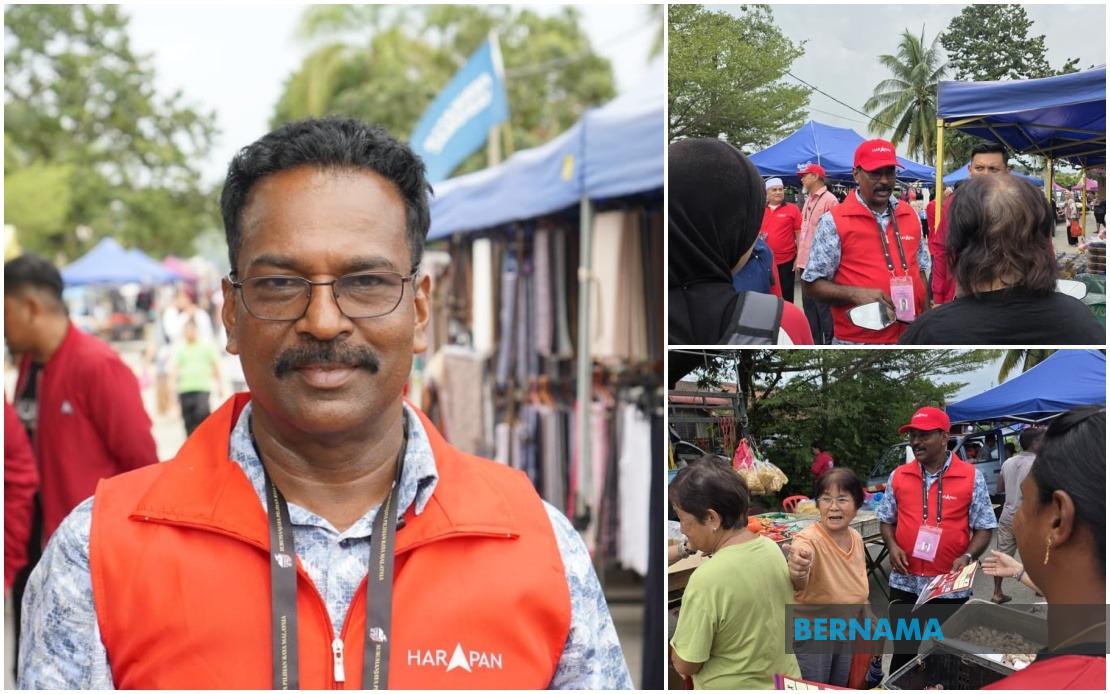
C. Subramani, the Pakatan Harapan candidate contesting the Bukit Kepong seat, is entering the 16th Johor state election with genuine optimism about pulling off a surprise victory. The Pagoh native has channelled feedback from extensive constituency visits into his campaign narrative, positioning himself as the change agent local voters are seeking. With Saturday's election drawing near, Subramani believes the groundswell of support he has encountered throughout the campaign period signals real traction against his rivals in what shapes up as a competitive three-cornered fight.
Subramani's approach to the contest reflects a methodical engagement strategy that has taken him beyond typical urban campaigning into the deeper pockets of the constituency. His visits to Orang Asli settlements across Bukit Kepong have exposed him to infrastructure deficits and socioeconomic pressures that urban-based politicians often overlook. These encounters have informed his platform, allowing him to speak with specificity about community needs rather than relying on generic development promises. The candidate argues that this ground-level intelligence gathering demonstrates his commitment to representing the entire constituency, not just its more accessible populations.
A cornerstone of Subramani's campaign philosophy centres on fostering stronger coordination between state and federal administrations. He contends that aligned governance structures would streamline the resolution of issues that cross jurisdictional boundaries—a persistent friction point in Malaysian politics. Education matters, irrigation concerns, and drainage problems frequently require ministerial intervention or Prime Minister attention to resolve effectively. By positioning himself as a bridge between these administrative levels, Subramani suggests that Bukit Kepong residents would benefit from faster problem-solving and more direct access to federal resources.
This emphasis on administrative efficiency addresses a real frustration in Malaysian constituencies where residents experience delays in service delivery due to political misalignment or bureaucratic siloing. For a constituency like Bukit Kepong, where Orang Asli communities and B40 households face compounding disadvantages, coordination between state and federal machinery becomes more than theoretical—it represents tangible potential for accelerated improvement. Subramani's framing suggests that electing him would unlock dormant federal capacity currently inaccessible due to political fragmentation.
Subramani's policy agenda extends beyond administrative architecture into specific quality-of-life improvements. He has identified poor street lighting as an immediate concern, emphasizing that safety infrastructure remains inadequate across various parts of the constituency. Narrow bridges present both safety and economic challenges, limiting access and commerce in affected areas. Critically, Subramani has made affordable housing for the B40 community a campaign pillar, recognizing that economic anxiety and housing insecurity shape voter sentiment in constituencies where median incomes are constrained.
A distinctive element of his platform involves transforming the Bukit Kepong Gallery into a historical tourism destination. This proposal attempts to marry heritage conservation with economic development—converting a cultural asset into a revenue-generating tourism hub that could benefit local businesses and create employment opportunities. For a rural or semi-rural constituency, tourism-based development offers an alternative to traditional economic models and appeals to voters seeking economic dynamism without massive industrial investment.
Subramani previously contested the Buloh Kasap seat in the 2022 Johor state election, giving him electoral experience and established organizational networks. His current leadership position as Pagoh PKR chief indicates deep party integration and suggests that party machinery is invested in his candidacy. This organizational backing, combined with his personal campaigning, provides the infrastructure necessary for a competitive challenge in the three-way contest.
The Bukit Kepong contest unfolds within the broader context of the 16th Johor state election, where 172 candidates are pursuing 56 state assembly seats. This degree of competition reflects both fragmentation across the political spectrum and the genuine stakes involved in state-level governance. With approximately 2.7 million voters participating statewide, individual constituencies like Bukit Kepong become crucial battlegrounds where electoral dynamics at the national level intersect with hyper-local concerns.
The three-cornered configuration in Bukit Kepong—featuring Pakatan Harapan, Barisan Nasional, and Perikatan Nasional candidates—mirrors fractious contests elsewhere in Johor. This splintered contest environment creates both opportunities and risks for challengers like Subramani. Fragmented opposition benefits challengers if they can consolidate support around a coherent narrative, but it also means victory margins may narrow, potentially creating controversial mandates. In the 2022 state election, the incumbent, Datuk Dr Sahruddin Jamal of Perikatan Nasional-Bersatu, won with a majority of just 710 votes—suggesting the seat remains genuinely competitive and that demographic shifts or organizational improvements could plausibly alter outcomes.
For Southeast Asian observers, Subramani's campaign illustrates evolving Malaysian electoral dynamics where incumbency carries less weight than historical norms suggested, and where candidates emphasizing administrative efficiency and targeted social provision resonate with increasingly demanding constituencies. His emphasis on Orang Asli welfare and B40 housing reflects broader Malaysian conversations about inclusive development and equity—issues that transcend party lines and reflect genuine voter priorities.

