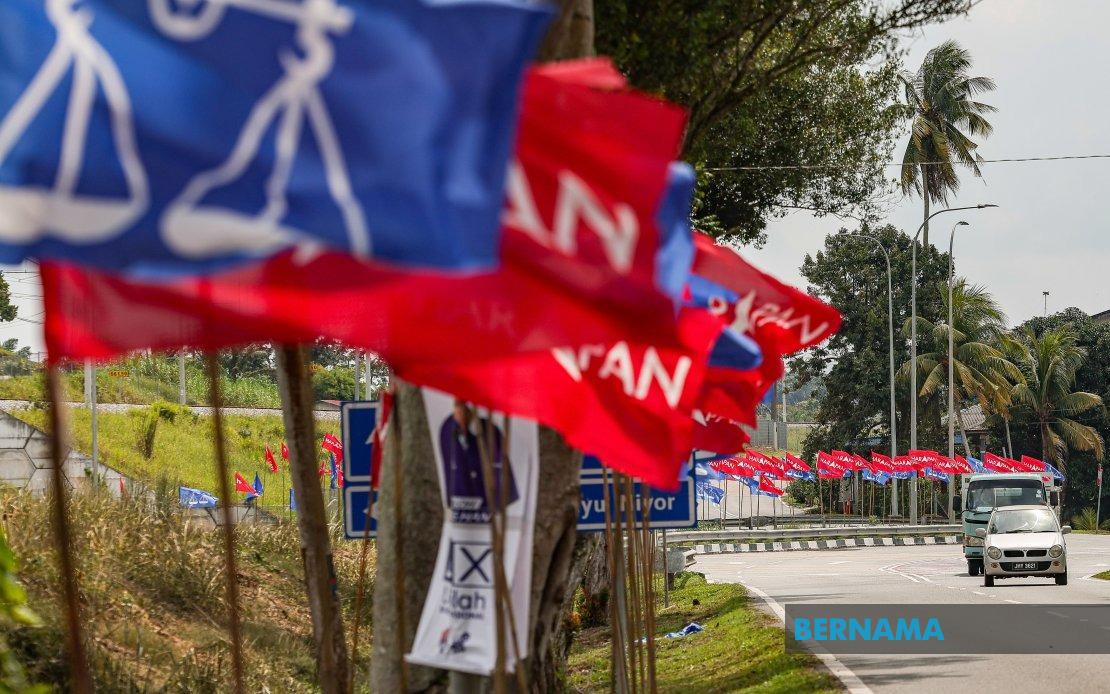
Pakatan Harapan's push to reclaim the Larkin state seat hinges significantly on mobilising voters in what is shaping as a closely watched contest in the 16th Johor state election scheduled for July 11. Suhaizan Kaiat, the PH candidate for the constituency and a sitting Member of Parliament for Pulai, articulated a cautiously optimistic assessment of his party's prospects, emphasising that electoral performance depends heavily on the level of participation among registered voters in the district.
Suhaizan's confidence draws substantially from historical voting patterns observed during the 14th General Election, when the Larkin seat swung decisively in favour of the opposition coalition. That particular electoral result demonstrated that Barisan Nasional's grip on the constituency could be loosened under the right conditions, specifically when citizens turned out in significant numbers. This historical precedent forms the analytical backbone of PH's strategy for the upcoming state poll, suggesting that the opposition bloc views Larkin as recoverable territory provided the party can energise its support base and attract swing voters.
A critical distinction underpins Suhaizan's argument regarding voter sentiment. The 2022 Johor state election, in which BN retained Larkin, occurred under unprecedented constraints imposed by the COVID-19 pandemic, resulting in a turnout of only 51 per cent. According to Suhaizan, this exceptionally low participation rate means that the 2022 outcome cannot be regarded as a reliable indicator of underlying voter preferences in the constituency. Instead, he contends that the 2018 general election provides a more accurate barometer of Larkin's true political leanings, suggesting that a return to normal electoral participation could fundamentally reshape the result.
The arithmetic of voter mobilisation thus becomes paramount in PH's tactical calculations. Suhaizan explicitly acknowledged that should turnout climb substantially above the pandemic-depressed levels of 2022, the opposition coalition's prospects would strengthen materially. This framing effectively transforms the election into a battle not merely over policy or personality, but over which coalition can more effectively encourage its sympathisers to cast ballots—a contest that typically favours better-organised parties with deeper grassroots networks.
Beyond the turnout equation, PH sees potential opportunities in the fractured political landscape created by tensions between coalition partners in the government fold. Suhaizan identified Bersatu as a possible source of vote leakage toward the opposition, noting that recent political friction between Bersatu and PAS has strained relationships within the ruling coalition. He suggested that Bersatu supporters, who previously cooperated with PH in earlier electoral alliances, might be receptive to backing PH candidates if disenchanted with their current political positioning. The fact that Bersatu declined to field a candidate in Larkin itself creates an opening for PH to appeal directly to voters who previously supported that party.
The immediate history of the Larkin seat reflects the volatile nature of Malaysian electoral politics. In 2018, Datuk Mohd Izhar Ahmad secured the seat contesting under the PH banner as a Bersatu member, representing the coalition that swept to power nationally. However, the 2022 state election saw BN reassert control through Mohd Hairi Mad Shah, who defeated PH with a majority of 6,178 votes—a relatively slender margin that suggests the constituency remains genuinely competitive. That narrow victory, combined with the subdued turnout conditions prevailing at that time, reinforces PH's contention that the seat remains in play.
The electoral contest itself features a three-cornered configuration that adds complexity to the outcome. Suhaizan faces competition from incumbent Mohd Hairi representing BN-UMNO and Norsinah Abu, the Bersama candidate. The presence of a third candidate could theoretically fragment votes in unpredictable ways, though historically in Malaysian state elections, such scenarios tend to benefit one major coalition at the expense of others. The splitting of anti-BN votes between PH and Bersama could work against the opposition, or conversely, Bersama's intervention might carve into BN's traditional support base.
The broader context of the Johor state election encompasses 172 candidates seeking to represent 56 state constituencies, making this one of Malaysia's most significant sub-national electoral contests. Early voting is scheduled for July 7, providing a window into which direction voter sentiment might be flowing before polling day itself. For political analysts observing Malaysian electoral trends, Johor's results typically signal broader dynamics affecting the federal political landscape, making contests like Larkin worthy of close attention from observers tracking shifts in voter behaviour.
Suhaizan's emphasis on voter turnout as the decisive variable encapsulates a broader reality of Malaysian politics: the demographic and organisational capacity of political parties to mobilise supporters often proves more consequential than traditional measures of popularity or policy platform. In state elections particularly, where campaigns receive less media attention than federal contests, on-the-ground organising and voter contact operations frequently determine which coalition can deliver supporters to polling stations. For PH in Larkin, therefore, the coming weeks will prove critical in testing whether the party can translate its optimism into the actual turnout numbers upon which its recapture strategy depends.

