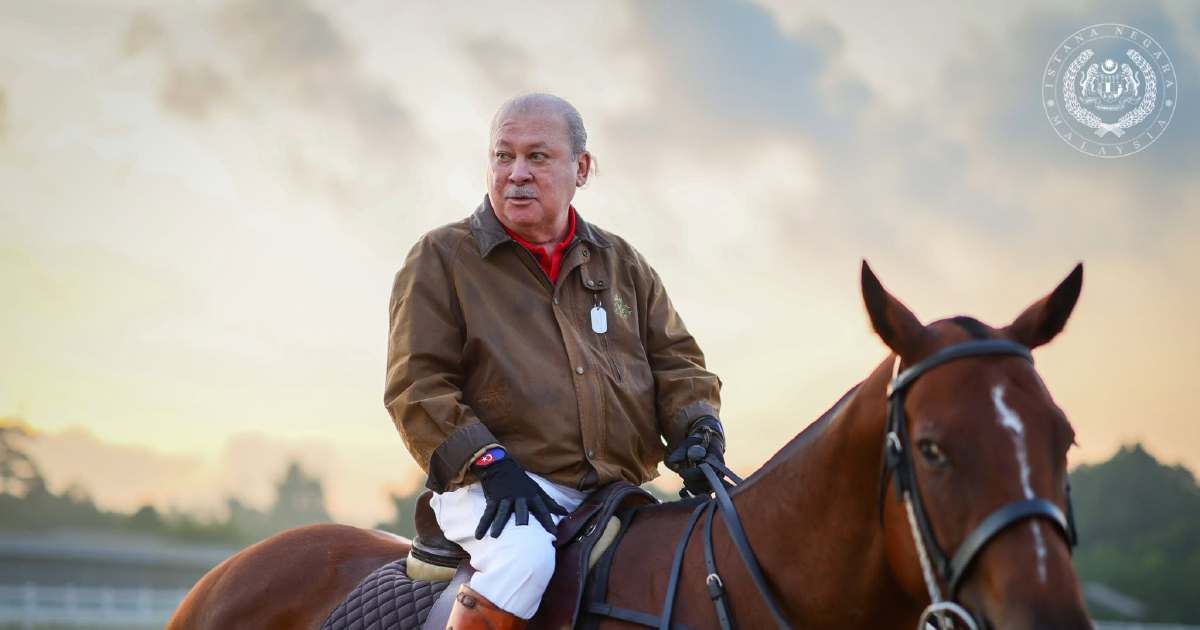
His Majesty Sultan Ibrahim, King of Malaysia, continued with his established morning fitness regimen at the Royal Johor Polo Club situated within the grounds of Istana Pasir Pelangi in Johor Baru on Monday. The sovereign displayed a measured and unhurried approach to his equestrian activities, reflecting the deliberate pace typical of his wellness routine.
The Royal Johor Polo Club has long served as a venue for the nation's leadership to engage in traditional sporting pursuits, particularly those involving horsemanship. Polo and recreational horse riding remain central to the cultural and recreational practices associated with Malaysian royalty, with facilities across the country maintained to facilitate these activities. For His Majesty, the morning sessions represent an established component of his daily health maintenance schedule since assuming the throne.
Sultan Ibrahim's commitment to maintaining an active lifestyle through equestrian pursuits underscores the importance placed by Malaysia's leadership on personal fitness and well-being. The ritual nature of these morning outings, conducted with consistent regularity, demonstrates an approach to health management that emphasizes sustainable, long-term engagement with physical activity. Such practices have historically been integral to the routines of Malaysian monarchs, connecting contemporary wellness practices with traditional aristocratic customs.
The Istana Pasir Pelangi grounds in Johor represent one of the significant royal residences in the southern region, and the associated polo and riding facilities remain among the most developed in the country. The state of Johor has maintained these amenities as part of its broader infrastructure supporting royal activities and traditional sporting heritage. The maintenance of such facilities reflects the enduring significance of equestrian culture within Malaysia's royal and official circles.
His Majesty's deliberate approach to his riding activities, characterized by a calm and unhurried manner, suggests a focus on the meditative and health-promoting aspects of horsemanship rather than competitive pursuits. This methodical approach to physical exercise aligns with contemporary health recommendations emphasizing consistency and sustainability over intensity. The relaxed demeanor observed during the session indicates an engagement with the activity that balances physical exertion with stress reduction and mental clarity.
For Malaysian observers and international commentators tracking the nation's leadership, such regular public activities offer reassurance regarding the sovereign's health status and continued engagement with official duties. The visible maintenance of established routines provides a form of continuity and stability at the apex of Malaysia's political system. These seemingly routine activities carry symbolic weight, demonstrating an active and present head of state engaged with the rhythms of daily life while upholding traditional practices.
The broader context of royal wellness practices in Southeast Asia reveals varied approaches to maintaining health within demanding ceremonial and political schedules. Malaysia's monarchical system requires the sovereign to undertake extensive official functions, rendering personal fitness regimes both practically necessary and symbolically important. The public nature of activities like horse riding allows for informal confirmation of the ruler's capacity to fulfill constitutional responsibilities.
The continuation of these morning sessions also reflects the institutional stability within Johor's royal establishment and the broader Malaysian monarchy. Equestrian activities maintain their cultural resonance across the region, with facilities like the Royal Johor Polo Club serving as repositories of traditional sporting knowledge and practice. Such venues facilitate not merely recreation but also the perpetuation of customs integral to Southeast Asian royal traditions.
As Malaysia navigates contemporary governance challenges, the everyday practices of its leadership—including established fitness routines—acquire significance beyond their immediate health purposes. They function as anchors of normalcy and continuity, grounding the institution of the monarchy in tangible, observable practices that resonate with public understanding. His Majesty's consistent maintenance of his equestrian routine thus serves multiple functions: personal health management, cultural preservation, and subtle reinforcement of institutional stability during periods when national attention focuses on broader political and economic questions affecting the nation and its Southeast Asian position.