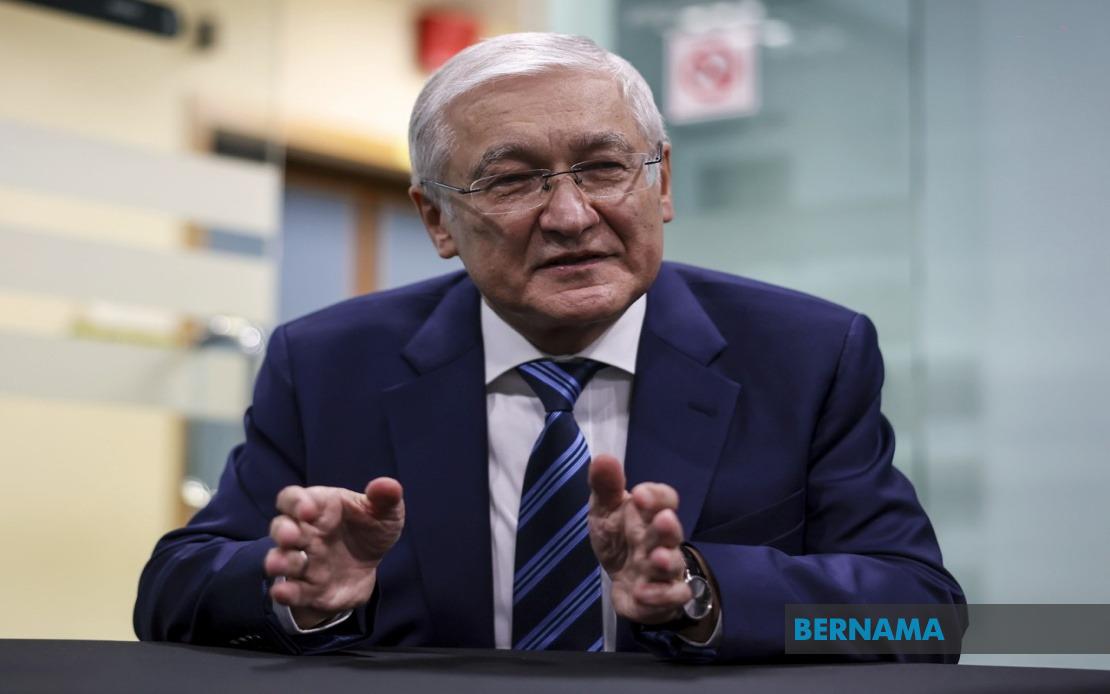
Malaysia's relationship with Russia is undergoing a remarkable transformation, driven by the personal diplomatic engagement of King Sultan Ibrahim, according to Russian Ambassador Naiyl Latypov. Speaking recently, the ambassador credited His Majesty's royal approach with bringing unprecedented warmth to bilateral ties between the two geographically distant nations, elevating them beyond conventional diplomatic channels and into what Moscow describes as an entirely new sphere of engagement. This shift comes as both countries prepare to commemorate six decades of formal relations in 2025.
The transformation began in earnest last August when Sultan Ibrahim became the first Malaysian monarch to undertake a state visit to Russia since diplomatic ties were formally established in 1967. This historic visit broke a pattern of decades in which Malaysia's relations with Moscow had remained cordial but relatively low-key, lacking the high-level personal engagement that characterises the kingdom's ties with Western nations. Ambassador Latypov emphasised that Russia profoundly values this unprecedented royal attention, viewing it not merely as diplomatic courtesy but as a fundamental shift in how the two nations perceive and engage with each other.
The momentum generated by that initial visit has accelerated markedly. Sultan Ibrahim returned to Russia just six months later in January, engaging in an intimate tour of the Hermitage Museum in St Petersburg alongside President Vladimir Putin—an encounter that symbolised deepening personal rapport between the leaders. The King made yet another appearance in May this year, attending Russia's Victory Day celebrations, a date of profound national significance for Moscow. During that May visit, His Majesty and President Putin reached several undisclosed agreements, which Ambassador Latypov believes will inject fresh energy into the bilateral relationship in the coming years.
Central to this diplomatic momentum is a proposed reciprocal visit by President Putin to Malaysia in 2027, coinciding with the 60th anniversary of formal diplomatic relations. This planned state visit would represent an extraordinary geopolitical gesture, as Moscow has historically maintained relatively modest engagement with Southeast Asia compared to its relations with Western powers and China. The invitation itself signals Malaysia's determination to position Russia as a strategic partner rather than a peripheral actor in regional affairs, a positioning that carries implications for ASEAN's broader approach to great power engagement.
The practical benefits of this renewed relationship extend well beyond ceremonial exchanges. In early June, Russia signalled its intention to eliminate visa requirements for Malaysian citizens, a significant facilitation measure that promises to increase people-to-people contact and economic exchange. More substantively, during Prime Minister Anwar Ibrahim's attendance at the ASEAN-Russia Commemorative Summit in Kazan last month, President Putin revealed that bilateral trade between Russia and Malaysia had expanded by 12.9 per cent over the previous year. Additionally, Russia committed to guaranteeing long-term supplies of petroleum, oil and gas to Malaysia—a development of genuine strategic importance for a nation that imports substantial quantities of energy resources.
These energy security assurances address a persistent vulnerability in Malaysia's economic landscape. The petrochemical and power generation sectors represent cornerstone industries for the Malaysian economy, and reliable access to Russian energy supplies provides valuable diversification away from Middle Eastern sources, reducing geopolitical risk concentration. Ambassador Latypov framed Russia's willingness to provide these guarantees as evidence of Moscow's serious commitment to the relationship, positioning energy cooperation as the foundation upon which broader engagement can develop.
Current trade figures underscore the untapped potential in Russia-Malaysia relations. In 2025, Russia ranked as Malaysia's ninth-largest trading partner among European nations, with bilateral trade reaching RM8.72 billion (approximately US$2.04 billion). Malaysia's exports to Russia concentrate heavily in electrical and electronic products, machinery, equipment and components, and processed food items. Conversely, Malaysian imports from Russia consist primarily of petroleum products, minerals, and chemicals. The relatively modest scale of this trade compared to Malaysia's engagement with other major powers suggests considerable room for expansion, particularly in sectors beyond traditional commodities.
Geopolitical analysts view Sultan Ibrahim's diplomatic initiative through the lens of strategic positioning. Professor Azmi Hassan, a geostrategist at the Nusantara Academy for Strategic Research, argues that royal diplomacy carries a prestige and access that transcends conventional diplomatic channels. He contends that the Yang di-Pertuan Agong's ability to engage directly with world leaders creates "windows of opportunity" unavailable to officials operating within standard bureaucratic frameworks. The securing of energy assurances exemplifies this principle—outcomes that emerged from royal engagement rather than traditional trade negotiations.
Looking forward to President Putin's anticipated 2027 visit, analysts emphasise that Malaysia should expand its ambitions beyond conventional trade expansion. Professor Azmi advocates that Malaysian policymakers should prioritise acquiring advanced science and technology capabilities from Russia, arguing that Moscow possesses technological sophistication comparable to Western nations yet at significantly more competitive pricing. This perspective challenges assumptions that technological transfer necessarily requires engagement with Western suppliers, opening possibilities for Malaysia to accelerate its technological development through diversified sourcing.
The historical context deepens the significance of current developments. Formal diplomatic relations between Russia and Malaysia were established on April 3, 1967, simultaneously with a trade agreement. Russia subsequently established its Trade Office in Kuala Lumpur in November 1967 and its embassy in April 1968, while Malaysia reciprocated by opening an embassy in Moscow in November 1968. These actions reflected mid-Cold War engagement, demonstrating that Malaysia pursued diplomatic normalisation with the Soviet Union despite the bipolar international environment of that era. The contemporary renewal of this relationship thus represents a re-engagement with a connection that has deep historical roots.
Sultan Ibrahim's diplomatic activism also carries broader implications for ASEAN's collective positioning toward major powers. By cultivating a particularly warm relationship with Russia, Malaysia demonstrates that Southeast Asian nations need not restrict their strategic engagement to Western allies or China, but can pursue genuinely multialigned foreign policies. This approach aligns with long-standing ASEAN principles of non-alignment while offering practical economic and security benefits. The energy security assurances obtained through royal diplomacy exemplify how personal engagement between leaders can generate concrete outcomes serving national interests.
The unfolding Russia-Malaysia narrative reflects a significant recalibration of a relationship that had existed in relative dormancy for decades. Where previous generations of Malaysian leaders maintained formal but limited engagement with Moscow, Sultan Ibrahim has transformed Russia from a distant diplomatic acquaintance into an active strategic partner. This transformation, accomplished through personal initiative rather than bureaucratic machinery, demonstrates how individual leadership can reshape geopolitical relationships. As the 60th anniversary approaches and President Putin's state visit materialises in 2027, this renewed partnership promises to deepen further, potentially establishing precedents for how Malaysia engages with other non-traditional partners in pursuit of energy security, technological advancement, and strategic autonomy.

