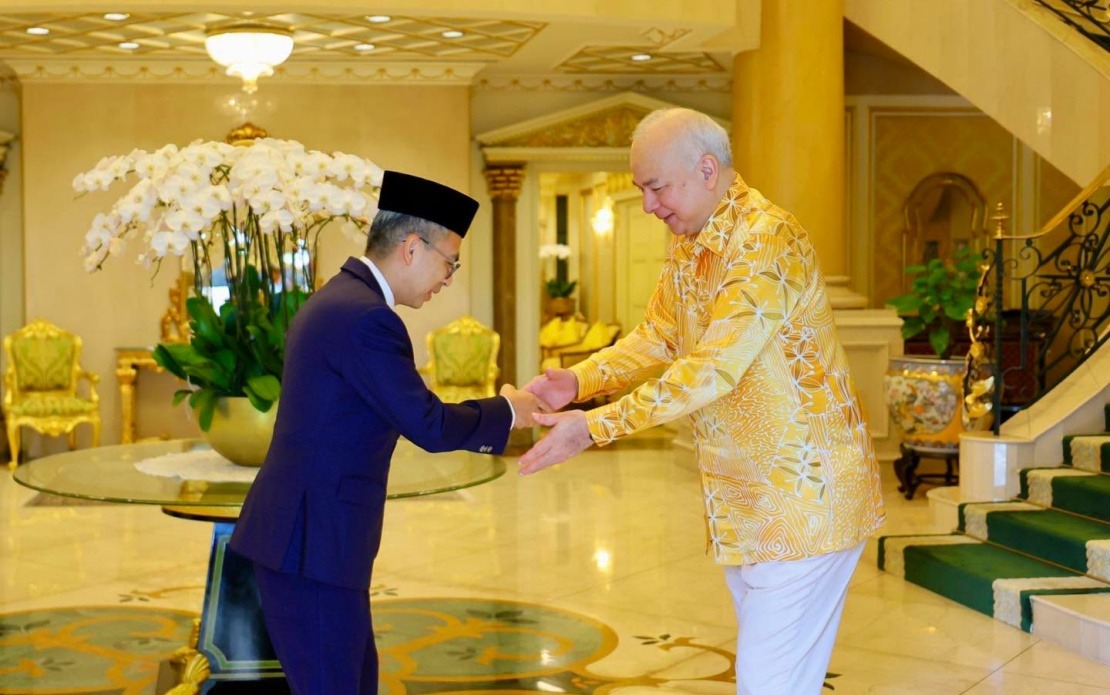
Communications Minister Datuk Fahmi Fadzil has updated Sultan Nazrin Shah, the Sultan of Perak, on the government's strategic push to develop telecommunications infrastructure throughout the state and broaden the availability of communication services to underserved areas. The briefing took place during a formal audience the minister held with the sultan, where infrastructure modernisation emerged as a key discussion point for the state's digital future.
The reinforcement of communication networks across Perak reflects a broader national commitment to closing digital divides in Malaysia's more rural and less densely populated regions. As one of the country's larger states by area but with dispersed population centres, Perak has historically faced challenges in achieving uniform service coverage across its various districts. The government's infrastructure development initiatives aim to address these longstanding gaps, ensuring that residents in outlying areas have comparable access to telecommunications services as their urban counterparts.
Beyond the technical aspects of network expansion, the audience also touched upon the critical issue of online safety—a concern that has gained prominence across Malaysia as digital adoption accelerates. Sultan Nazrin's attention to this matter underscores the growing recognition among Malaysian leadership that robust infrastructure must be accompanied by measures protecting users from online threats, cybercrime, and harmful content. This dual-track approach aligns with international best practices where telecommunications development goes hand-in-hand with digital security frameworks.
The briefing represents part of a wider engagement between the federal government and state rulers on matters of public concern and strategic importance. Such audiences between ministers and state monarchs serve multiple purposes: they keep the royal institution informed of government policy directions, provide an opportunity for rulers to express concerns or priorities, and demonstrate respect for constitutional protocols governing Malaysia's federal system. In Perak's case, this engagement suggests telecommunications infrastructure has become a priority issue warranting the sultan's personal attention.
Communications infrastructure investment carries particular significance for Perak's economic development prospects. Improved broadband connectivity can attract technology companies, support small and medium enterprises in adopting digital tools, and enable rural communities to participate more fully in the digital economy. Educational institutions can leverage better connectivity to offer online learning opportunities, whilst healthcare providers can expand telemedicine services to remote areas. These downstream benefits make infrastructure investment not merely a technical matter but an economic and social development priority.
The state's telecommunications landscape has undergone considerable transformation in recent years, yet significant work remains to achieve genuinely universal coverage. Competition between service providers has driven some improvements, but achieving comprehensive network redundancy and high-speed connectivity in all areas typically requires coordinated government policy and targeted investment. The minister's audience with the sultan suggests the government recognises this reality and is committed to sustained effort in this area.
Online safety, the other major topic raised during the briefing, encompasses a range of concerns from protecting children from inappropriate content to defending citizens against financial scams and identity theft. Malaysia, like other Southeast Asian nations, has experienced growing challenges in these areas as internet penetration deepens and more commercial and government services move online. An effective online safety framework requires coordination between telecommunications providers, government agencies, law enforcement, and internet service platforms—a complex ecosystem that continues to evolve.
The minister's expression of goodwill toward the sultan and the Perak Royal Family, conveyed through a Facebook post following the audience, reflects customary diplomatic courtesy. Such expressions acknowledge the important ceremonial and representative role of state rulers in Malaysia's constitutional monarchy system. Sultan Nazrin, who ascended to the throne in 2019, has taken an active interest in state development matters and has earned recognition for his engagement with contemporary policy issues affecting Perak's residents.
For Malaysian technology and telecommunications observers, the briefing signals that infrastructure expansion remains high on the government's agenda, with state-level coordination playing an important role. Perak's specific needs—shaped by its geography, population distribution, and economic structure—require tailored solutions rather than one-size-fits-all approaches. The inclusion of online safety in formal briefings to state rulers also indicates that digital governance and citizen protection have achieved parity with traditional infrastructure concerns in policy discussions.
Looking ahead, the outcomes of such briefings may influence resource allocation decisions and policy priorities affecting Perak specifically and potentially setting precedents for how other states approach telecommunications development. The government's apparent commitment to discussing these matters at the highest levels of state governance suggests that rural connectivity and digital safety will likely receive continued attention and investment in coming years.

