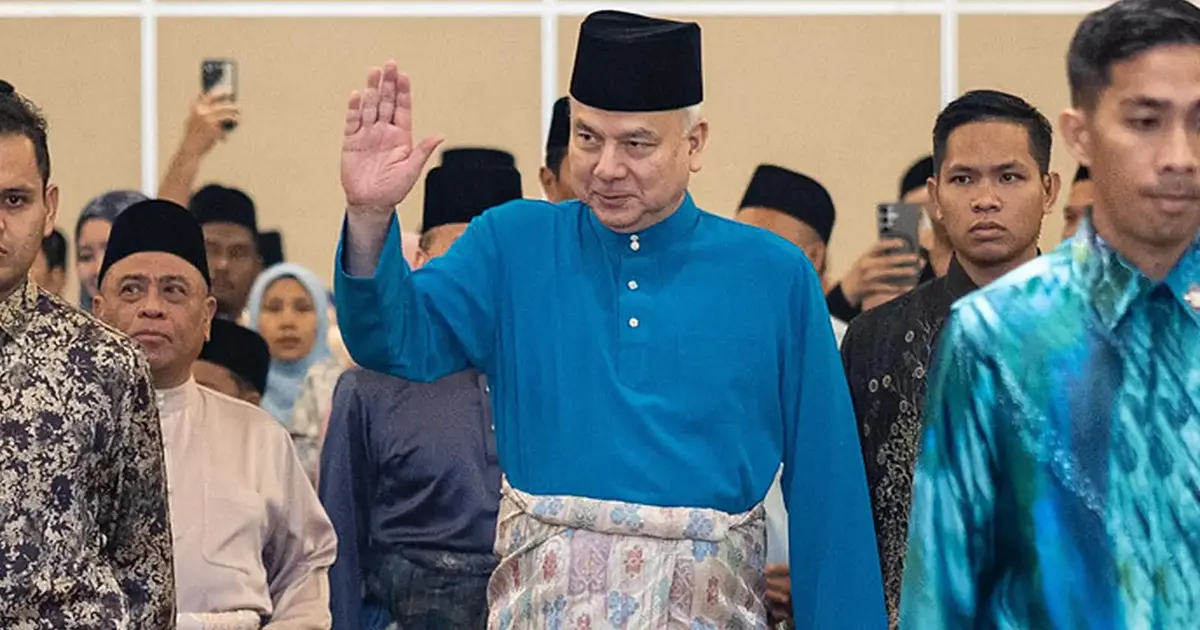
Sultan Nazrin Shah, the Deputy Agong, has issued a pointed reminder to the country's leadership that sustainable national progress cannot be built on impulse or emotional reactions to immediate circumstances. In his message, the royal figure underscored the critical importance of measured, deliberative decision-making at the highest levels of government—a counsel that carries particular resonance given Malaysia's complex political landscape and the diverse interests that must be balanced in policymaking.
The Deputy Agong's warning reflects a growing concern within institutional circles about the pace and nature of governance decisions that can affect millions of citizens. When leaders act precipitously, driven by momentary grievances or partisan considerations rather than long-term strategic thinking, the consequences often ripple through society in unintended ways. This principle applies equally whether decisions concern economic policy, legislative measures, or inter-communal relations. The throne's intervention in this matter suggests that royal advisers perceive a need for recalibration in how contemporary Malaysia approaches its collective challenges.
Central to Sultan Nazrin's message is the assertion that a nation's true strength emerges from the cooperative spirit of its people. Malaysia, as a multiethnic and multireligious federation, has historically depended on a social compact that privileges consensus, mutual respect, and a shared commitment to coexistence. When these foundations weaken—whether through divisive rhetoric, opportunistic polarisation, or short-sighted governance—the entire nation suffers economically, socially, and institutionally. The Deputy Agong's emphasis on cooperation therefore serves as both diagnosis and prescription for contemporary Malaysian challenges.
Respect between different segments of society, another pillar highlighted in the royal message, has become increasingly strained in recent years. Political competition, social media amplification of grievances, and economic pressures have created an environment where mutual regard sometimes yields to tribalism and accusation. Leaders who understand their responsibility to the nation recognise that their words and actions either reinforce or undermine the broader fabric of social cohesion. When public figures speak and act with restraint and thoughtfulness, they model citizenship. When they prioritise sensationalism or divisive messaging, they corrode it.
Harmony, the third element cited by Sultan Nazrin, distinguishes not merely the absence of conflict but rather the presence of active goodwill and constructive engagement across group boundaries. Building and maintaining such harmony requires consistent effort, particularly from those in positions of authority who can amplify either discord or accord. The Deputy Agong's invocation of this ideal serves as a reminder that harmony cannot be taken for granted or treated as a luxury for peaceful times; rather, it must be actively cultivated and protected as a strategic national asset.
For Malaysian leaders across political parties and sectors, the royal message carries an implicit warning about the consequences of governance failure. Public trust in institutions erodes when decisions appear arbitrary, reactive, or disconnected from careful analysis. Conversely, when leadership demonstrates patience, consultation, and evidence-based reasoning, it strengthens institutional legitimacy and public confidence. The Deputy Agong's words thus speak to effective governance as much as they speak to national harmony.
The broader context for this intervention includes Malaysia's ongoing navigation of complex challenges: managing economic pressures while maintaining social investments, addressing communal sensitivities while advancing inclusive development, and balancing competing visions for the nation's future. Each of these challenges demands leaders who can think beyond immediate political gains and consider the long-term implications of their choices. Impulsive decisions in any of these domains risk unravelling the careful accommodations that have kept Malaysia stable across decades.
Southeast Asia more broadly has witnessed the destabilising effects of emotional, populist leadership in various contexts. Sultan Nazrin's intervention implicitly warns against Malaysia following similar trajectories. The region's experience demonstrates that short-term political advantage gained through inflammatory decision-making often comes at substantial cost to institutional stability, economic performance, and social cohesion. Malaysia's monarchy, by articulating alternative principles, seeks to reinforce institutional norms that have served the nation's interests.
The timing of the Deputy Agong's remarks also merits attention. Coming at a moment when Malaysian politics encompasses multiple competing interests and frequent policy adjustments, the emphasis on deliberation and harmony suggests that institutional voices perceive a drift toward reactive, fragmented governance. The royal intervention, therefore, serves as both statement and signal—articulating values that should guide leadership while also indicating that the monarchy remains attentive to governance quality and its implications for the nation.
Ultimately, Sultan Nazrin's message reaffirms that Malaysia's greatest strength lies not in any single leader's vision or any party's electoral dominance, but rather in the collective commitment of its people to respect one another, cooperate across differences, and work toward common prosperity. This foundation has proven resilient through various trials; maintaining it requires consistent recommitment, especially from those who hold power. The Deputy Agong's counsel, rooted in this understanding, offers both historical wisdom and contemporary relevance for Malaysian leadership.