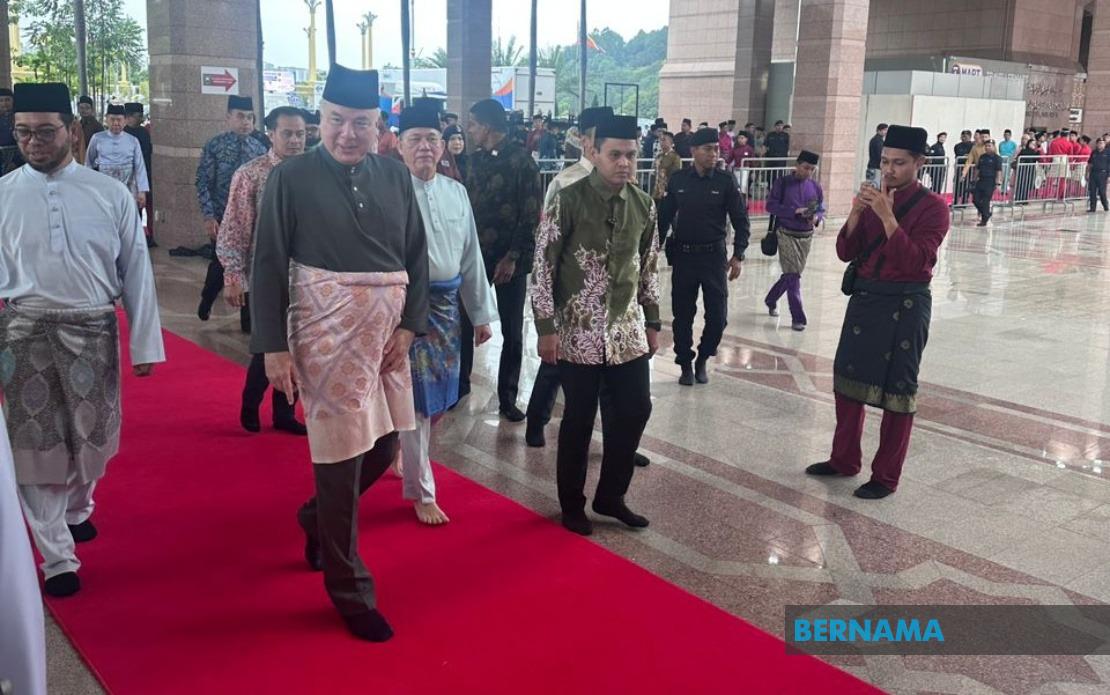
Sultan Nazrin Shah, the Deputy Yang di-Pertuan Agong, has delivered a pointed warning to Malaysia's leadership class about the dangers of impulsive governance. Speaking at the National Level Maal Hijrah 1448 Celebration in Putrajaya on June 17, the Perak Ruler stressed that nations suffer significantly when their leaders prioritize emotional reactions and personal sentiments over measured deliberation. Such recklessness, he cautioned, invariably transfers the burden of poor governance onto ordinary citizens who bear the consequences of decisions made without proper consideration.
The royal address underscores a growing concern about the quality of decision-making at the highest levels of government. Sultan Nazrin articulated that leaders who chase short-term gains at the expense of long-term stability ultimately inflict lasting damage on their nations. His emphasis on "calmness, openness, and cautiousness" reflects a traditional understanding of governance that values studied judgment over reactionary responses to political pressures or public sentiment. This perspective resonates particularly in Southeast Asia, where rapid policy shifts have occasionally destabilized economies and created investor uncertainty.
The Sultan drew inspiration from the Islamic calendar event of Hijrah—the Prophet Muhammad's migration from Mecca to Medina—to illustrate the importance of strategic planning and foresight. He highlighted how the Prophet deliberately selected Abdullah bin Uraiqit, a non-Muslim guide, based purely on merit and reliability rather than religious affiliation. This historical example carries contemporary relevance for Malaysia, a multicultural nation where selecting leaders and advisors based on competence and integrity, irrespective of background, strengthens institutional quality. The principle demonstrates that effective governance transcends parochial interests and demands a pragmatic focus on capability and trustworthiness.
Sultan Nazrin's remarks about sacrifice constitute perhaps the most pointed element of his address. He lamented that the spirit of collective sacrifice—willingness to forgo personal comfort for communal benefit—has eroded within the Muslim community and, by extension, Malaysian society more broadly. The erosion of this value, he suggested, threatens national cohesion when external pressures mount. In the Malaysian context, where economic competition from regional peers intensifies and global challenges proliferate, a citizenry unwilling to make shared sacrifices becomes vulnerable to fragmentation and short-termism that undermines long-term development strategies.
The Deputy Yang di-Pertuan Agong distinguished between superficial sacrifice and genuine commitment to collective welfare. True sacrifice, he explained, demands that individuals place broader societal interests above personal gains, requiring courage, perseverance, and authentic conviction rather than rhetorical posturing. This distinction carries weight in contemporary Malaysia, where political discourse frequently invokes national interests while individual actors pursue narrow factional advantages. Sultan Nazrin's call for sacrifice to become "a way of life" implies a fundamental realignment of priorities away from individualism toward communalism, a shift essential for navigating the "increasingly challenging storms and waves" facing the global order.
The Sultan anchored his arguments in the historical precedent of the Medina Charter, which successfully consolidated diverse populations—different tribes, religions, and ethnicities—under a unified governance framework grounded in tolerance and equitable leadership. This reference carries significant implications for Malaysia's ongoing efforts to maintain plural harmony amid polarizing trends. The Charter demonstrates that unity and cooperation flourish under just governance that respects legitimate differences while enforcing fair rules applicable to all. Sultan Nazrin's invocation suggests that Malaysia's future stability depends not merely on constitutional arrangements but on leadership demonstrating genuine commitment to equity and wisdom.
Through his Maal Hijrah address, Sultan Nazrin positioned unity as inseparable from effective governance. He contended that a nation's success fundamentally rests on the willingness of its people to cooperate despite ethnic, cultural, and religious differences, provided that governance remains fair and discerning. This framing has direct relevance to Malaysian politics, where electoral competition sometimes exploits divisive narratives rather than building consensus around shared national objectives. The Sultan's emphasis suggests that true national strength emerges not from homogeneity but from managed diversity under principled stewardship.
The attendance of Deputy Prime Minister Datuk Seri Fadillah Yusof and Minister Dr Zulkifli Hasan underscores the governmental significance assigned to the occasion. The participation of senior officials indicates that these reflections on leadership quality and sacrifice carry endorsement at high levels of the executive. However, the gap between articulated ideals and actual governance practice remains substantial in Malaysian politics. The challenge facing the nation involves translating Sultan Nazrin's moral and philosophical framework into concrete institutional practices that genuinely reward competence, prudence, and collective sacrifice over factional positioning.
Sultan Nazrin reframed Maal Hijrah from a mere commemorative exercise into a mechanism for introspection and institutional renewal. He rejected the notion that celebrating the Hijrah amounts simply to marking a calendar date or nostalgic reflection on distant history. Instead, he positioned it as an opportunity for honest assessment of past failures and collective acknowledgment of national shortcomings. This reinterpretation transforms a religious observance into a secular governance lesson about the need for regular critical evaluation and course correction.
The Sultan's warning about heedlessness—people becoming "increasingly overwhelmed by the tides of worldly life"—carries metaphorical weight for Malaysia's position in an increasingly competitive and volatile global economy. Nations that lose focus on foundational principles of integrity, collective purpose, and strategic foresight risk being swept aside by faster-moving, better-coordinated rivals. Southeast Asia's economic landscape has shifted dramatically, with competitors like Vietnam and Indonesia competing aggressively for investment and influence. Malaysia's ability to maintain its regional standing depends on whether its leadership can embrace the very qualities Sultan Nazrin advocates: prudence over impulse, sacrifice over self-interest, and unity over faction.
The approximately 5,000 attendees at the celebration represented diverse segments of Malaysian society, suggesting broad potential exposure to these ideas. However, translating aspirational rhetoric into institutional change requires more than royal exhortation. It demands that political leaders visibly demonstrate the virtues being promoted and that institutional incentive structures reward rather than punish prudent, selfless governance. Sultan Nazrin's address effectively crystallizes perennial tensions in Malaysian public life between noble ideals and everyday political realities, between calls for unity and persistent sectarian competition.
Ultimately, Sultan Nazrin's intervention in the national discourse reflects concern that Malaysia risks squandering institutional and human capital through leadership characterized by short-term thinking and reactive decision-making. His emphasis on learning from Islamic history while addressing contemporary challenges situates governance reform within a framework recognizing both timeless principles and modern complexities. Whether Malaysia's political establishment heeds these warnings—whether impulsive decision-making diminishes and sacrifice becomes lived reality rather than merely celebrated concept—will substantially determine the nation's trajectory through the coming decade of regional and global transition.