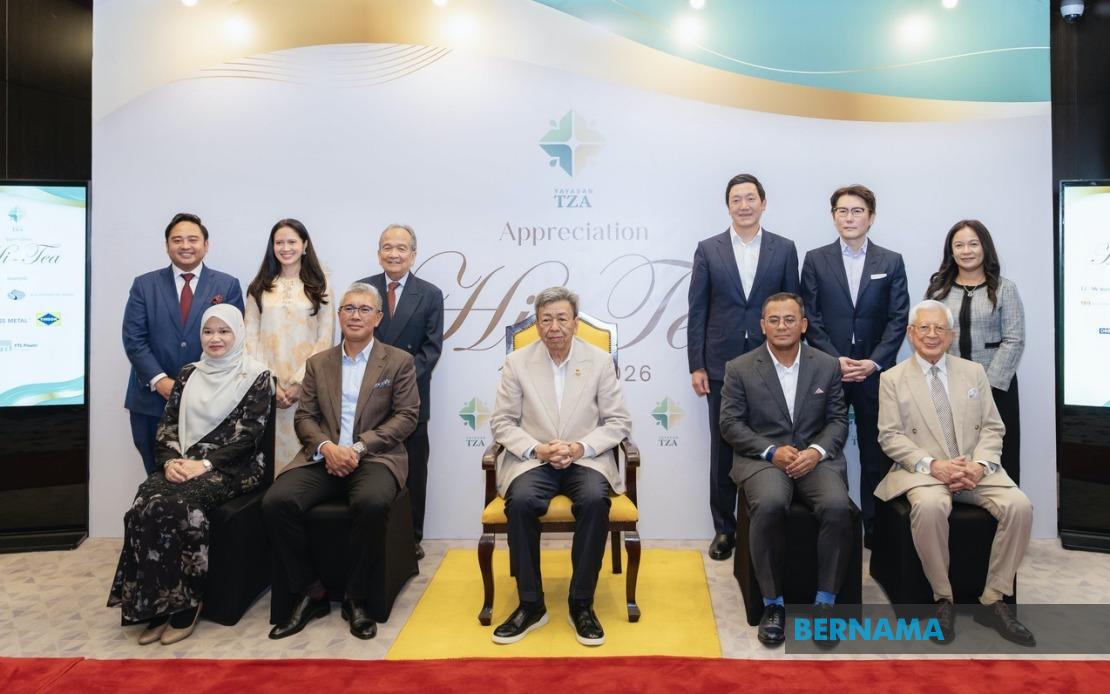
Sultan Sharafuddin Idris Shah, the Sultan of Selangor, graced the Yayasan TZA (YTZA) Appreciation Hi-Tea Ceremony in Kuala Lumpur on June 18, underscoring royal patronage of the foundation's charitable work. The monarch arrived at approximately 3.50 pm and was welcomed by YTZA chairman Tan Sri Arshad Raja Tun Uda alongside Tengku Datuk Seri Zafrul Abdul Aziz, the foundation's advisor. The presence of Selangor Menteri Besar Datuk Seri Amirudin Shari and Education Minister Fadhlina Sidek highlighted the event's significance within both state and federal educational policy circles.
During his address, Tengku Zafrul articulated the foundation's philosophy that extends beyond providing immediate relief to communities in need. Instead, YTZA positions itself as an institution dedicated to fostering long-term capacity-building, enabling individuals and families to chart sustainable pathways toward improved living standards. The foundation pursues this mission through interconnected streams of activity, ranging from direct academic interventions to environmental sustainability projects, grassroots community engagement, and cultural celebrations designed to strengthen social cohesion. This multifaceted approach reflects growing recognition among Malaysian philanthropic organisations that addressing poverty and inequality requires integrated solutions rather than fragmented charitable gestures.
Among YTZA's most significant educational initiatives is the ACE SPM programme, a targeted academic support scheme concentrating on secondary school students preparing for the Sijil Pelajaran Malaysia examination. The programme specifically prioritises candidates from B40 households, the bottom forty percent of earners, whose families often lack access to private tutoring or supplementary educational resources. By addressing this equity gap, ACE SPM aims to level the competitive playing field in Malaysia's education system, where socioeconomic background frequently determines academic outcomes. The 2025 cohort benefited 467 students across ten secondary schools throughout Selangor, demonstrating meaningful penetration within the state's education landscape.
Beyond in-person classroom support, YTZA has leveraged digital platforms to broaden its educational reach during the post-pandemic era. The foundation's digital initiatives extended services to more than four thousand students, highlighting the growing importance of technological infrastructure in bridging geographical and economic divides in Malaysia. This dual-track approach—combining traditional mentorship with online learning tools—reflects pragmatic adaptation to diverse student circumstances, whether they live in urban centres with established tutoring markets or in underserved rural and suburban communities with limited educational infrastructure. The substantial differential between in-person beneficiaries and digital users signals untapped potential for further expansion and innovation.
Tengku Zafrul expressed gratitude toward the network of stakeholders whose contributions sustain YTZA's operations and programme delivery. Sponsors, corporate donors, strategic partners, volunteers, and grassroots supporters collectively enable the foundation to maintain its commitment to marginalised communities. This emphasises a structural reality of Malaysian civil society: philanthropic organisations operating at significant scale depend fundamentally on sustained private sector engagement and individual voluntarism. Without these complementary support systems, publicly funded education and social services alone struggle to address systemic inequality, particularly affecting low-income households.
During the ceremony, Sultan Sharafuddin witnessed corporate pledges totalling RM1.3 million from two major donors. Kuok Brothers Sdn Bhd contributed RM1 million, whilst YTL Power International Berhad pledged RM300,000. These donations represent tangible evidence of corporate social responsibility commitment within Malaysia's business establishment, particularly among major conglomerates with substantial market capitalisation. The public presentation of cheques during a high-profile royal occasion serves both functional and symbolic purposes: it demonstrates corporate commitment to social welfare while elevating visibility of the foundation's work within Malaysian society.
YTZA announced the launch of Larian KITA@Klang, a community fun run scheduled for October 10, 2025. The event will commemorate the Sultan of Selangor's Silver Jubilee celebration, marking twenty-five years of his reign. Larian KITA@Klang represents the fourth iteration within the Larian KITA series, a recurring initiative designed to foster community inclusivity and social bonding. Rather than conventional competitive running formats emphasising individual achievement, Larian KITA positions physical activity as a social connector, celebrating cultural diversity and local culinary traditions along the route. For Klang specifically, this approach acknowledges the municipality's multicultural composition and its significance as Malaysia's principal port city.
The community fun run model employed by YTZA reflects broader trends within Asian philanthropy toward experiential engagement rather than passive beneficiary relationships. By inviting participation across demographic lines, these events build grassroots momentum for social causes whilst generating resources through registration and sponsorship. The October timing positions Larian KITA@Klang strategically within Selangor's events calendar, capitalising on heightened public interest surrounding the Sultan's jubilee commemoration. This synchronisation demonstrates sophisticated event management, linking charitable fundraising with state-level ceremonial occasions.
The YTZA appreciation ceremony illustrates how Malaysia's charitable sector increasingly intertwines with state institutions and royal patronage. The Sultan's attendance elevated the event's prestige whilst signalling official recognition of the foundation's contributions to social welfare. Educational support for disadvantaged students represents a particularly strategic philanthropic focus, given Malaysia's aspirations toward becoming a high-income nation dependent on human capital development. When B40 students lack access to quality academic preparation, Malaysia's economic competitiveness suffers, as does social mobility. YTZA's emphasis on SPM preparation directly addresses these interconnected challenges.
The foundation's expansion trajectory warrants monitoring by policymakers concerned with educational equity. The gap between four thousand digital beneficiaries and four hundred sixty-seven direct programme participants suggests significant unmet demand among students seeking supplementary academic support. Sustained corporate investment and volunteer engagement remain essential for closing this gap further. Simultaneously, YTZA's success in securing RM1.3 million in new corporate pledges during a single event underscores receptiveness within Malaysia's business community toward education-focused charitable causes, potentially opening opportunities for scaled replication across other states.