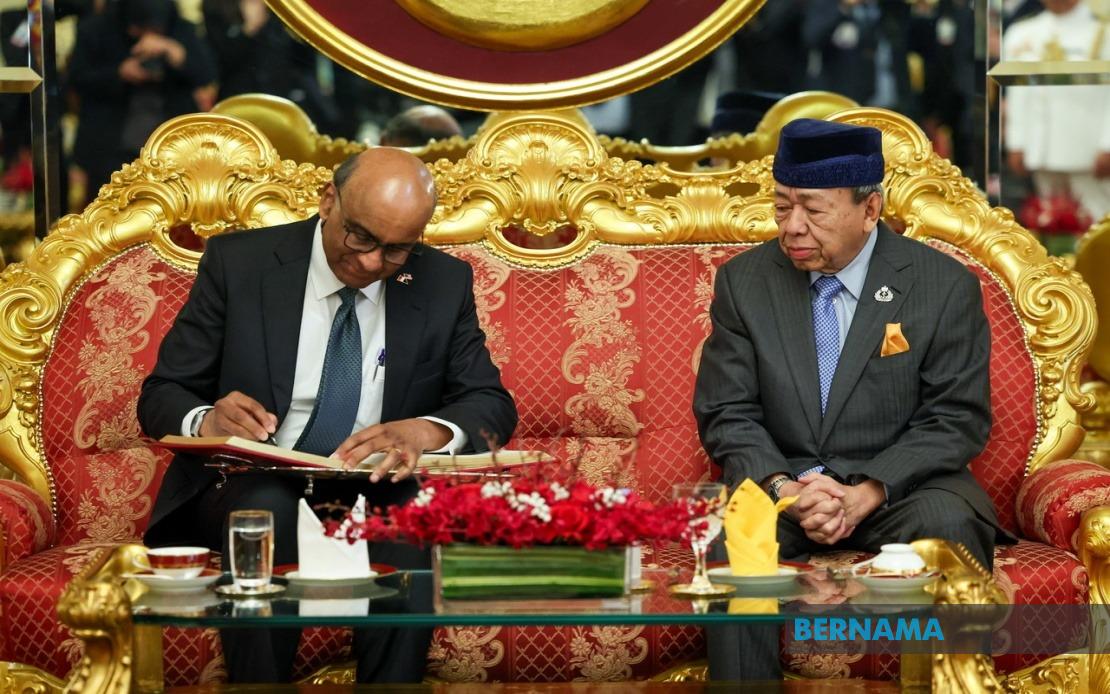
Sultan Sharafuddin Idris Shah of Selangor received Singapore President Tharman Shanmugaratnam at Istana Alam Shah on July 14 in a formal audience that highlighted the enduring diplomatic relationship between Malaysia and Singapore. The meeting, which formed part of Tharman's three-day state visit to Malaysia from July 13 to 15, commenced at 11 am when the Singapore president arrived at the royal palace in Klang. The engagement lasted approximately ninety minutes, concluding at 12.40 pm, reflecting the significance accorded to high-level bilateral discussions during such official visits.
The Raja Muda of Selangor, Tengku Amir Shah, received Tharman upon his arrival at the palace, a protocol that underscores the formal nature of the engagement. Entrepreneur Development and Cooperatives Minister Steven Sim was designated as minister-in-attendance, a role that facilitates coordination between the visiting delegation and Malaysian government representatives. The presence of these senior officials at the audience demonstrates Malaysia's commitment to treating the Singapore president's visit with appropriate ceremonial standing, reflecting both nations' recognition of their mutual strategic importance in Southeast Asia.
Tharman's visit represents a reciprocal gesture, as it follows His Majesty Sultan Ibrahim, King of Malaysia, conducting a state visit to Singapore on May 6 and 7, 2024. Such exchanges of official visits between heads of state are customary diplomatic practice that reinforce bilateral relationships and provide opportunities for substantive dialogue on matters of mutual concern. The Foreign Ministry's coordination of this visit underscores its diplomatic significance, as state visits typically address not only ceremonial obligations but also substantive policy discussions on trade, security, and regional cooperation.
The timing and structure of this engagement reflect the contemporary importance of Malaysia-Singapore relations within the broader ASEAN framework. Singapore stands as Malaysia's second-largest trading partner globally, a position that carries substantial economic implications for Malaysian businesses and investors. More significantly within the regional context, Singapore functions as Malaysia's primary trading partner among ASEAN member states, a distinction that shapes economic policy and trade negotiations across Southeast Asia. This bilateral trade relationship generates considerable commercial activity and employment opportunities on both sides of the Causeway, making the maintenance of strong political ties essential for economic stability.
The choice of Istana Alam Shah as the venue for the audience carries symbolic weight, as the royal palace serves as the official residence of Selangor's Sultan and represents the state's institutional authority. Holding high-level diplomatic functions at the palace rather than at federal government buildings emphasizes the constitutional role of Malaysia's constitutional monarchs in foreign relations and state protocol. This arrangement also demonstrates respect for Selangor's prominence as Malaysia's economic heartland and most densely populated state, recognizing that the state government plays a significant role in regional affairs affecting both Singapore and Malaysia.
The substantive topics likely addressed during the ninety-minute audience remain undisclosed, as is typical with formal diplomatic audiences. However, given the relationship between Malaysia and Singapore, discussions probably encompassed trade facilitation, transport connectivity through the Causeway and Second Link, maritime boundary matters, water supply agreements, and regional security cooperation. These perennial issues require ongoing dialogue at the highest levels to prevent misunderstandings and to identify new opportunities for cooperation that benefit both nations' citizens and economies.
For Malaysian readers and policymakers, Tharman's visit underscores Singapore's continued importance as a key economic and political partner despite occasional bilateral tensions. Singapore's role as a financial hub and major trading partner means that developments in Singapore's political leadership and foreign policy orientations directly influence Malaysian economic prospects. The state visit framework allows both governments to signal stability and continuity in their relationship to international investors and the broader business community, which relies on predictable bilateral relations for cross-border commercial operations.
The presence of Minister Steven Sim as minister-in-attendance also reflects the broader economic dimension of Malaysia-Singapore ties. His portfolio encompassing entrepreneurship development and cooperatives suggests that discussions may have touched upon opportunities for Malaysian small and medium enterprises to engage more effectively with Singapore's economy, as well as potential areas for cooperative business ventures. Such engagement at the ministerial level complements the ceremonial aspects of the state visit with practical discussions about trade facilitation and commercial opportunities.
From a regional perspective, this visit reaffirms the stability of one of ASEAN's most important bilateral relationships at a time when Southeast Asian integration initiatives require strong support from member states. Malaysia and Singapore, as founding members of ASEAN with sophisticated institutional frameworks and complementary economies, serve as anchors for regional stability. Their demonstrated commitment to maintaining high-level diplomatic engagement signals to other ASEAN members and external powers that the regional organization's core relationships remain robust and functional.
Looking forward, the successful conduct of this state visit and the substantive audience at Istana Alam Shah suggest that both governments remain committed to deepening bilateral cooperation across multiple sectors. The reciprocal nature of state visits between Sultan Ibrahim and President Tharman establishes a foundation for ongoing dialogue at the highest levels, which should facilitate resolution of any outstanding bilateral issues and identification of new collaborative opportunities. For Malaysian stakeholders in trade, investment, and regional affairs, the maintenance of strong Malaysia-Singapore relations remains fundamental to economic growth and regional prosperity.

