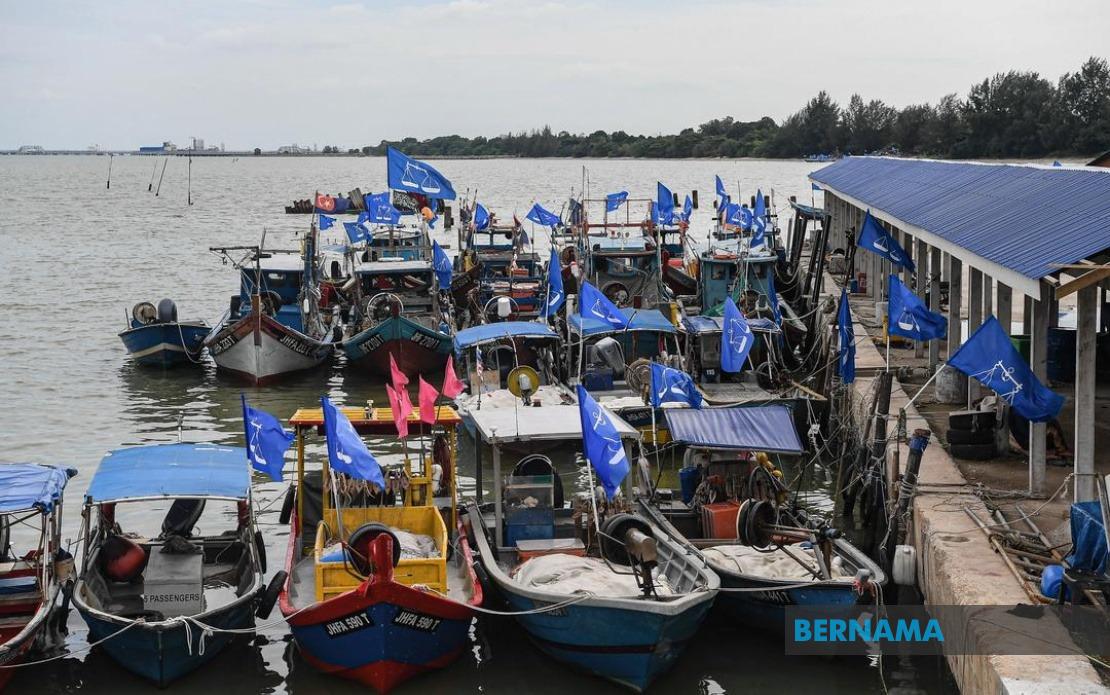
The coastal community of Sungai Rengit in Kota Tinggi faces a critical juncture as voters prepare to elect a new state assemblyman, with traders and fishermen hoping the incoming representative will finally resolve infrastructure challenges that have plagued the area for nearly a decade. Located in the Tanjung Surat state constituency, this strategic hub serves residents and workers associated with the Pengerang Integrated Petroleum Complex, yet the community struggles with deteriorating facilities and inadequate services that undermine business operations and livelihoods.
The food court traders at Medan Selera Sungai Rengit represent a microcosm of the broader developmental neglect affecting the area. Originally displaced from their location to accommodate a development initiative, traders were relocated to a temporary site with promises of relocation within approximately eighteen months—a timeframe that has now stretched far beyond expectations. The current temporary arrangement has become a de facto permanent installation, complete with basic canopy structures and plywood partitions rather than proper infrastructure befitting a commercial hub serving a major petrochemical facility workforce.
Beverage trader Lai Swee Hong, who has operated in the area for three decades, articulates the fundamental business problem confronting merchants at the site. The proposed relocation area, though officially available, suffers from severe practical limitations that make it unsuitable for viable commerce. Restrictive parking arrangements combined with a one-way road configuration create logistical barriers that deter both traders and customers, rendering the alternative location economically unviable despite being nominally designated as the permanent solution. For established operators like Lai, the temporary site represents not merely a transition point but the only location where their customer base remains consolidated and accessible.
The physical deterioration of stall infrastructure directly compromises trader viability and personal security. Structures lacking proper doors and walls create vulnerability to theft while simultaneously exposing merchandise and operators to weather exposure. This combination of inadequate protection and crime susceptibility has transformed what should be a functional commercial space into an environment where losses mount steadily and trader morale deteriorates, yet where profitability margins remain too slim to absorb such depredation.
Food trader Wini Fasiha Zawawi documents the escalating security crisis that has intensified since the previous year, with theft incidents occurring despite police patrols and formal reports to local authorities. The absence of substantive preventative measures or protective infrastructure has created a situation where even modest losses accumulate and erode the financial sustainability of small-scale food service operations. This security vacuum represents not merely an inconvenience but a systematic constraint on business viability for traders operating in this precarious temporary arrangement.
Beyond the trader community, Sungai Rengit's fishing population confronts equally pressing economic pressures that demand political attention and resource allocation. As fuel costs and operational expenses rise persistently, fishermen depend on government subsidies to maintain marginal profitability in an increasingly challenging maritime economy. Sin Hock Hwee, a lifelong fisherman with five decades of experience, emphasizes that current fuel assistance programs provide essential lifelines enabling fishing communities to continue operating without succumbing entirely to cost-of-living pressures. The sustainability of these support mechanisms remains uncertain and contingent on political will.
Younger fishermen in Kampung Sungai Rengit articulate a broader developmental vision alongside immediate economic concerns. Hidayat Isa represents a generation seeking not merely subsistence support but proactive infrastructure investment and policy responsiveness that acknowledges their specific needs and aspirations. The proposal to designate Kampung Sungai Rengit as an adopted village reflects aspirations for sustained political attention and comprehensive development planning that extends beyond crisis management to strategic community advancement. This generational perspective suggests that fishermen seek partnership-based governance rather than reactive assistance.
The Tanjung Surat state seat election presents voters with contrasting visions through competing candidates representing different political coalitions. Pakatan Harapan's Faizul Abdul Ghani faces incumbent Barisan Nasional member Aznan Tamin in what observers characterize as a closely contested matchup. This competitive dynamic creates unusual political opportunity for community members to articulate specific demands and hold candidates accountable to concrete commitments regarding infrastructure resolution, security improvements, and economic support continuity.
The infrastructure crisis in Sungai Rengit exemplifies broader governance challenges affecting resource-rich areas in Malaysia that attract industrial development yet receive inadequate corresponding investment in supporting community infrastructure. The Pengerang Integrated Petroleum Complex generates significant economic activity and employment, yet the surrounding commercial and residential areas appear to have received insufficient attention from development planning authorities. This disparity between industrial investment and community infrastructure represents a systemic governance issue extending beyond individual electoral contests.
The trader and fisherman testimonies collected during this electoral cycle offer incoming representatives explicit direction regarding constituent priorities and expectations. Rather than remaining distant from community concerns, these voices articulate concrete proposals: upgrade the temporary food court site with proper infrastructure and security measures, accelerate or abandon the relocation process with clarity, enhance jetty facilities, sustain and improve fuel subsidies, and establish governance mechanisms ensuring ongoing responsiveness to fishing community needs. These demands reflect neither unreasonable expectations nor ideological positions but practical requirements for economic sustainability.
Malaysian policymakers and regional observers should recognize that infrastructure deficiencies in established commercial zones reflect not merely local governance failures but represent broader inefficiencies in how development planning coordinates between industrial expansion and community support systems. Sungai Rengit's situation, while specific to Johor, resonates across Southeast Asian contexts where rapid industrial development often proceeds without corresponding attention to supporting community infrastructure. The upcoming electoral decision offers opportunity not merely for local change but potentially for establishing precedent regarding how elected representatives address such systematic gaps.
The resolution of Sungai Rengit's infrastructure challenges will serve as a litmus test for incoming political representatives' capacity to translate campaign rhetoric into concrete community benefit. Whether the elected assemblyman prioritizes trader stabilization, security enhancement, and fisherman support—or alternatively allows institutional inertia to perpetuate existing deficiencies—will establish patterns for constituent expectations and political accountability in the constituency. The community has articulated its requirements clearly; implementation capacity and political commitment now determine whether Sungai Rengit transcends its current status as an underserved commercial zone dependent on temporary accommodations.

