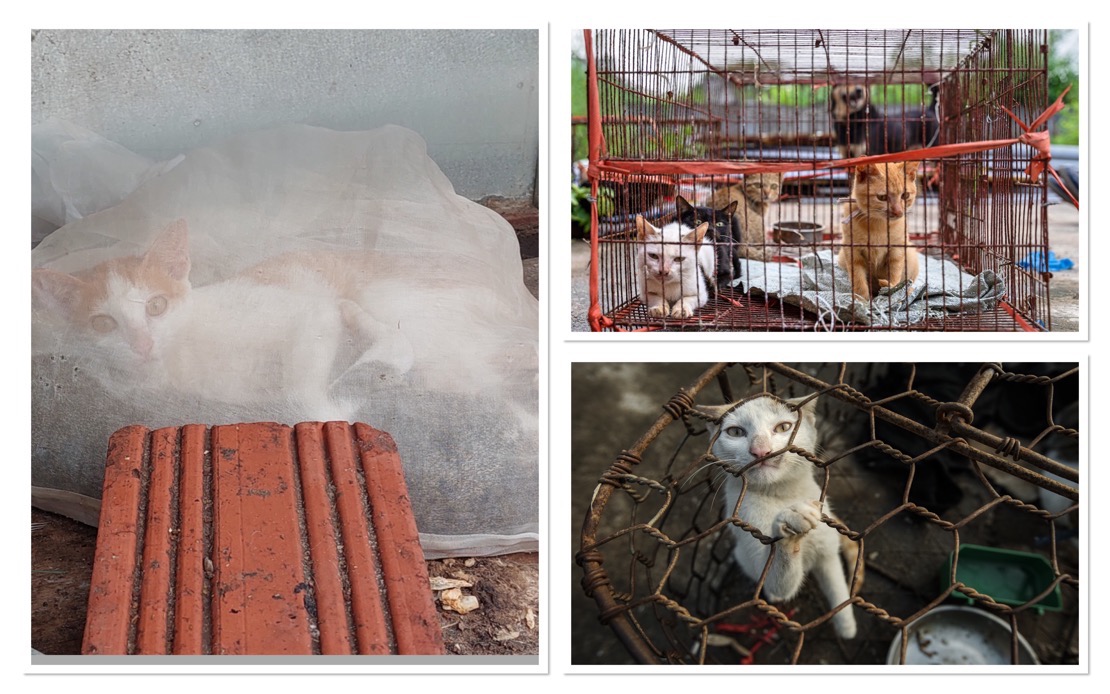
An underground trade in cat meat continues to flourish across parts of Indochina despite decades of activism and awareness campaigns, with animal welfare organisations estimating that approximately one million cats are killed each year in Vietnam alone. The brutal practice persists in remote areas of Cambodia and Laos as well, though on a smaller scale, driven primarily by deeply rooted cultural beliefs rather than dietary necessity. International animal welfare groups like FOUR PAWS have documented the systematic theft of cats from homes and streets, their trafficking across provincial borders, and their subsequent slaughter to meet demand sustained by centuries-old superstitions about fortune and health.
The cultural beliefs underpinning this trade are surprisingly specific and geographically nuanced. In Vietnam, many consumers believe that consuming cat meat during certain phases of the lunar calendar can reverse periods of bad luck or attract good fortune into their lives. Beyond these superstitious motivations, others purchase cat meat based on the conviction that it possesses genuine medicinal properties that can improve health or treat specific ailments. Jon Rosen Bennett, who leads dog and cat welfare advocacy at FOUR PAWS, emphasises that cat meat consumption functions primarily as a cultural and traditional practice rather than as a significant dietary staple across the region. These beliefs have been passed down through generations, creating a persistent demand that has proven remarkably resistant to modern intervention efforts.
The economics of the trade reveal the financial incentives perpetuating the practice. FOUR PAWS investigations conducted in 2020 documented that live cats were being purchased for approximately US$6 to US$8 per kilogramme, equivalent to RM25 to RM33. Once slaughtered, cat meat commanded prices between US$10 and US$12 per kilogramme, or roughly RM41 to RM49, representing a significant markup that attracts traders and distributors. Black cats command premium prices due to their association with special luck-bringing or enhanced medicinal properties, creating an additional financial incentive for traffickers to specifically target these animals. This pricing structure demonstrates how superstition translates directly into market value and criminal activity.
Recent enforcement actions have begun exposing the scale and systematic nature of the underground trade. Police in Ho Chi Minh City dismantled a trafficking gang last week that had orchestrated inter-provincial smuggling operations, rescuing approximately 500 cats in a single raid. Nine gang members were detained for their involvement in what authorities determined was a three-year operation involving the systematic theft and sale of cats. The rescue represents one of the more visible interventions against the trade, though law enforcement officials acknowledge that such operations represent only a fraction of the total criminal activity occurring throughout the region.
A striking disconnect exists between public consumption of cat meat and broader social attitudes toward the practice. Bennett reports that approximately 90 percent of Vietnamese people indicated they would support a comprehensive ban on both dog and cat meat trade in survey responses. Even more significantly, more than 90 percent of respondents stated that they do not consider such consumption to represent an authentic or legitimate part of Vietnamese culture. This overwhelming public opposition suggests that the trade persists not because it reflects genuine societal values, but rather because of entrenched criminal networks, weak enforcement mechanisms, and the persistence of belief systems among specific consumer segments that remain insulated from broader cultural shifts.
The absence of legal frameworks addressing the trade creates a regulatory vacuum that enables traffickers to operate with relative impunity. Vietnam currently maintains no nationwide ban on the slaughter, sale, or consumption of cat meat, meaning that enforcement efforts must rely on animal cruelty laws or theft provisions rather than species-specific protections. This legal gap stands in contrast to public sentiment and allows traders to exploit ambiguities in the legal landscape. Cambodia has taken some steps toward addressing the issue, with FOUR PAWS launching an online public reporting platform in early June as part of a broader awareness campaign, but coordinated regional legal frameworks remain absent.
Beyond the profound animal welfare concerns surrounding the trade, public health officials increasingly recognise the practice as a significant epidemiological risk. The mass movement of undocumented cats across provincial and international borders creates conditions favouring the transmission of zoonotic diseases, particularly rabies, which poses direct threats to human populations throughout the region. The unsanitary conditions under which cats are typically slaughtered and butchered, combined with the informal nature of the supply chain, mean that meat safety standards are not observed. These health risks extend beyond individual consumers to affect broader communities through potential disease spillover events.
The cat meat trade represents only one component of a much larger regional problem involving multiple species. Animal welfare advocates estimate that more than 10 million dogs are slaughtered for their meat annually across Southeast Asia, suggesting that the feline trade comprises part of a systematic commodification of companion animals. However, public sentiment against dog meat consumption is also strengthening throughout the region, even though the issue remains deeply sensitive in certain societies where such consumption has historical roots. The growing opposition to both cat and dog meat trades reflects broader shifts in attitudes toward animal welfare and companion animal protection across Southeast Asia.
The persistence of the cat meat trade despite widespread public opposition and international pressure underscores the complexity of addressing culturally entrenched practices through external advocacy alone. While campaigns by governments and international organisations have generated increased awareness and public opposition, the structural factors enabling the trade—including weak enforcement, profitability for criminal networks, and the durability of superstitious beliefs among specific demographics—continue to sustain demand. Malaysian readers and policymakers should recognise that this regional issue has implications beyond borders, as cross-border trafficking networks operate throughout Southeast Asia and public health risks from inadequately regulated animal trades affect the entire region. The expansion of legal protections for companion animals, improved enforcement mechanisms, and targeted cultural engagement with communities where these beliefs remain strongest represent necessary components of any effective regional response.

