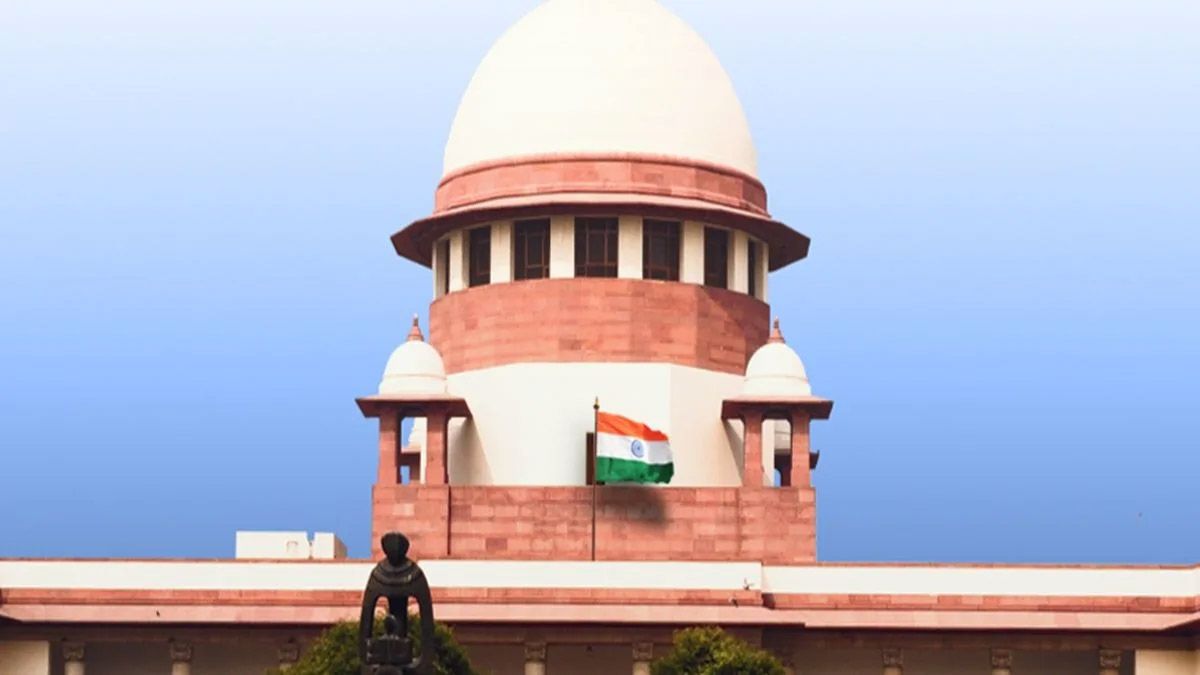
The Supreme Court of India has intervened to halt enforcement of a sweeping cow-slaughter prohibition imposed by the Madras High Court, delivering a significant setback to animal rights advocates while vindicating the Tamil Nadu government's position that the lower court had overstepped its authority. A bench comprising Justices Vikram Nath and Sandeep Mehta granted an interim stay on the Madras High Court's May 27 judgment during Monday's hearing of the state government's appeal, effectively freezing the blanket ban that had prohibited the slaughter of any bovine animal across the state, regardless of circumstance or location.
The legal dispute reveals a fundamental conflict over judicial scope and the proper interpretation of India's animal protection framework. The Tamil Nadu government had petitioned the Supreme Court arguing that the Madras High Court had dramatically expanded the original case beyond its stated parameters. The original public interest litigation had sought to prevent cow slaughter in public spaces and ensure operations occurred solely within authorised facilities, a measured regulatory approach grounded in existing legislation. Instead, the High Court had issued an absolute prohibition encompassing all locations, including designated slaughterhouses, effectively negating statutory provisions that permit livestock slaughter under prescribed conditions.
Justice Vikram Nath signalled during the proceedings that the impugned order required substantial correction, suggesting the Supreme Court found merit in the state's jurisdictional concerns. The bench issued notice on the Tamil Nadu government's Special Leave Petition, indicating it would examine the matter thoroughly before rendering a final judgment. This procedural step freezes the High Court's directives pending completion of the appellate process, preventing immediate enforcement of the prohibition while allowing both parties to present comprehensive arguments.
The state's legal strategy rests on demonstrating that established legislation provides a regulatory rather than prohibitionist framework for livestock management. Tamil Nadu invoked the Tamil Nadu Animal Preservation Act of 1958, which prescribes specific conditions permitting cattle slaughter rather than imposing blanket restrictions. The government supplemented these arguments by referencing the Prevention of Cruelty to Animals Act of 1960, the Prevention of Cruelty to Animals (Slaughter House) Rules of 2001, the Tamil Nadu Urban Local Bodies Act of 1998, and contemporary food safety regulations. Collectively, these legal instruments establish a comprehensive regulatory regime acknowledging that slaughter may occur under stringent oversight in designated facilities, contradicting the High Court's interpretation.
The original public interest litigation had been filed by K Surya Prasanth, General Secretary of Hindu Makkal Katchi, who alleged that temporary structures had been erected in Coimbatore specifically to facilitate cow slaughter during Bakrid, the Islamic festival of sacrifice. This allegation triggered the High Court's expansive response, which relied heavily on Article 48 of the Constitution of India, a directive principle exhorting states to take steps toward prohibiting slaughter of cattle suitable for agricultural work. The High Court also invoked a 1976 Government Order that had banned cow and heifer slaughter in state slaughterhouses, treating this administrative decision as possessing statutory force.
The Madras High Court's reasoning extended beyond mere constitutional principles to mandate strict compliance at state bureaucratic levels. The judgment directed the Chief Secretary and Additional Director General of Police in charge of law and order to issue enforcement directives, effectively conscripting administrative machinery to police the absolute prohibition. Notably, the High Court specified that slaughter could occur only in designated facilities yet simultaneously prohibited it everywhere, a logical inconsistency that likely contributed to the Supreme Court's concern about the order requiring correction.
For Malaysian observers, this case illustrates broader tensions across South Asia regarding the intersection of religious practice, food security, animal welfare, and constitutional federalism. India's system reserves significant regulatory authority to states concerning agricultural practices and animal husbandry, yet constitutional directive principles create pressure for uniform prohibition. Tamil Nadu faces particular complexity given its Hindu majority but substantial Muslim population for whom Bakrid observance carries profound religious and cultural significance. The state government's position reflects pragmatic recognition that regulation can accommodate both welfare concerns and community practices, whereas absolutism risks marginalising minority observances.
The case also demonstrates how public interest litigation, while enabling citizens to raise systemic concerns, can generate unintended expansions of judicial authority. The original petitioner sought accountability for specific alleged violations—temporary slaughter structures in Coimbatore—yet the High Court transformed narrow remedial relief into comprehensive prohibition affecting statewide operations including licensed facilities. This phenomenon concerns legal scholars who worry that courts, absent institutional expertise in agricultural and food systems management, may substitute judicial decree for legislative calibration of competing interests.
For Southeast Asian jurisdictions considering animal protection frameworks, the Tamil Nadu episode underscores the importance of statutory clarity. Existing legislation provided avenues for addressing the petitioner's concerns regarding unlicensed slaughter in public spaces, yet ambiguous enforcement apparently prompted litigation seeking broader judicial intervention. Strengthening administrative implementation of existing regulations often proves more effective than expanding judicial prohibitions, avoiding the constitutional conflicts that triggered Supreme Court intervention here.
The interim stay preserves the status quo ante, permitting licensed slaughter operations to continue under existing regulatory frameworks while the Supreme Court examines jurisdictional boundaries. The bench will ultimately determine whether the High Court properly interpreted Article 48 as mandating absolute prohibition or whether constitutional protection can accommodate regulated slaughter consistent with animal welfare principles and legislative intent. This resolution will influence how Indian courts across multiple states approach animal protection petitions, particularly those touching religious and cultural practices of minority communities.
Beyond the immediate parties, the decision carries implications for India's broader trajectory on animal welfare policy. A Supreme Court affirmation of the state government's regulatory approach would validate legislative schemes permitting conditioned slaughter, reinforcing federalism principles and statutory deference. Conversely, endorsement of the High Court's absolutism would signal that constitutional directives override existing parliamentary and state enactments, potentially triggering cascading litigation challenging licensed operations nationwide. The Ultimate outcome remains pending, but the interim stay already provides breathing room for the state government and reassurance to stakeholders dependent on regulated livestock processing within established legal parameters.

