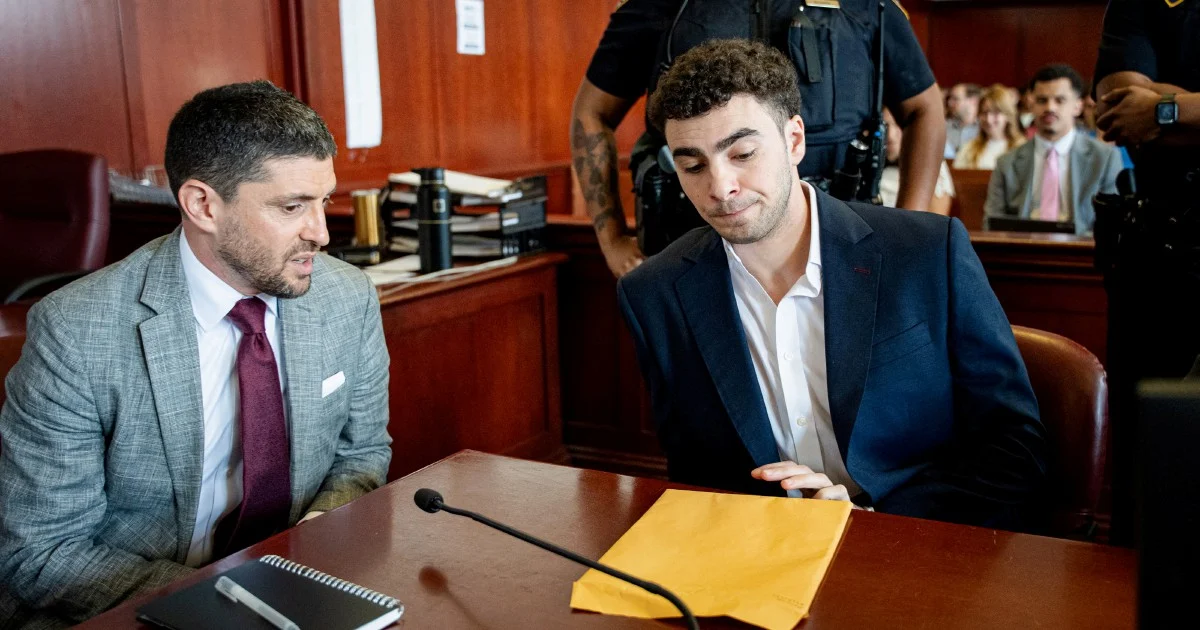
Luigi Mangione, the man facing charges in the fatal shooting of a prominent health insurance executive on a Manhattan street, has decided to set aside his defence strategy centred on establishing that he was enduring a critical mental health episode at the time of the alleged incident. The decision, disclosed through a court document filed on Friday, represents a significant tactical shift in how his legal team intends to approach the case at trial.
The withdrawal of the mental health defence comes as legal proceedings in the high-profile case continue to unfold in New York courts. Mangione stands accused of gunning down the executive in broad daylight on a city street, an event that triggered widespread media coverage and public debate about healthcare, corporate accountability, and gun violence in America. The precise reasons behind the strategic repositioning remain unclear, though defence teams routinely reassess their approaches based on evolving circumstances, available evidence, and legal considerations.
For Malaysian and Southeast Asian observers, this case underscores the volatile intersection of healthcare systems and public safety that resonates across the region. The victim's prominence in the health insurance industry drew international attention to long-standing criticisms about access to medical care and insurance denial practices in the United States—issues that parallel healthcare accessibility concerns in several Southeast Asian nations. The case has reignited global conversations about the tension between corporate profit motives and patient welfare, topics that extend well beyond American borders.
Mental health defences in criminal proceedings represent complex legal terrain. When a defendant initially signals plans to argue diminished capacity or insanity, they typically must satisfy stringent evidentiary thresholds demonstrating a genuine psychiatric condition that impaired their ability to form intent or understand their actions. The decision to abandon such a strategy suggests Mangione's legal counsel may have concluded that psychiatric evidence would prove insufficient to meet these demanding standards, or that pursuing this angle could prove counterproductive in shaping jury perception.
The case has generated intense scrutiny regarding the circumstances surrounding the shooting and the investigation that followed. Law enforcement authorities worked methodically to apprehend the suspect, eventually taking Mangione into custody. Throughout the investigative phase and into the early stages of criminal proceedings, questions have persisted about motive, premeditation, and the defendant's mental state leading up to and during the alleged incident.
Strategic defence decisions at this stage of prosecution often reflect careful calculations about trial prospects. Withdrawing a mental health defence does not necessarily mean Mangione's team has abandoned all psychological considerations—rather, they may be repositioning to focus on alternative legal arguments or procedural challenges. Defence attorneys routinely evaluate which aspects of a case possess the strongest evidentiary foundation and the greatest persuasive potential before a jury.
The shooting occurred against a backdrop of broader American discourse surrounding healthcare system failures, insurance industry practices, and their human consequences. Media coverage immediately contextualised the incident within debates about frustration with medical bureaucracy, a framework that captured public imagination globally. This social environment potentially influences how legal proceedings are perceived and interpreted by observers beyond the courtroom.
For context in understanding this case's significance: the defendant's background, the victim's corporate position, and the brazen public nature of the alleged crime combined to create an unusually polarised public reaction. Some segments characterised the shooting as an act of desperation born from systemic healthcare failures, while others emphasised the gravity of the alleged criminal act and the necessity of accountability under law. This polarisation may influence how courts manage the case and how juries ultimately perceive the evidence presented.
The legal proceedings will likely continue to evolve as both prosecution and defence prepare for trial. Discovery processes, pretrial motions, and potential plea negotiations remain possible outcomes before a trial commences. The decision to withdraw mental health defence plans represents merely one tactical adjustment in what will probably prove a complex and closely watched prosecution.
Observers in Southeast Asia may find this case particularly instructive because it highlights tensions between legitimate grievances against institutional systems and the rule of law's imperative to address alleged criminal violence through established judicial processes. The case demonstrates how personal crises, systemic failures, and individual agency intersect in ways that challenge simple categorisation or judgment.
As the legal process advances, the decision to abandon this particular defence strategy will likely influence subsequent developments in the case. Whether Mangione's team pursues alternative defences, negotiates with prosecutors, or proceeds toward trial with a modified approach remains to be determined. The implications of these choices will extend well beyond the courtroom, shaping how Americans and international observers understand both the healthcare system's human costs and the criminal justice system's response to extraordinary circumstances.

