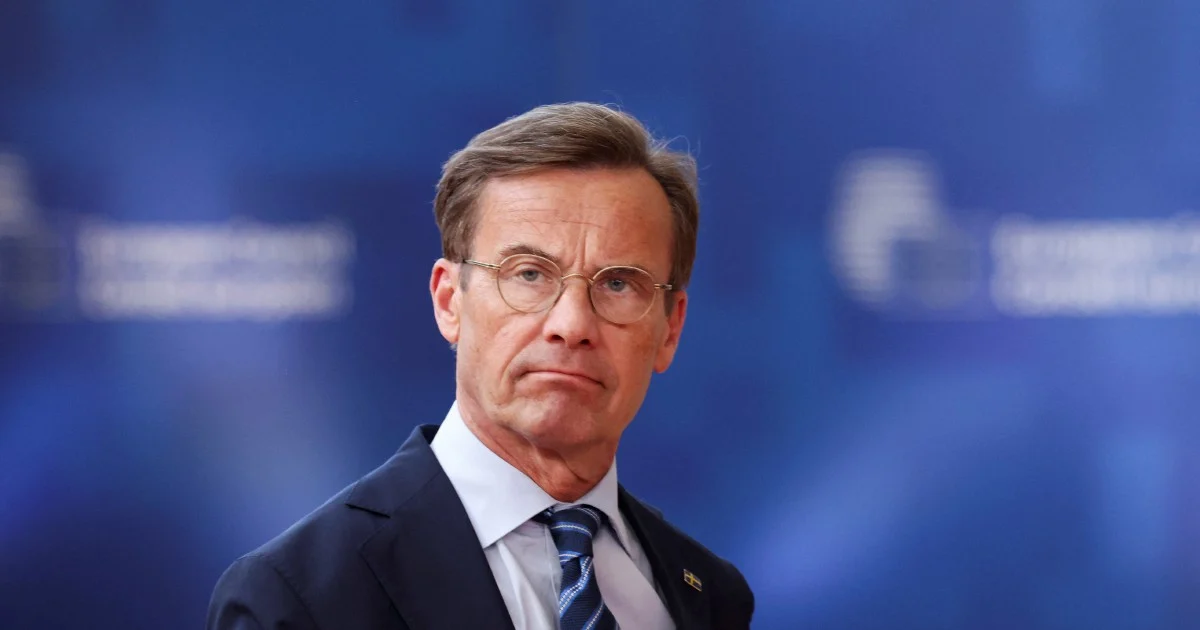
Swedish Prime Minister Ulf Kristersson faces a mounting pile of controversies that have become a defining feature of his administration, yet each episode has failed to derail his political trajectory. As the nation heads towards legislative elections in approximately three months, a fresh set of corruption allegations has surfaced, adding another layer to a pattern of difficulties that has characterised his tenure since taking office four years ago. His apparent ability to weather successive scandals with minimal lasting damage raises questions about political accountability and public tolerance in Swedish politics during an era of polarisation.
Kristersson's governing period has been marked by a succession of disputes and allegations spanning ethics, financial conduct, and administrative practices. Despite the persistence of these controversies, they have not translated into substantial penalties or forced departures from key associates. This resilience—or what some observers might characterise as an uncanny ability to deflect criticism—stands in contrast to the typical consequences faced by scandals of similar magnitude in other European democracies. The Swedish political establishment and electorate have shown surprising forbearance, allowing his centre-right coalition government to continue functioning without the existential threats that might emerge elsewhere.
The timing of these latest allegations carries particular significance for Swedish political dynamics. With elections looming within a quarter year, the renewal of accusations creates potential turbulence when campaigning intensifies and public scrutiny typically sharpens. Previous scandals have emerged at various points during his administration, yet none has proved sufficiently damaging to force early dissolution or trigger broader institutional crises. Understanding why these controversies have failed to accumulate into a genuinely destabilising force requires consideration of Sweden's particular political culture, institutional design, and the fragmented nature of parliamentary opposition.
Swedish media has maintained sustained coverage of the various controversies surrounding Kristersson and his government. Yet media attention alone does not guarantee political consequences, particularly in environments where the coalition government maintains sufficient parliamentary support to weather individual scandals. The opposition parties, whilst critical, have struggled to translate these allegations into coherent narratives that resonate broadly with voters or force governmental collapse. This structural reality reflects the peculiarities of Swedish coalition politics, where minority governments can persist through tolerance arrangements and where governmental stability often takes precedence over demands for accountability arising from individual scandals.
The substance of the specific allegations now facing the Prime Minister remains unclear from available reporting, but their emergence exemplifies a broader pattern. Whether addressing concerns about decision-making processes, financial impropriety, or ethical lapses, Kristersson's administration has demonstrated consistent capacity to contain political damage. This outcome might reflect several intersecting factors: the technical nature of some allegations making them difficult for public comprehension; strategic communication by the government effectively reframing narratives; or genuine public exhaustion with scandal fatigue that reduces the electoral salience of fresh revelations.
For Southeast Asian observers and policymakers, the Swedish experience offers instructive lessons about scandal resilience in mature democracies. Malaysia, as a nation with its own complex history of political accountability and contested narratives around governance, presents an instructive comparison. Where Malaysian politics has frequently witnessed scandals trigger immediate demands for resignation or even bring down governments, Sweden's experience demonstrates that institutional stability and parliamentary arithmetic can create vastly different thresholds for political consequences. The contrast highlights how scandal impacts depend not merely on factual substance but on political configuration, institutional design, and public response patterns shaped by historical experience.
Kristersson's four-year period in office has coincided with significant challenges for Sweden, including economic pressures, immigration debates, and foreign policy adjustment following NATO expansion. The government has pursued substantive policy agendas despite the swirling controversies, suggesting that scandal management has not entirely consumed administrative capacity. This compartmentalisation—the ability to advance governmental business despite concurrent accountability questions—represents another distinctive feature of his tenure. Whether this approach serves governance well or merely defers necessary reckoning with ethical questions remains contested among Swedish observers and international analysts.
The approaching election will serve as a test of whether accumulated scandals finally register meaningfully with voters, or whether other considerations—economic management, immigration policy, or foreign affairs responses—dominate electoral calculations. Previous scandals have not prevented Kristersson from maintaining substantial political support, with opinion polling continuing to show his centre-right coalition possessing competitive electoral prospects despite the accumulating controversies. This resilience suggests either that these matters genuinely rank lower in voter priority hierarchies than other policy domains, or that Swedish voters distinguish between personal or administrative matters affecting individual politicians versus broader governmental competence assessments.
The international dimension also warrants consideration. Sweden's enhanced security posture following NATO accession and its role in supporting Ukraine represent major foreign policy pivots that have occupied political bandwidth during the scandal-ridden period. International standing and security concerns may have created constituencies inclined toward governmental continuity, providing implicit protection for Kristersson against domestic pressure for change. Countries facing significant external security challenges sometimes demonstrate greater tolerance for domestic political complications, prioritising stability in defence and foreign policy above accountability demands.
As campaigns intensify before the election, these latest corruption allegations will inevitably feature in opposition messaging and media scrutiny. Yet the historical pattern suggests that absent a dramatic escalation in severity or direct personal involvement of the Prime Minister in criminal activity, these disputes are unlikely to prove transformative politically. The Swedish experience illustrates how institutional arrangements, political fragmentation, and public priorities can insulate leaders from consequences that might prove fatal elsewhere, raising enduring questions about accountability, governance legitimacy, and the conditions under which scandals genuinely alter political outcomes.

