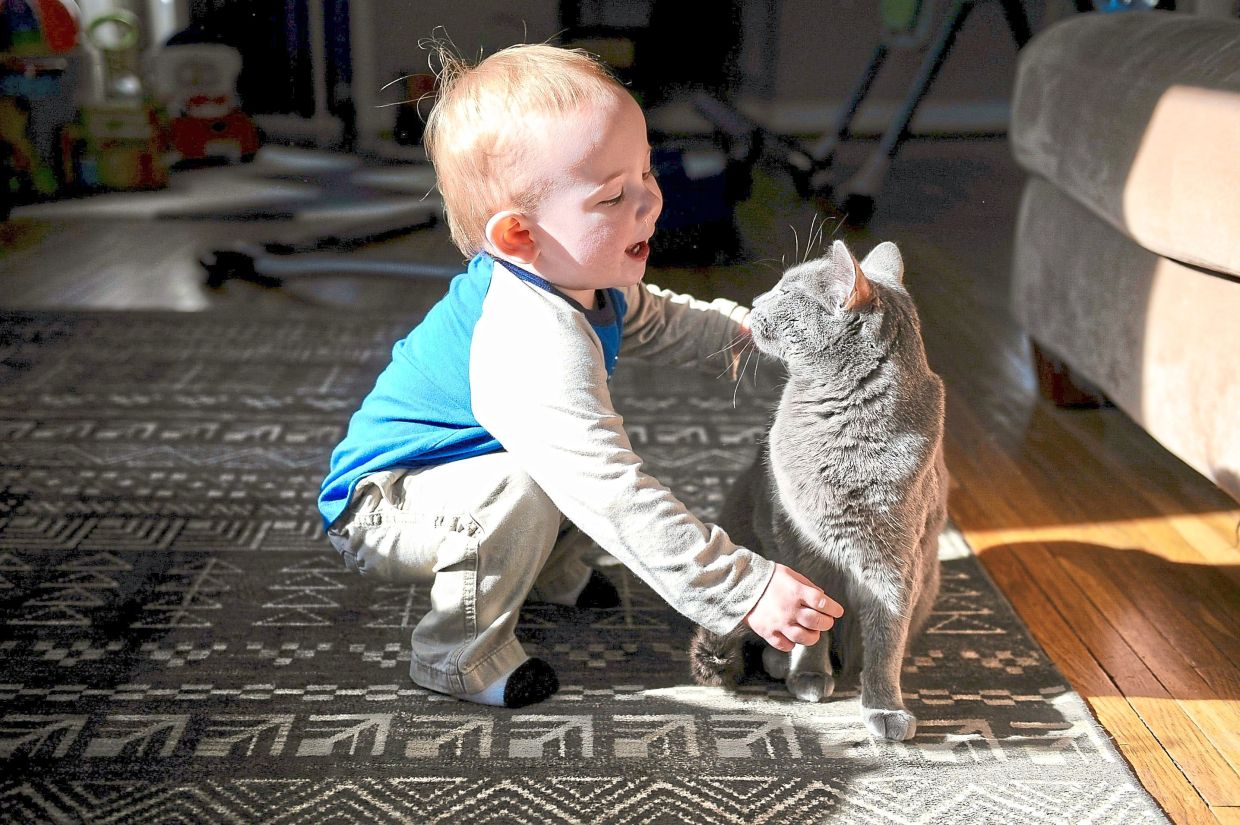
For decades, parents of children with asthma have been advised to avoid cats, widely assumed to be a significant trigger for attacks and symptom flare-ups. Yet a large-scale Swedish study has now cast doubt on this conventional wisdom, revealing that children living with cats experience asthma outcomes no worse than those without feline companionship. The research, drawing on data from nearly 30,000 Swedish children tracked over 24 months, represents one of the most comprehensive investigations into whether household cats genuinely pose a respiratory risk to young asthma sufferers.
Asthma ranks among childhood's most burdensome chronic conditions, hospitalising countless children annually across developed nations. The Global Asthma Network estimates that the disease affects 9.1 per cent of children globally, with prevalence climbing to 11 per cent among adolescents, though rates fluctuate considerably depending on geography and living conditions. Within Malaysia and neighbouring Southeast Asian countries, where tropical climates and urban pollution compound respiratory challenges, asthma management remains a critical public health concern. Understanding which environmental factors genuinely worsen the disease—and which represent persistent myths—carries direct relevance for families seeking to balance medical guidance with daily life decisions.
Traditionally, medical professionals have identified several established asthma triggers: air pollution exposure, parental smoking, childhood respiratory infections, childhood obesity, and pre-existing allergic conditions such as eczema or hay fever. Animal dander, particularly from cats, has long occupied a prominent position on lists of household allergens to avoid. Many asthma patients describe personal experiences where proximity to cats precipitated breathing difficulties, reinforcing clinical suspicion that feline exposure constitutes a genuine hazard. Yet when researchers have systematically examined this relationship through clinical studies and epidemiological surveys, the evidence has remained surprisingly contradictory, typically emerging from small investigations that may not accurately represent broader child populations.
The Swedish investigation began in 2023 when Dr Resthie R Putri and colleagues at Karolinska Institutet in Stockholm assembled a nationwide cohort of 30,277 children aged four to 17 years at enrolment, all diagnosed with either asthma or airway allergies and born between 2006 and 2020. Researchers followed these youngsters through 24 months until 2024, compiling asthma outcome data from multiple linked national registries including the Swedish National Patient Register, the Prescribed Drug Register, and the National Airway Register. This comprehensive administrative approach permitted detailed tracking of diagnoses, emergency department visits, medication prescriptions, asthma control test results, and spirometry lung function measurements—far more extensive than typical clinical studies.
A unique advantage of Swedish healthcare infrastructure enabled this research design: mandatory registration of all pet cats born after 2008 in the National Cat Register commenced in 2023, providing researchers an objective method to identify households with cats rather than relying on parental recall or questionnaire responses. Among the cohort, 9.4 per cent of families reported having at least one cat during the study period. The researchers compared asthma severity, exacerbation frequency, disease control, and measured lung function between cat-exposed and non-exposed children, anticipating they might document worsening outcomes in the feline-cohabiting group.
No such differences emerged. Moderate-to-severe asthma, assessed through prescribed medication patterns, occurred in 9.6 per cent of children living with cats compared to 10.1 per cent without cats—a negligible distinction. Asthma exacerbations or attacks happened at nearly identical rates: 3.3 per cent in cat-exposed children versus 3.5 per cent in the comparison group. Among 1,428 children with available lung function testing data, 97 lived with cats, yet both groups demonstrated comparable spirometry measurements and asthma control indicators. These findings directly contradict the assumption that household cats measurably harm respiratory outcomes in asthmatic children.
Dr Putri proposed a plausible explanation for this counterintuitive result: cat allergen exposure may be so pervasive in modern society that most children encounter feline dander regardless of home circumstances. Children without cats at home might still experience significant exposure through schools, public transportation systems, friends' homes, and other shared environments. If ubiquitous background exposure exists, introducing an additional cat into a household may produce no incremental worsening because the child's immune system already responds to ambient allergen levels. This phenomenon parallels research in other domains showing that once exposure thresholds are exceeded, incremental increases produce diminishing health effects.
The scale and rigour of this Swedish study represents a substantial advance over previous investigations, yet methodological limitations warrant acknowledgment. The research lacked individual data on which specific allergens each child's immune system actually recognised—researchers could not determine whether cat-sensitive children were disproportionately represented in either group. Additionally, because the National Cat Register only became mandatory recently, some families owning cats may have escaped registration, potentially misclassifying genuinely cat-exposed children as unexposed. Such misclassification would bias results toward finding no differences between groups, possibly obscuring real effects in truly sensitised subpopulations.
For Malaysian families grappling with childhood asthma decisions, these findings offer reassurance that categorical cat avoidance may not be medically justified. Southeast Asian paediatricians and respiratory specialists increasingly recognise that asthma management should target verified individual triggers rather than applying population-level assumptions to every child. If a particular child demonstrates clinical sensitivity to cats—documented through skin testing or allergen challenge—avoidance remains prudent. However, blanket recommendations that all asthmatic children must live cat-free lack robust supporting evidence and unnecessarily restrict family choices regarding pet ownership.
The broader significance extends beyond feline companionship. This study exemplifies how large-scale population registries and linked health administrative data enable rigorous investigation of questions that smaller clinical studies cannot adequately address. Malaysian policymakers and health authorities might consider whether developing comparable linkable registries—for example, connecting asthma registries with household data—could facilitate similar evidence-building exercises. As asthma prevalence rises throughout Southeast Asia, distinguishing genuine environmental threats from medical folklore becomes increasingly important for guiding families and clinicians toward genuinely protective strategies.
Moving forward, researchers might investigate whether specific cat characteristics—breed, allergen production levels, or grooming practices—could identify subgroups where ownership presents greater risk. Mechanistic studies examining immune responses in cat-sensitised versus non-sensitised asthmatic children might clarify why household cat exposure fails to worsen outcomes despite documented allergen presence. Such investigations could eventually permit personalised guidance distinguishing children who should truly avoid cats from those for whom the animal's presence carries no meaningful health consequence.

