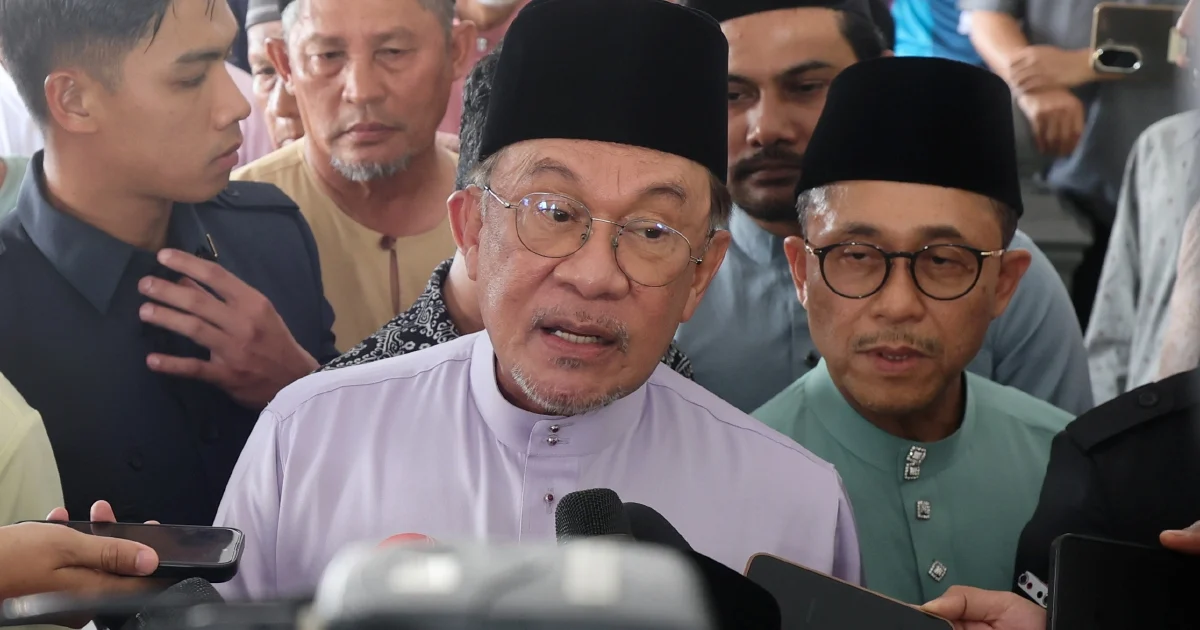
Prime Minister Datuk Seri Anwar Ibrahim has moved to reassure non-Muslim communities that the government's agenda to fortify the Syariah court system will not erode their fundamental right to practise their religions without hindrance. Speaking in Putrajaya, the Prime Minister sought to allay concerns that may have emerged among Malaysia's Christian, Buddhist, Hindu, and other religious minorities regarding potential implications of judicial reforms affecting Islamic law institutions.
The assurance comes at a time when Malaysia's constitutional architecture remains a subject of careful scrutiny, particularly regarding the balance between the position of Islam as the federation's religion and the guarantees extended to other faiths. Anwar's statement represents an attempt to position the government's modernisation efforts within the established constitutional framework that has governed religious coexistence in Malaysia since independence, underscoring that institutional strengthening and minority protections operate within separate legal domains.
Malaysia's unique federal system grants substantial autonomy to individual states in managing Syariah court affairs, a complexity that compounds questions about how reforms in one jurisdiction might cascade across others. The Syariah courts themselves exercise jurisdiction exclusively over Muslims in matters encompassing family law, inheritance, and religious offences. By their constitutional design, these courts have no bearing on the civil rights of non-Muslim citizens, who fall entirely under the purview of civil courts for all legal matters.
Anwar's statement reflects ongoing political sensitivity around religious matters in Malaysia, where coalition-building frequently requires navigation of competing interests and concerns. The Prime Minister's remarks appear calculated to maintain the delicate consensus that has characterised Malaysia's plural society, emphasising that institutional competence and jurisdictional clarity do not translate into expanded scope. This distinction between strengthening an institution within its existing mandate and expanding that mandate has been central to Malaysia's approach to managing religious pluralism.
For non-Muslim communities, whose representation spans multiple political coalitions, the clarification offers some reassurance regarding their constitutional position. However, the need for such assurances itself signals underlying apprehension that religious institutional developments warrant close observation. Malaysian political discourse frequently involves competing visions of the nation's religious character, and statements from the Prime Minister on this subject carry weight precisely because misunderstanding could fuel further tension.
The broader context involves Malaysia's ongoing juridical evolution. While the Syariah court system has existed since the country's founding, discussions about its modernisation, efficiency, and authority periodically gain traction among policymakers and legal scholars. Proponents argue that improved administration and clearer procedures within these courts serve the interests of Muslim litigants by reducing delays and enhancing consistency, arguments that centre on competence rather than expansion of scope.
Regional developments inform these discussions as well. Across Southeast Asia, countries with significant Muslim populations continue debating the relationship between Islamic law and broader legal frameworks. Malaysia's experience offers lessons about institutional design when constitutional guarantees encompass both a state religion and explicit protection for minority faiths. These competing constitutional values require careful calibration, and any perception of imbalance—in either direction—can generate political reverberations.
For Malaysian businesses and civil society, clarity around religious institutions matters because legal certainty undergirds economic activity and social trust. Non-Muslim investors and entrepreneurs require assurance that contracts, property rights, and other civil matters remain firmly within secular jurisdiction. Anwar's statement aims to provide such assurance, though the repeated need for clarification suggests ongoing uncertainty that officials must actively manage.
The government's emphasis on Syariah court strengthening also reflects practical concerns within Malaysia's Muslim majority population. Improvements in expediting cases, maintaining consistency in rulings, and enhancing institutional capacity appeal across political lines and represent administratively sensible objectives. Separating these technical improvements from questions about institutional scope represents a key challenge that Anwar appears keen to highlight.
Moving forward, how the government implements these reforms while maintaining transparent communication with all communities will shape public confidence. The statement from the Prime Minister indicates awareness that religious matters require proactive leadership and clear messaging, particularly when institutional changes are under discussion. Malaysia's continuing success in maintaining religious harmony depends partly on officials articulating the constitutional boundaries that define each community's rights and responsibilities with clarity and consistency.
Non-Muslim leaders and organisations have historically engaged constructively with the government on matters affecting their communities, and this dynamic will likely continue. The test lies in whether institutional reforms proceed with appropriate consultation and whether safeguards for minority religious freedoms receive equal emphasis with initiatives affecting Muslim citizens. Anwar's reassurance represents a starting point for this ongoing dialogue rather than a final resolution of questions that periodically surface in Malaysian public discourse.

