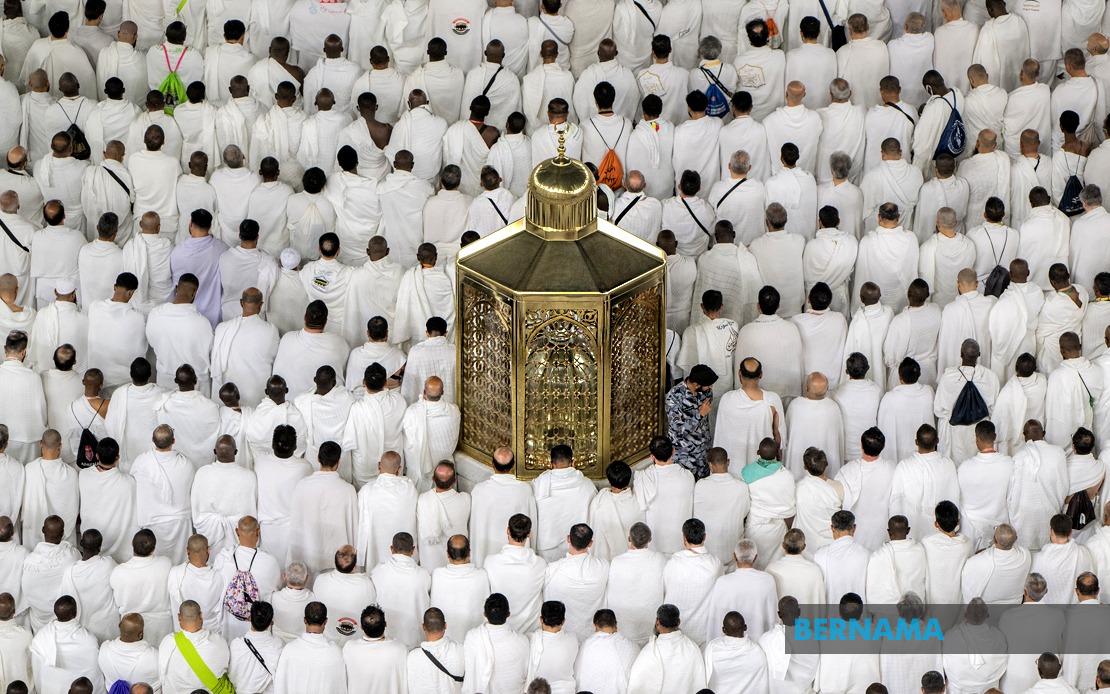
Malaysia's Tabung Haji will maintain its "first-registered, first-served" allocation system for Haj pilgrimages, rejecting suggestions to introduce expedited categories for certain groups of depositors. The decision, announced by Deputy Minister in the Prime Minister's Department (Religious Affairs) Marhamah Rosli during parliamentary proceedings, underscores the institution's commitment to preserving equity in a system where hundreds of thousands of Malaysians await their turn to perform the Islamic pilgrimage.
The parliamentary exchange centred on a proposal from Kuala Krai MP Abdul Latiff Abdul Rahman, who had questioned whether recently retired civil servants receiving substantial gratuity payments might be granted accelerated access to Haj opportunities. His argument held that such individuals possess the financial resources to fund their pilgrimage but face lengthy waiting periods due to Tabung Haji's current sequential allocation framework. The suggestion touched on a recurring tension in Malaysia's pilgrimage management: balancing ability to pay against the principles of universal fairness that underpin the institution's operations.
Marhamah's response emphasised that introducing preferential Haj categories would fundamentally compromise the integrity of the waiting queue system. Rather than creating exception categories, she stressed that Tabung Haji's established framework treats all depositors equally, irrespective of their financial circumstances or employment background. This position reflects a deliberate philosophical stance that prioritises long-term systemic fairness over individual circumstances, a principle that has guided Tabung Haji's operations for decades.
The minister reinforced that transparency and equity remain central pillars of Tabung Haji's approach. All depositors receive advance notification of their estimated Haj year, enabling them to prepare financially, undergo health screening, and acquire religious knowledge well in advance. This predictability allows families to budget over years, arrange work schedules, and ensure pilgrims are adequately prepared spiritually and physically for one of Islam's five pillars.
A significant policy development introduced this Haj season involves implementing a minimum savings balance requirement of RM15,000 before an offer letter is issued to prospective pilgrims. While this falls short of the actual pilgrimage cost of RM33,300, the threshold serves as an initial screening mechanism to identify serious candidates and reduce administrative burden on those unable to fund their journey. This measure balances accessibility with financial prudence, acknowledging that most pilgrims will accumulate additional funds between receiving their offer letter and their actual departure date.
Depositers unable to proceed when their turn arrives retain recourse through an appeal mechanism. Those not yet eligible for Haj can formally petition for consideration, with decisions made according to established criteria and priority assessments. This safety valve allows flexibility within the system while maintaining overall structural integrity, preventing rigid adherence to timelines from creating genuine hardship.
The quota challenge remains a persistent constraint on Malaysia's Haj arrangements. Malaysia received an allocation of 31,600 pilgrims for the current Haj season, a figure set entirely by the Saudi Arabian government based on proportional formulas applied across the Muslim world. Marhamah confirmed that Tabung Haji applies annually for additional quota increases to accommodate Malaysia's growing demand, though obtaining supplementary allocations depends solely on Saudi Arabia's discretionary decisions. This quota limitation fundamentally shapes domestic Haj policy, making sequential allocation systems necessary to manage demand exceeding supply.
For Malaysian readers, the quota issue carries significant implications. With the Malaysian population exceeding 34 million and a substantial Muslim majority, competition for the 31,600 annual Haj places remains intense. Many Malaysians wait a decade or longer, and some never receive their turn before health or financial circumstances prevent travel. This scarcity backdrop makes equitable allocation systems critically important, as any perceived favouritism could generate public resentment and undermine institutional legitimacy.
Another notable dimension of Tabung Haji's recent operations involves enhanced security measures against pilgrimage-related fraud. Marhamah reported that no fraud cases were recorded during the 1447 Hijrah Haj season, a development attributed to strengthened enforcement efforts and improved awareness campaigns. The "No Visa, No Haj" public education initiative supports Saudi Arabia's "No Haj Without Permit" policy, helping prevent unofficial arrangements that exploit vulnerable pilgrims seeking alternative routes when official channels prove inaccessible.
The fraud prevention success reflects closer collaboration between Tabung Haji, the Royal Malaysia Police, and the Ministry of Tourism, Arts and Culture through a dedicated Haj Fraud Task Force. This multi-agency approach targets scams where unlicensed operators promise guaranteed Haj opportunities outside official channels, often absconding with substantial deposits. For Malaysian families, particularly those less familiar with administrative processes, such safeguards prove invaluable in protecting life savings allocated for this religious obligation.
From a broader policy perspective, Tabung Haji's position reveals how Malaysian governance balances religious obligations with financial sustainability and bureaucratic fairness. The institution manages aspirations of millions while operating within external constraints imposed by Saudi Arabia's quota allocations. Rather than attempting workarounds that might privilege certain groups, Tabung Haji's leadership has chosen to strengthen the system's foundational fairness principles.
This approach carries lessons extending beyond Haj administration. In an era when special privileges and exemptions frequently dominate political discourse, Tabung Haji's defence of universal application principles—regardless of individual circumstances—represents an institutional commitment to meritocratic processes. Whether the public universally accepts this reasoning or whether future pressure might reshape the policy remains uncertain, but for now, Malaysia's pilgrimage management remains anchored to sequential fairness.
Looking forward, the institution faces ongoing challenges in managing mounting demand against fixed quota constraints. Increasing the RM15,000 minimum balance threshold, enhancing appeal procedures to accommodate genuine exceptional cases, or improving communication about realistic waiting periods might offer incremental improvements. Yet the core principle of first-registered, first-served allocation appears unlikely to change, as abandoning it would risk dismantling the systematic fairness that has earned Tabung Haji its reputation as a trusted custodian of Malaysian Muslims' pilgrimage aspirations.

