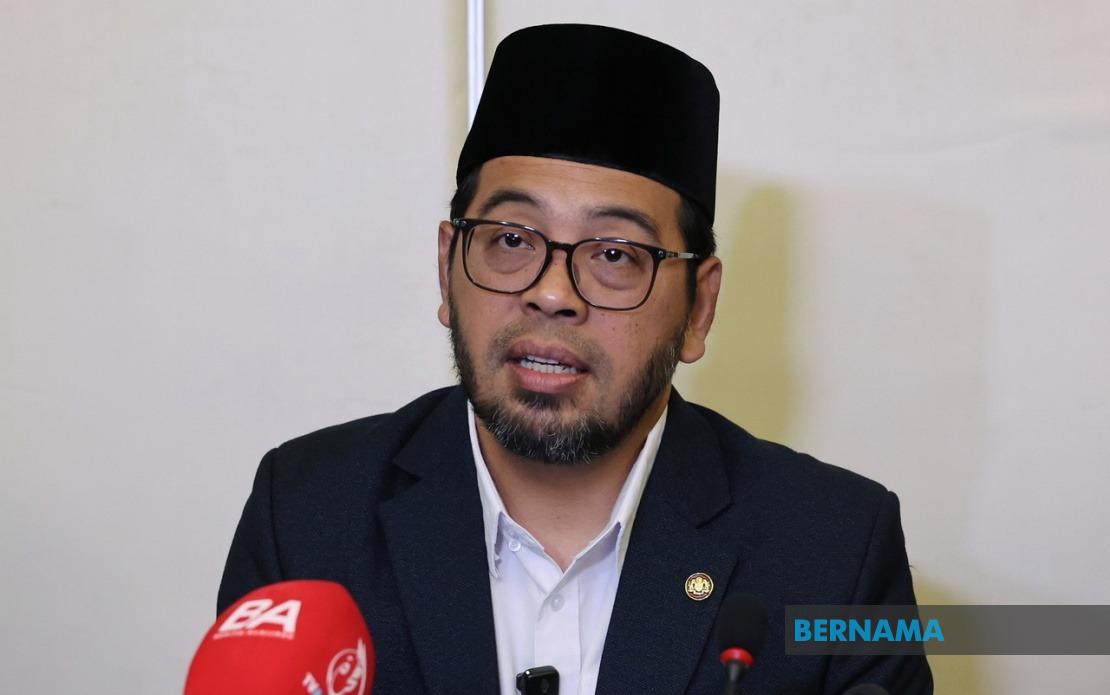
Tabung Haji has significantly improved its institutional standing following a comprehensive recovery programme implemented since the MADANI Government came to office in late 2022, Religious Affairs Minister Dr Zulkifli Hasan announced during a special parliamentary sitting. The minister's statement came as the government formally tabled a 211-page Royal Commission of Inquiry report for public debate, marking the culmination of a lengthy investigation into the pilgrim savings institution's financial management and operational lapses spanning 2014 to 2020.
When the current administration assumed responsibility for national governance, Tabung Haji was actively managing a portfolio of underperforming and problematic legacy assets inherited from earlier years. These inherited difficulties stretched back to 2018 and represented a significant structural challenge to the institution's recovery prospects. Rather than rushing toward public disclosure, the government adopted a strategic approach by granting Tabung Haji breathing room to address systemic weaknesses and restore its operational and financial health before subjecting the institution to intense parliamentary and public scrutiny. This deliberate sequencing appears to have paid dividends, with current performance metrics suggesting the institution has moved into markedly better condition.
The minister noted that Tabung Haji's rehabilitation has already yielded visible international recognition, with the institution receiving five World's Best Haj Management Awards across four consecutive years. This achievement underscores a fundamental point central to the government's narrative about institutional recovery: competent, honest and integrity-focused leadership combined with proper governance structures can effectively reverse deterioration even in complex organisations managing substantial public assets. For Malaysian pilgrims who entrust savings to Tabung Haji, such external validation provides reassurance about current management quality and strategic direction.
The Cabinet's unanimous decision on July 29 to declassify and publicly release the RCI report represented a turning point in the institution's trajectory. Rather than treating the inquiry findings as a matter for bureaucratic closure, the government chose maximum transparency by making the document available for parliamentary debate in a specially convened sitting. This deliberate embrace of public accountability stands in contrast to earlier suggestions that sensitive aspects might remain confidential. The decision reflected a calculation that institutional credibility recovery depends fundamentally on demonstrating that wrongdoing will face serious consequences and that systematic failures will be thoroughly investigated and remedied.
Enforcement action has followed swiftly on the government's transparency commitment. The Malaysian Anti-Corruption Commission and Royal Police have initiated investigations into individuals identified by the RCI as potentially implicated in misappropriation of institutional assets. Several persons have been detained for questioning, signalling that the government's stated commitment to holding officials accountable extends beyond rhetorical endorsement toward concrete investigative and prosecutorial action. This enforcement dimension addresses a persistent concern among depositors and Muslim community members that past institutional failures might be treated as administrative matters rather than potential criminal conduct warranting investigation.
The institutional significance of Tabung Haji extends well beyond conventional savings operations or investment management. The institution holds sacred deposits contributed by Malaysians who view their savings not primarily as profit-generating assets but as steps toward pilgrimage to Mecca. Parents gradually accumulate savings intended for their children's haj journeys; teachers, traders, retirees, farmers, fishermen, rubber estate workers and taxi drivers similarly entrust their earnings to Tabung Haji with profound spiritual intention. This peculiar character of the deposits—simultaneously financial instruments and expressions of religious commitment—creates obligations toward depositor trust that transcend ordinary commercial banking relationships. Any breach of that trust therefore carries implications that extend into the moral and religious domains alongside the financial and legal spheres.
Minister Zulkifli emphasised that the government recognises the incompatibility between this sacred character of deposits and any inclination toward concealment or minimisation of institutional failures. He stated explicitly that neither numerical complexity nor accounting technicalities could justify obscuring the reality of what occurred, nor could narrative management driven by narrow political calculations be permitted to override the fundamental interests of affected depositors and the broader Muslim community. This formulation suggests the government views Tabung Haji institutional governance not merely as a technical or administrative matter but as a test case for whether publicly accountable governance can simultaneously serve multiple stakeholder interests—safeguarding depositor confidence, enforcing accountability for misconduct, and restoring institutional credibility.
The RCI itself conducted a substantial investigation, chaired by former Chief Justice Tun Mohamed Raus Sharif and comprising five individuals with demonstrated expertise in public administration, banking, finance, Islamic law and accounting. The commission's members were formally appointed in January 2022 and presented their report to the King in August of that same year. The resulting document contains 25 recommendations for institutional improvement, addressing governance weaknesses and operational vulnerabilities identified across the six-year investigation period. As of the date the minister spoke to Parliament, approximately 75 percent of these recommendations had already been implemented by Tabung Haji management, with the remaining recommendations in active implementation. This relatively rapid adoption of recommended reforms suggests either that management recognised the necessity of change or that the RCI's recommendations aligned with restoration efforts already underway.
For Malaysian depositors and potential pilgrims, the government's approach to the Tabung Haji crisis illuminates broader questions about institutional recovery and accountability in the Malaysian context. The sequencing—allowing private institutional restoration before public disclosure—reflects confidence that competent management can reverse damage; yet the subsequent enforcement action against identified wrongdoers demonstrates that recovery cannot substitute for accountability. The emphasis on transparency and parliamentary debate signals that even complex financial institutional failures should not remain opaque to public scrutiny. The restoration of international recognition through the Haj Management Awards provides some independent validation that recovery efforts have yielded substantive improvements rather than mere public relations repositioning.
The implications extend across Southeast Asia's Islamic finance landscape, where depositor confidence in institutions managing savings with religious purpose remains foundational to system stability. Should Tabung Haji's recovery prove durable and the enforcement actions against wrongdoers proceed credibly, the case study could inform how other regional institutions approach similar crises. Conversely, any suggestion that accountability falters or that reform measures prove superficial would validate critics' concerns about institutional governance across the region. For Malaysia specifically, the Tabung Haji restoration effort represents a test of whether the MADANI Government can deliver on its core commitments regarding institutional transparency and enforcement evenhandedness when substantial public assets and community trust remain at stake.

