Lembaga Tabung Haji (TH) has intensified its recovery campaign against Saudi Arabia-based property developer Al-Rawda Real Estates Development & Project Management Co Ltd, deploying sophisticated asset-tracing methods to secure the bulk of an outstanding arbitration award now valued at approximately 884 million Saudi riyal. The payments crisis has unfolded gradually, with Al-Rawda delivering only 14.9 million Saudi riyal—less than two percent of the total amount owed—before abandoning compliance with a settlement accord negotiated in November 2024.
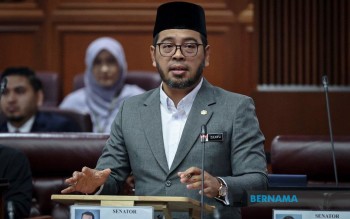
Minister in the Prime Minister's Department (Religious Affairs) Dr Zulkifli Hasan disclosed the mounting frustration at a parliamentary briefing, explaining that TH had exhausted conventional enforcement mechanisms against the developer but discovered the company lacked sufficient liquid assets to satisfy the judgment. The termination of the November settlement agreement marks a strategic pivot toward more aggressive collection strategies, with TH now engaging specialised consulting firms to map Al-Rawda's financial holdings across jurisdictions. This shift reflects growing recognition that voluntary payment mechanisms have failed and that creative legal tactics may be necessary to recover funds previously thought lost.
The underlying transaction that triggered this enforcement saga reveals the extraordinary nature of TH's dealings with Al-Rawda during the 2015-2017 period. Between those three years, TH committed approximately RM1.55 billion in upfront capital to lease four premium hotels located in Makkah and Madinah under agreements spanning ten to eighteen years. Dr Zulkifli characterised the structure as highly unusual, departing markedly from standard commercial practice in the hospitality sector. Rather than maintaining direct control, TH simultaneously appointed Al-Rawda as operational manager through a separate Management and Operation Agreement that entitled the pilgrimage fund to anticipated rental income of 2.49 billion Saudi riyal over the contract period.
The architectural weakness in this arrangement became apparent when the religious affairs minister disclosed that TH's entire security for this colossal investment rested on a personal promissory note guaranteed solely by Al-Rawda's proprietor, Dr Mashhoor Ali Omar Almadoodi. No corporate guarantees, performance bonds, or asset pledges cushioned TH against default. When Al-Rawda ceased rental payments in March 2019 without explanation or negotiation, TH found itself unable to generate the anticipated income stream while remaining liable for the original capital expenditure. The pilgrimage fund subsequently initiated enforcement proceedings within Saudi Arabia's legal system, embarking on a protracted dispute that would consume years of institutional resources and diplomatic attention.
The arbitration process itself proved contentious, with Al-Rawda mounting a counterclaim against TH that extended proceedings over four years. Final resolution arrived through an arbitral award dated April 16, 2023, which vindicated TH's position entirely and ordered Al-Rawda to remit 899 million Saudi riyal as compensation. Yet this apparent victory proved hollow, as the developer demonstrated neither capacity nor willingness to honour the award. The November 2024 settlement represented TH's attempt to salvage something from the judgment through negotiated instalments, only to have Al-Rawda renege almost immediately after the first modest payment.
This case exemplifies broader vulnerabilities in TH's governance structures that the Royal Commission of Inquiry identified across the 2014-2020 period. The RCI designated Al-Rawda as one of fourteen problematic investments generating collective losses measured in billions of ringgit, suggesting systematic institutional weaknesses rather than isolated misjudgements. When the comprehensive 211-page RCI report became public on July 29, it documented management and operational deficiencies that enabled such questionable transactions to proceed without adequate oversight or risk assessment protocols. The report's findings prompted recommendations for sweeping institutional reforms.
TH has demonstrated responsiveness to the commission's criticisms, implementing approximately 75 percent of the twenty-five recommended improvements by late July. These enhancements presumably address governance gaps that allowed the Al-Rawda arrangement and similar ventures to proceed with insufficient due diligence. However, implementation of future reforms cannot recover funds already lost to defaults and underperforming investments. The asset-tracing initiative represents TH's final mechanism to retrieve capital that may have been transferred to affiliated entities, hidden in corporate structures, or otherwise secreted beyond the reach of conventional creditor remedies.
For Malaysian pilgrims and hajj fund contributors, the Al-Rawda debacle carries direct implications regarding the stewardship of their religious obligations and savings. The RM1.55 billion committed to these Makkah and Madinah hotels represented accumulated contributions from millions of Malaysian Muslims over decades. That capital now exists in a state of suspended recovery, entangled in international arbitration and asset-tracing proceedings that may yield partial recovery at best. The episode underscores the intersection between religious governance and commercial competence, demonstrating that devout institutional missions cannot substitute for rigorous financial management and fiduciary accountability.
The broader Southeast Asian context adds urgency to TH's recovery efforts. The region contains numerous Islamic finance institutions managing hajj funds and religious investments under similar structural vulnerabilities. The Al-Rawda precedent illustrates how inadequate due diligence on cross-border property transactions can metastasise into institutional crises affecting millions of beneficiaries. Saudi Arabia's role as both the physical location of Islam's holiest sites and increasingly a destination for large-scale Muslim-majority investment creates particular risks, as disputes invoke both international commercial arbitration and complex enforcement mechanisms across jurisdictions with varying legal traditions.
Dr Zulkifli's parliamentary disclosure also hints at diplomatic dimensions beyond the purely commercial aspects. TH's recovery efforts must navigate Saudi Arabia's regulatory environment, property laws, and the position of a sovereign government that may harbour concerns about international creditors pursuing aggressive asset-tracing against its private sector entities. The engagement of specialised consulting firms suggests TH is preparing for protracted, sophisticated recovery litigation rather than anticipating swift voluntary payment. The asset-tracing approach may identify holdings in third-country jurisdictions where enforcement proves more tractable than within Saudi Arabia itself.
Looking ahead, the combination of institutional reforms and aggressive recovery tactics represents TH's two-track response to the crisis. Enhanced governance protocols and oversight mechanisms should prevent future replication of the Al-Rawda model, while asset-tracing operations attempt salvage operations on extant liabilities. Success on either front remains uncertain, but the intensity of effort signals TH's commitment to accountability and restoration of institutional credibility damaged by years of underperformance and governance scandals. For Malaysian stakeholders, the outcome will test whether religious finance institutions can ultimately balance fiduciary responsibility with commercial ambition.

