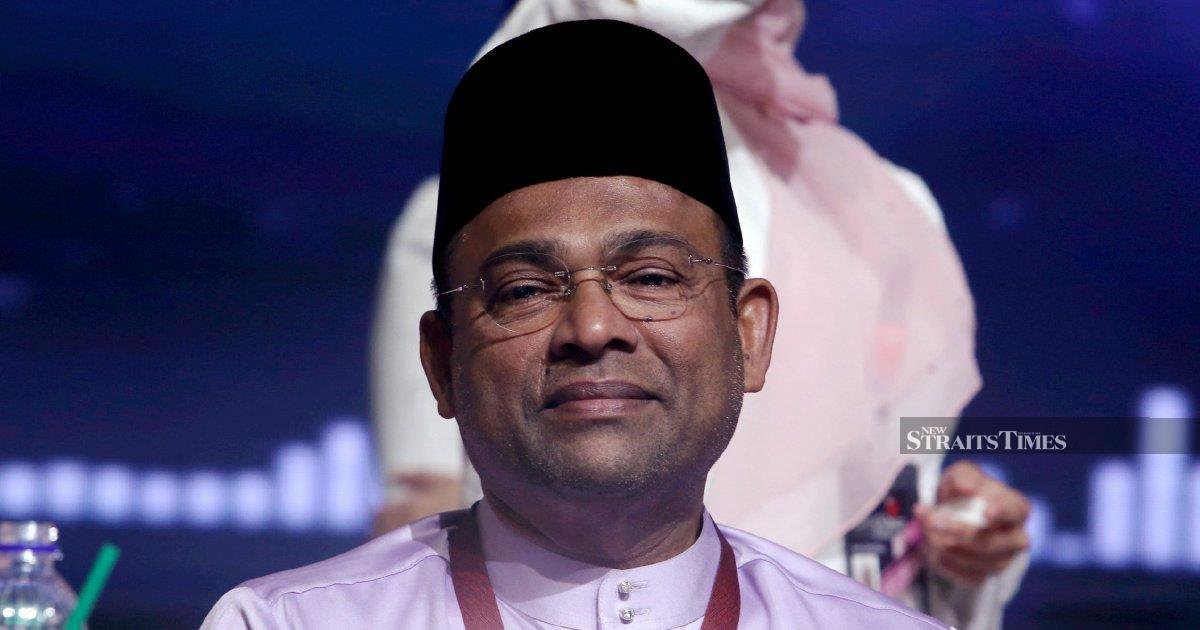
Datuk Seri Abdul Azeez Abdul Rahim, who previously held the position of chairman at Tabung Haji, has declined to engage with mounting pressure from political quarters seeking clarity on his interactions with enforcement authorities. Bersatu party members have publicly called upon the former leader to disclose whether investigators from the Malaysian Anti-Corruption Commission have reached out to him in connection with the Royal Commission of Inquiry's comprehensive examination of the Islamic pilgrimage fund's governance and financial management.
The veteran administrator's response reflects a broader reluctance to address mounting scrutiny surrounding the massive fund's operations. Rather than directly responding to the party's demands, Abdul Azeez has instead characterised the RCI report itself as making no specific reference to his involvement or conduct during his tenure leading the institution. This positioning allows him to maintain distance from the escalating inquiry while ostensibly placing responsibility for establishing culpability on the commission's investigative findings.
Tabung Haji, which manages savings and pilgrimage arrangements for approximately 9 million registered members, has long occupied a sensitive position within Malaysia's financial landscape given its religious and social significance. The establishment of the RCI underscores official concern regarding the fund's administration, particularly following years of mounting losses and management questions that have proven increasingly difficult to ignore or deflect through conventional institutional channels.
The emergence of Bersatu's specific demand for Abdul Azeez to confirm MACC contact reflects the highly charged political environment surrounding investigations into major Malaysian institutions. In recent years, scrutiny of large funds and government-linked companies has become intertwined with broader political rivalries, raising questions about whether accountability mechanisms function independently or become weaponised through factional disputes within Malaysia's complex political structure.
Abdul Azeez's predecessors and contemporaries in senior management roles across Malaysia's financial and statutory authorities have faced varying degrees of investigation and exposure over recent years. The pattern suggests that institutional leadership positions increasingly carry risks regardless of individual conduct, particularly when massive funds underperform or encounter governance challenges that public confidence cannot easily overlook or absorb.
The timing of Bersatu's intervention carries particular significance within Malaysian political calculations. As a coalition partner within the current governing arrangement, the party's willingness to publicly press for clarity on potential enforcement actions against prominent figures suggests either internal coalition tensions or strategic manoeuvring ahead of potential political realignments that periodically reshape Malaysia's parliamentary landscape.
Enforcement agencies including the MACC occupy an increasingly prominent role in Malaysian public discourse, yet their independence remains contested and frequently becomes entangled in partisan narratives. When prominent figures brush aside inquiries regarding contact with such bodies, the opacity inherent in investigation protocols prevents immediate public verification, creating space for competing interpretations and mounting suspicion regardless of underlying facts.
The RCI process itself represents an attempt to move beyond ordinary investigative channels toward institutional accountability mechanisms capable of commanding broader public confidence. Yet the subsequent handling of findings and follow-up actions often determines whether such inquiries translate into meaningful consequences or function primarily as political theatre satisfying public demands for accountability without necessarily producing substantive reforms or personal repercussions.
Sector observers note that Tabung Haji's difficulties have compounded over successive administrations, suggesting systemic challenges rather than failures concentrated within any single leadership period. Nonetheless, accountability frameworks typically focus on identifiable individuals rather than structural deficiencies, creating pressure to identify and penalise specific executives rather than implementing comprehensive institutional reform that might prove more effectively remedial.
For Malaysian pilgrims and the broader Muslim community invested in Tabung Haji's institutional integrity, the ongoing investigations represent both necessary oversight and potential disruption to an organisation managing deeply significant religious and financial obligations. The fund's governance remains essential to millions of ordinary Malaysians' pilgrimage planning and savings arrangements, making its stability and transparent operation matters extending far beyond elite political considerations.
The RCI's findings and subsequent investigative actions will ultimately determine whether Malaysia's accountability mechanisms function as instruments of genuine institutional reform or primarily serve domestic political consumption. Abdul Azeez's apparent unwillingness to directly address Bersatu's inquiries may reflect calculation that maintaining silence offers strategic advantage over engagement with questions framed within partisan contexts that characterise much of contemporary Malaysian political discourse.
Within Southeast Asia's broader context, Malaysia's handling of major institutional scandals increasingly attracts regional scrutiny regarding the functionality of governance frameworks and enforcement mechanisms. How authorities and former leaders navigate investigations into funds managing substantial public resources carries implications extending beyond immediate political considerations toward fundamental questions about institutional accountability and the rule of law's consistency across Malaysia's complex economic and political landscape.

