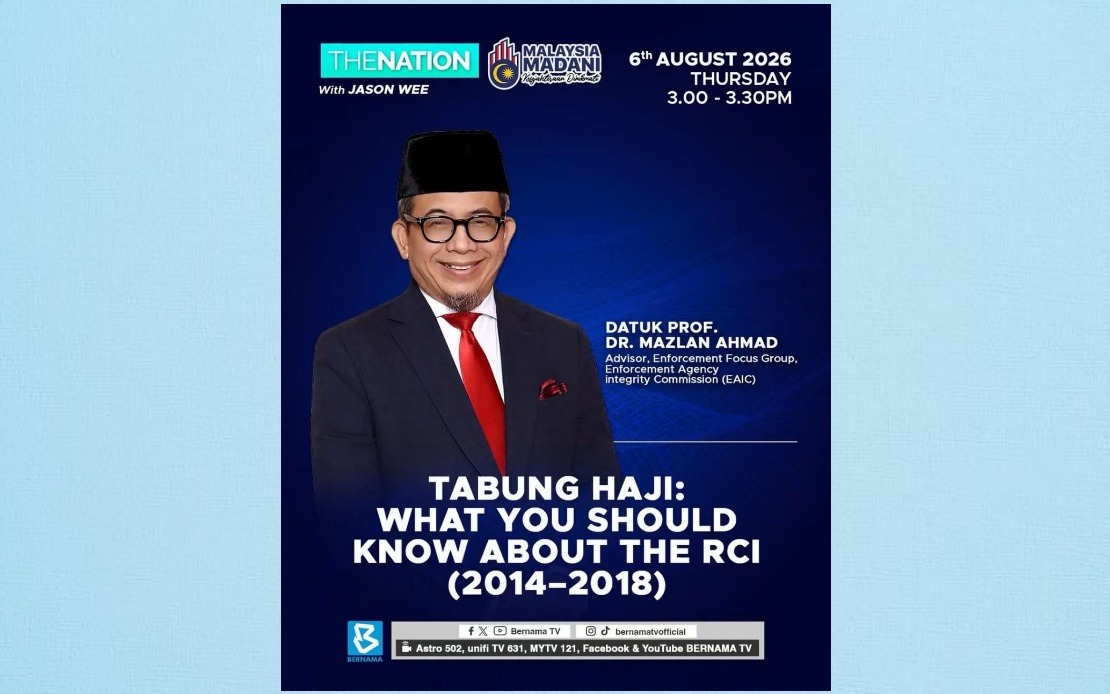
Malaysia's tax authorities should immediately commence an in-depth investigation into possible tax evasion at Tabung Haji and its subsidiaries, according to governance and enforcement specialists responding to this week's Royal Commission of Inquiry report. The call represents a significant escalation in official scrutiny of the troubled pilgrim fund manager, which has faced mounting criticism over its financial management and institutional oversight during the 2014-2020 period examined by the commission.
Prof Datuk Dr Mazlan Ahmad, advisor to the Enforcement Focus Group at the Enforcement Agency Integrity Commission, stressed that investigators must employ sophisticated forensic accounting techniques to reconstruct the movement of funds across the organisation's various entities. His comments highlight the technical complexity involved in untangling Tabung Haji's financial architecture, where subsidiary relationships and commercial operations may have obscured or facilitated questionable transactions that escaped conventional audit processes.
The forensic approach would be essential for establishing a comprehensive audit trail showing where money originated, how it moved through the system, and which individuals or entities benefited from various schemes. Without such detailed tracing, enforcement authorities risk overlooking the interconnected nature of potential violations that may have been deliberately structured to evade detection. This methodology is particularly relevant given that Tabung Haji operates as both a statutory body managing hajj savings for millions of Malaysian Muslims and a commercial enterprise with diverse business interests.
Beyond tax evasion concerns, specialists are flagging the need for investigators to examine potential money laundering activity within the organisation. Identifying suspicious transaction patterns would help authorities determine whether deliberate concealment of fund origins or destinations occurred, and whether those responsible understood the nature of their involvement in potentially unlawful conduct. Money laundering investigations often proceed in tandem with tax investigations, as the underlying misconduct may involve both regulatory breaches and criminal activity.
Crucially, Prof Mazlan warned that investigative scope cannot remain confined to senior management or board members. The entire institutional ecosystem surrounding Tabung Haji requires examination, including middle management, departmental heads, external advisors, and third-party service providers who may have participated in or facilitated questionable practices. This systemic approach reflects growing recognition that financial misconduct rarely involves a single actor, but rather emerges from organisational cultures where inadequate controls, weak oversight, and misaligned incentives enable successive violations.
The governance failures documented by the Royal Commission provide the evidentiary foundation for this broader scrutiny. A critical deficit in board-level oversight emerged as a fundamental problem, with directors failing to exercise adequate checks and balances over management actions. Under Malaysian corporate governance standards and fiduciary law, board members bear direct accountability for organisational conduct. Their failure to implement proper supervision mechanisms does not absolve them of responsibility; rather, it constitutes potential breach of duty that may itself warrant separate investigation.
Prof Mazlan, speaking as both a chartered accountant and council member of the Malaysian Institute of Accountants, emphasised the non-negotiable nature of fiduciary obligations. Directors must establish and maintain governance frameworks that prevent mismanagement, including segregation of duties, transaction approval hierarchies, and independent audit functions with genuine authority to question management decisions. When these protections are absent or ineffective, the organisation becomes vulnerable to abuse by individuals positioned to exploit weak controls.
The Royal Commission report, released on July 29, documented significant findings regarding management practices and governance structures spanning the six-year examination period. Rather than representing a conclusive endpoint for accountability processes, the commission's work should serve as a catalyst for more intensive official investigation. The factual foundation provided by the inquiry enables enforcement agencies to move beyond preliminary assessment into detailed forensic examination, ultimately determining whether documented governance failures correspond to identifiable criminal offences.
Parliament will convene on August 11 for a special sitting dedicated to debating the commission's findings and recommendations. This legislative engagement provides an opportunity to consider whether existing oversight mechanisms and enforcement powers are adequate to address institutional weaknesses at Tabung Haji, and whether additional investigative resources or regulatory tools are required. The parliamentary session may also signal political momentum behind enforcement action, potentially influencing how aggressively authorities pursue the investigation and whether they secure necessary cooperation from the organisation.
For Malaysian taxpayers and Tabung Haji account holders, this investigation carries direct implications. Tax evasion represents a hidden subsidy by compliant taxpayers to organisations engaged in non-compliance, effectively shifting tax burdens downward. Similarly, any misallocation of Tabung Haji funds through fraudulent schemes directly diminishes the accumulated savings of millions of Malaysian Muslims who depend on these accounts for hajj financing. The intersection of tax evasion, corporate governance failure, and potential criminal activity at a major national institution demands thorough, sustained investigative commitment rather than perfunctory compliance activity.
The investigation's complexity and sensitivity demand that authorities approach the matter with both rigour and impartiality. Political considerations or institutional prestige must not compromise investigative integrity. Malaysian precedent suggests that comprehensive forensic investigations, when properly resourced and professionally managed, can successfully reconstruct even deliberately obscured financial transactions and identify responsible parties. The Tabung Haji matter now requires exactly this calibre of professional commitment from the Inland Revenue Board and supporting enforcement agencies.

