Tabung Haji's ill-fated investment in Putrajaya Perdana Bhd has emerged as emblematic of deeper institutional failings that drew Malaysia's largest Islamic pilgrimage savings fund into the orbit of 1Malaysia Development Bhd's controversial dealings. The RM145.3 million loss from this single transaction exemplifies how structural weaknesses in governance and decision-making processes allowed TH to accumulate massive exposure to problematic assets during a critical period in the country's recent financial history.
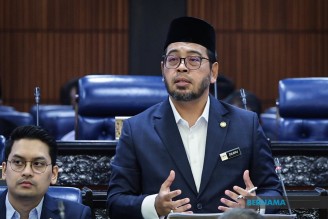
During a parliamentary briefing on the Royal Commission of Inquiry's findings, Minister in the Prime Minister's Department (Religious Affairs) Dr Zulkifli Hasan outlined how TH's involvement with Putrajaya Perdana represented merely one chapter in a troubling saga. The appointment of TH's chairman to lead Putrajaya Perdana created a direct conduit through which the pilgrimage fund became entangled in 1MDB's network of transactions. This corporate arrangement raised fundamental questions about fiduciary duty and institutional independence that the RCI would later dissect in detail.
The 1MDB connection extended beyond Putrajaya Perdana into TH's land dealings at the Tun Razak Exchange, where the fund participated in property transactions during the height of the 1MDB controversy. Zulkifli highlighted a particularly troubling scenario: TH's chief executive officer simultaneously occupied a seat on 1MDB's board of directors, creating an obvious conflict of interest that should have triggered alarm bells among TH's governance structures. This dual role blurred the institutional boundaries that should have protected TH's assets and fiduciary obligations to contributors.
The minister posed a critical question that strikes at the heart of institutional accountability: whether these investments genuinely served TH's interests or whether they functioned as a mechanism to bail out or stabilise other troubled entities. This query reflects the broader pattern of interconnected dealings that characterised Malaysian corporate governance during this turbulent period. The answer, according to the RCI's comprehensive 211-page report released in July, revealed systematic weaknesses rather than isolated lapses.
TH's experience with FGV Holdings exemplifies how poor investment decisions compounded across the portfolio. The fund held onto shares in the country's then-largest initial public offering, which had raised over RM10 billion, even as valuations collapsed. When share prices fell by more than 80 percent, TH management chose to adjust impairment accounting policies rather than confront the underlying investment failure. This accounting manoeuvre effectively masked losses exceeding RM1 billion from scrutiny, allowing deteriorating asset quality to remain obscured from contributors and stakeholders.
Since strengthening its financial position, TH has undertaken significant remedial measures to rectify these legacy investments. The fund repurchased TRX land that it had sold for RM400 million in 2018, acquiring it back at RM270 million based on current market valuation. This RM130 million writedown reflects the actual economic damage sustained through the earlier transaction. Similarly, TH recovered the UJ Estates oil palm plantation that it had previously disposed of for RM800 million, reacquiring it at RM695 million in current market value, representing a RM105 million deterioration in asset worth.
The Royal Commission of Inquiry uncovered 14 distinct problematic investments that collectively generated losses totalling billions of ringgit across the 2014 to 2020 period. These findings suggest a systemic breakdown in investment governance rather than scattered misjudgements. The RCI submitted 25 comprehensive recommendations aimed at preventing similar governance failures and strengthening TH's institutional safeguards. As of late July, TH had already implemented 75 percent of these recommendations, indicating a determined effort to address structural vulnerabilities.
The temporal scope of the RCI's investigation—spanning 2014 to 2020—encompasses a period of significant institutional turbulence in Malaysia's financial sector. This six-year window captured the peak of 1MDB's controversial dealings alongside multiple instances where governance oversight proved inadequate. For Malaysian investors and pilgrims contributing to TH, the RCI findings provide uncomfortable clarity about how institutional independence can erode when senior leaders occupy multiple board positions across related entities.
The broader implications of TH's experience resonate throughout Southeast Asia's investment landscape. As Islamic finance and Shariah-compliant investment vehicles expand across the region, the TH case demonstrates the importance of maintaining robust governance firewalls between competing institutional interests. The willingness of TH's current leadership to undertake expensive asset recovery operations—repurchasing investments at losses—signals recognition that restoring stakeholder confidence requires more than accounting adjustments.
The reconstruction of TH's portfolio through careful asset rebalancing and the recovery of strategic holdings suggests a deliberate pivot away from the interconnected corporate dealings that characterised the previous decade. For Malaysian policymakers and regulators overseeing Islamic financial institutions, the RCI report serves as a cautionary blueprint of governance failures and their downstream consequences. The systematic nature of TH's investment problems indicates that isolated compliance fixes prove insufficient without fundamental changes to decision-making structures and conflict-of-interest protocols.
Moving forward, TH's implementation of the RCI's recommendations will test whether institutional learning can translate into sustained governance improvements. The pilgrimage fund's position as a significant player in Malaysia's capital markets means that its recovery pathway carries implications beyond its 8.4 million members. As Southeast Asia's Islamic finance sector continues to expand, the lessons embedded in the RCI report—about the dangers of concentrated decision-making, interlocking directorates, and accounting opaqueness—will likely inform regulatory frameworks and institutional best practices across the region for years to come.

