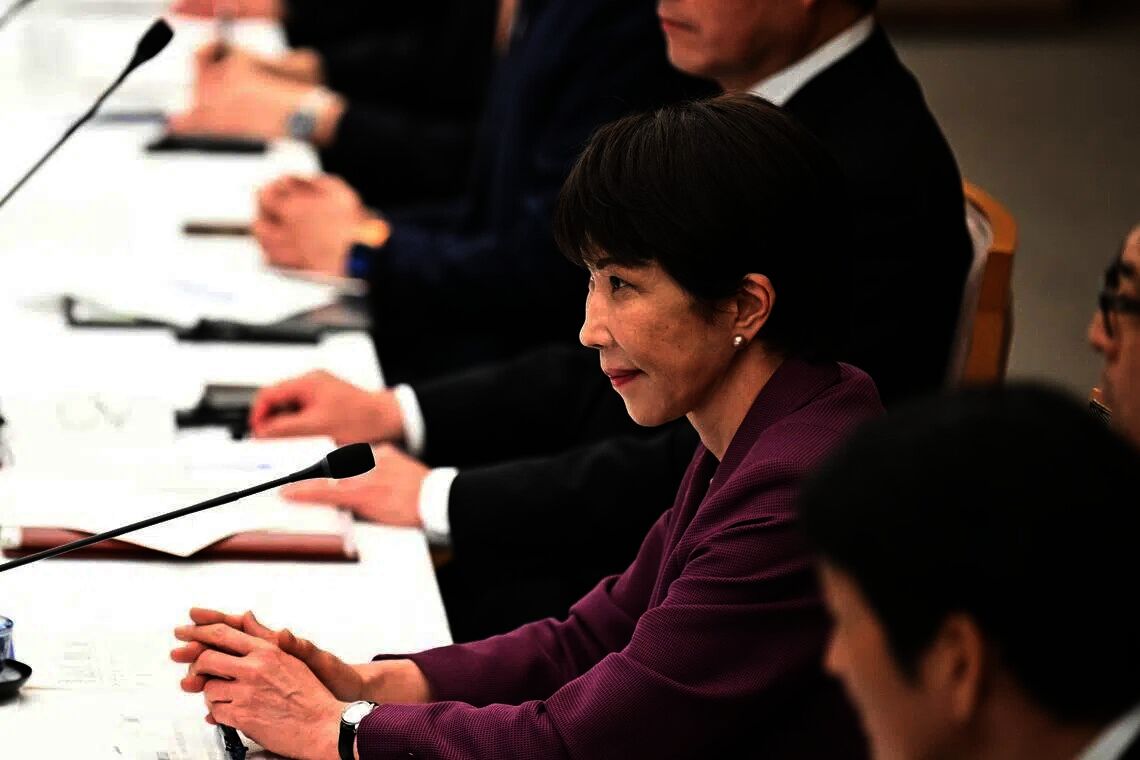
A video clip circulating on social media has thrust Japanese Prime Minister Sanae Takaichi back into the spotlight for her decades-old comments minimizing Japan's wartime aggression in Asia. The footage, drawn from a 2002 television debate on TV Asahi, captures Takaichi—then serving as a lawmaker—arguing that Japan's military campaigns against China constituted acts of self-defence, and that imperial expansion throughout the 1930s represented standard international practice. The resurgence of these remarks has unleashed a torrent of criticism within Japan, exposing the enduring sensitivity surrounding how Tokyo interprets its role in World War II and raising fresh questions about the historical consciousness of the nation's current leadership.
During the live political discussion, host Soichiro Tahara, a respected Japanese journalist, directly challenged Takaichi's assertions, characterising her historical interpretations as fundamentally flawed and intellectually deficient. Tahara expressed incredulity that someone holding such views could occupy a seat in parliament, his on-air rebuttal highlighting the stark disconnect between scholarly consensus and Takaichi's framing of Japan's wartime conduct. This contemporary pushback, now amplified across digital platforms more than two decades later, has resonated powerfully with audiences, lending credibility to the current criticism and demonstrating that concerns about her historical literacy were not merely isolated to that 2002 encounter.
The viral nature of the video has galvanised online discourse across multiple platforms. Comments accumulating the highest engagement levels on YouTube reveal widespread dismay among Japanese citizens. Observers have described Takaichi's grasp of history as severely distorted, questioning how someone holding such perspectives could ascend to the nation's highest executive position. The sentiment emerging from these exchanges suggests that many Japanese citizens view her historical position not as a legitimate scholarly interpretation but as emotionally driven revisionism lacking intellectual coherence or factual grounding.
Yusuke Yamashita, who teaches corporate social responsibility at Sakushin Gakuin University, offered a penetrating analysis of Takaichi's historical claims by noting her apparent inability to articulate a coherent theoretical framework underpinning her "self-defence war" argument. Rather than resting on documented evidence or logical reasoning, Yamashita contended, her position appears rooted purely in emotional attachment to nationalist mythology. This assessment cuts to the heart of the substantive concern: that Japan's prime minister may be advancing historical narratives shaped by conviction rather than scholarship, a distinction with profound implications for policy direction and regional relations.
The political establishment's response has extended beyond academic commentary. Ichiro Ozawa, a veteran legislator who represented his district from 1969 to 2026, issued a stark statement characterising Takaichi's historical revisionism as not merely wrong but dangerous. In his public remarks, Ozawa conveyed alarm that someone with such fundamental misunderstandings of Japan's past now commands executive authority, warning that the nation risks drifting toward catastrophic outcomes without her removal from office. His intervention signals that concerns about Takaichi's worldview transcend generational divides within the political elite.
Takaichi's pattern of revisionist commentary extends throughout her three-decade parliamentary career, beginning with her election in 1993. She has consistently positioned herself within the Liberal Democratic Party's conservative-nationalist faction, consistently advocating for constitutional amendments that would substantially expand Japan's military scope and capabilities. Her proposals to rename the Self-Defence Forces reflect a broader ideological project to reshape Japan's security posture and national identity in ways that depart from post-war consensus. These longstanding positions underscore that her recent criticism stems not from isolated remarks but from a coherent political philosophy spanning her entire career.
Takaichi's historical revisionism aligns with a broader current within Japanese right-wing political circles that seeks to reframe Tokyo's wartime conduct through a sanitised lens. This revisionist movement systematically minimises, contextualises, or outright denies documented atrocities committed against Chinese and other Asian populations during the occupation and colonial periods. Scholars and regional observers view such efforts as fundamentally incompatible with historical accuracy and as potentially destabilising to peace and cooperation throughout Asia. The recirculation of Takaichi's 2002 comments thus carries implications beyond Japan's domestic politics, touching upon regional security dynamics and the foundation for trust among neighbours.
The timing of this controversy compounds existing challenges to Takaichi's political standing. Public approval for her administration had already declined noticeably by mid-2024, with polling data from July indicating that disapproval had begun surpassing approval in several surveys—a troubling threshold for any sitting prime minister. These declining numbers reflected widespread dissatisfaction with her government's handling of economic concerns and quality-of-life issues affecting ordinary Japanese households. The emergence of the historical revisionism video thus arrives during a period of already-weakened political capital, potentially accelerating erosion of public confidence.
Critics maintain that Takaichi's pursuit of ambitious but divisive constitutional and security agendas has proceeded despite inadequate attention to mounting practical grievances among the electorate. This imbalance between her ideological priorities and responsiveness to public economic anxieties has compounded frustration, with observers questioning whether her administration possesses the political durability to sustain its reform agenda. The historical revisionism controversy effectively crystallises broader concerns about whether Takaichi's political priorities align with contemporary Japanese society's values and expectations, raising fundamental questions about her capacity to maintain governing legitimacy.

