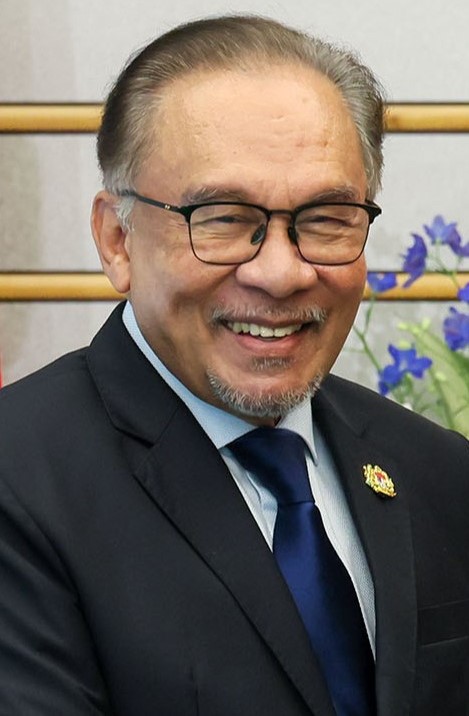
The death of Tan Sri Dr M. Mahadevan marks the end of an extraordinary chapter in Malaysian medicine. The internationally recognised psychiatrist, widely acknowledged as the architect of modern mental health services in the country, passed away on June 15 at his Ukay Heights residence in Ampang, succumbing to complications from heart failure and lung infection. He was 96 years old. His family was present at his bedside when he died at approximately 7.45 pm, bringing to a close a life dedicated to transforming Malaysia's approach to psychiatric care and mental wellness.
Dr Mahadevan's final weeks were spent recovering at home following a month-long treatment stint at a private medical facility in Ampang, where doctors had been managing his deteriorating heart condition and concurrent respiratory infection. According to his longtime carer Thenagaran, the distinguished physician had previously required intensive care monitoring but chose to spend his remaining days surrounded by loved ones in the comfort of his home. This decision reflected not only his personal wishes but also the modern palliative care principles he had long advocated throughout his medical career. His passing comes after an extended period of declining health, though his contributions to Malaysian psychiatry remained firmly cemented in the nation's institutional memory.
The funeral arrangements underscore the respect Dr Mahadevan commanded within both medical and broader community circles. Well-wishers gathered at his family home at No. 32, Lorong Lee Hin Neo 1, Ukay Heights, on June 16 and 17, with visiting hours allocated for both morning and afternoon periods to accommodate mourners. The cremation ceremony took place on June 18 at the Sentul Hindu Crematorium, following religious observances held at his residence that morning. These arrangements reflected the diverse spectrum of individuals whose lives and professional trajectories had been influenced by his pioneering work across seven decades of practice.
Dr Mahadevan's foundational role in shaping Malaysia's psychiatric infrastructure cannot be overstated. As the founding president of the Malaysian Psychiatric Association—an organisation that continues to set professional standards and advance the discipline—he established the institutional frameworks upon which modern mental health practice in the country still rests. During the 1980s, his position as the government's chief psychiatrist gave him the authority and platform to implement systemic reforms that elevated psychiatric services from peripheral concern to central healthcare priority. His vision extended beyond treating individual patients to fundamentally reorganising how the nation conceptualised, delivered, and funded mental health interventions.
An equally significant achievement was his establishment of the Central Mental Hospital, later renamed Hospital Bahagia Ulu Kinta, which became the flagship institution for psychiatric treatment and research in Malaysia. This facility represented a departure from the custodial model of mental healthcare that had previously dominated the region, introducing instead evidence-based therapeutic approaches grounded in contemporary international practice. The hospital's development under his direction demonstrated that sophisticated psychiatric care could be successfully implemented in a developing nation's healthcare system, a notion that challenged prevailing assumptions at the time and paved the way for mental health improvements across Southeast Asia.
Dr Mahadevan's academic credentials and international standing elevated Malaysia's profile in global psychiatric circles. Born on September 9, 1929, he completed his secondary education at St John's Institution in Kuala Lumpur before pursuing medical training in Bangalore, India, graduating in 1961. Subsequently, he undertook advanced specialisation at University College Dublin in Ireland, an experience that exposed him to cutting-edge European psychiatric methodologies. His particular expertise in hypnotherapy and psychosomatic medicine earned him recognition far beyond Malaysian shores, culminating in Harvard University's decision to establish a travel scholarship programme bearing his name—an extraordinary honour for any clinician and especially remarkable for a physician from a developing nation during that era.
His appointment as the first Malaysian president of the Asian Branch of the International College of Psychosomatic Medicine illustrated the regard in which he was held by international professional bodies. This distinction acknowledged not only his clinical acumen but also his intellectual contributions to understanding the intricate relationships between psychological states and physical health manifestations. The timing of his appointment coincided with growing recognition within global medicine that psychiatric and psychosomatic approaches held crucial keys to addressing previously intractable health conditions. Dr Mahadevan became an ambassador for these evolving paradigms throughout Asia during a critical transitional period in the region's medical history.
Perhaps most tellingly, it was Tunku Abdul Rahman Putra Al-Haj, Malaysia's founding Prime Minister, who personally invited Dr Mahadevan to return to his home country in 1967 to undertake the monumental task of developing a comprehensive mental health system. This invitation reflected the supreme confidence Malaysia's founding leadership placed in his expertise and vision. By 1967, the country was consolidating its post-independence institutions, and psychiatric services represented a significant gap in the emerging healthcare infrastructure. Dr Mahadevan answered this call with characteristic dedication, spending the subsequent five-and-a-half decades building, refining, and professionalising mental health provision across the nation.
The conceptual framework Dr Mahadevan introduced to Malaysian psychiatry emphasised integration across medical disciplines, community engagement, and the application of contemporary psychological science to practical healthcare delivery. Rather than viewing psychiatry as a specialised field addressing only severe mental illness in institutional settings, he advocated for understanding mental health as foundational to overall wellbeing and inseparable from physical medicine. This holistic orientation anticipated by decades the global shift toward integrated care models that now form the basis of contemporary health policy recommendations from organisations like the World Health Organization.
Dr Mahadevan's legacy extends profoundly into contemporary Malaysian healthcare policy and practice, even as his direct clinical involvement ended. The Malaysian Psychiatric Association, which he founded, continues to certify specialists, establish ethical standards, and advocate for improved mental health services. Hospital Bahagia Ulu Kinta remains a leading treatment and research institution. More broadly, his pioneering work demonstrated that developing nations could establish world-class psychiatric services without compromising local cultural values or financial sustainability. This template influenced mental health system development across Southeast Asia, making his influence genuinely regional rather than merely national in scope.
The circumstances of his final years—a period of declining health managed with dignity and family support—embodied the very principles of compassionate, patient-centred care that he had championed throughout his career. His choice to return home rather than remain hospitalised represented a personal endorsement of the palliative and community-based approaches that constitute the modern evolution of the mental health paradigms he had worked tirelessly to establish. In this sense, his death and funeral arrangements offered a final, unspoken commentary on the values that had animated his life's work: the primacy of individual dignity, the importance of family connection, and the belief that sophisticated medical care should enhance rather than diminish one's humanity.