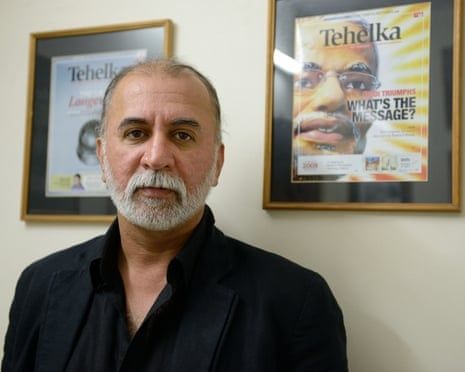
The Bombay High Court has delivered a significant verdict in one of India's most closely watched sexual assault cases, convicting Tarun Tejpal, the 63-year-old founder and former editor of Tehelka magazine, of raping a journalist colleague. The conviction on Thursday overturned an acquittal issued by a lower court in Goa just three years earlier, marking a dramatic reversal that underscores the complexity and prolonged nature of sexual assault proceedings in the Indian judicial system. Tejpal will receive his sentence on the same day as the conviction, with the possibility of appealing the decision to a higher court.
The alleged crime occurred in November 2013 when Tejpal was accused of assaulting the junior journalist in an elevator at a luxury five-star hotel in Goa during a professional event. The victim's courage in pursuing the case through multiple court hearings and reversals has become emblematic of the broader struggle women face when seeking justice for sexual violence in India's male-dominated workplaces and legal system. The assault allegations emerged during a period when India's entire approach to sexual crimes was under intense international and domestic scrutiny.
Tejpal's arrest in 2013 was followed by a seven-month detention before the Supreme Court granted him bail, a period that allowed the case to gain significant media attention and public debate. However, the trajectory of the case took an unexpected turn in 2021 when a trial court in Goa acquitted him of all charges, including rape, sexual harassment, and wrongful restraint. This acquittal appeared to suggest the case had reached its conclusion, yet the Goa government's decision to challenge the verdict before the Bombay High Court kept the matter alive and ultimately led to this week's conviction.
The High Court's decision to overturn the acquittal and convict Tejpal represents a vindication for the complainant, who pursued justice through a gruelling legal process spanning a decade. Sunita Sawant, the Goa Police investigator who spearheaded the original probe, told reporters that the verdict sends a powerful message to women across all sectors of Indian society about the importance of standing up for their rights. Such affirmations from law enforcement and the judiciary are particularly significant in contexts where victims frequently face social stigma, professional retaliation, and institutional dismissal of their claims.
The timing of Tejpal's initial arrest coincided with a period of heightened national reckoning over sexual violence in India. The fatal gang rape of a 23-year-old student aboard a New Delhi bus in December 2012 had catalysed unprecedented nationwide protests and international condemnation just months before Tejpal's alleged assault. That brutal case prompted the Indian government to undertake significant legal reforms, strengthening the country's rape laws and broadening definitions of sexual assault. Tejpal's case thus unfolded against a backdrop of evolving legal standards and public consciousness about workplace sexual harassment.
For the South Asian region more broadly, the case illustrates both progress and persistent challenges in addressing sexual violence. While India has enacted stricter laws and established specialized courts in some jurisdictions, implementation remains inconsistent, conviction rates remain low, and trials frequently extend over many years. For Malaysian readers and Southeast Asian observers, the case underscores why regional harmonization of sexual assault legislation, improved investigator training, and witness protection mechanisms remain critical priorities for advancing women's safety across the region.
The institutional fallout from Tejpal's conduct has been severe and enduring for Tehelka, the magazine that he founded and led for years. The publication had built its reputation on rigorous investigative journalism and vocal advocacy for marginalized communities, including championing women's rights and social justice causes. The profound irony of the magazine's founder being accused and now convicted of sexual assault against a staff member created a credibility crisis that the organisation has never fully recovered from. The scandal exposed the gap between institutional values expressed in editorial content and the lived reality of workplace safety for women employees.
Tehelka continues to operate under new leadership in the years following the 2013 incident, yet the publication has struggled to regain the cultural influence and journalistic standing it previously enjoyed. The case served as a sobering reminder to India's media industry that editorial excellence and social advocacy ring hollow when leadership fails to maintain basic standards of professional conduct and human dignity. This has broader implications for media organisations across South and Southeast Asia that position themselves as champions of social reform while potentially harbouring their own internal cultures of misconduct.
Tejpal's assertion that he denies the accusations and his anticipated appeal to higher courts mean the legal proceedings are far from concluded. The appellate process could extend the case further, potentially delaying final closure for years. His access to legal resources and the appellate system reflects the reality that Indian courts offer multiple layers of review, which can serve both as a safeguard against miscarriage of justice and as a mechanism through which those with means can prolong proceedings. The convicted former editor now faces the possibility of incarceration, dependent on the sentencing decision and any subsequent appellate outcomes.
The case's decade-long trajectory from initial accusation to conviction reflects systemic challenges within India's criminal justice system regarding sexual assault cases. Investigations, trials, and appeals frequently consume years, during which victims must maintain their engagement with the process while managing its emotional and professional toll. For Malaysian and Southeast Asian policymakers examining their own judicial systems, the Tejpal case offers cautionary lessons about the need for expedited trial procedures in sexual assault matters, improved victim support services, and mechanisms to reduce the burden on complainants pursuing justice through prolonged legal proceedings.

