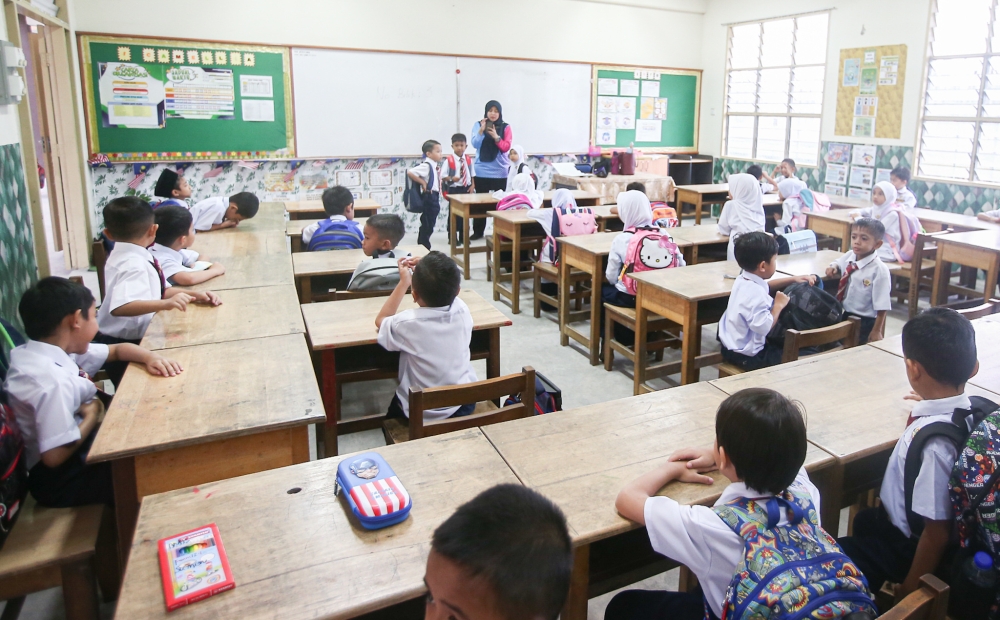
Malaysia's education sector faces a mounting crisis of classroom authority as teachers increasingly avoid disciplining students for fear of legal action and social media campaigns, prompting the National Union of the Teaching Profession to champion protective legislation. The union's push for a Teachers' Protection Act reflects deepening anxieties within the profession about the erosion of pedagogical autonomy, a concern that extends well beyond individual classrooms to threaten the fabric of school discipline across Southeast Asia's most established education system.
The reluctance of educators to maintain order in classrooms stems from multiple converging pressures. Beyond the immediate threat of civil litigation from parents dissatisfied with disciplinary measures, teachers now confront a more diffuse and unpredictable menace: viral social media campaigns that can rapidly amplify isolated incidents into public scandals. A single disciplinary action, photographed or recorded and posted online, risks transforming a teacher into a target for coordinated criticism, threats, and demands for dismissal. This digital vulnerability has created a chilling effect that extends far beyond the courtroom, making even routine corrective measures feel fraught with professional peril.
The union's advocacy reflects recognition that Malaysia's teaching workforce operates within an increasingly hostile legal environment. Parents armed with ready access to lawyers and social media platforms have grown more litigious in recent years, viewing school discipline through a lens of individual rights rather than collective classroom management. Teachers who once operated with implicit institutional backing now find themselves isolated when disputes arise, forced to justify actions that previous generations would have regarded as uncontroversial components of their professional responsibilities. This shift has particular significance in a Malaysian context where traditional notions of authority and respect for educators have historically underpinned educational hierarchies.
The proposed Teachers' Protection Act would establish legal scaffolding to shield educators from frivolous or malicious suits arising from disciplinary actions taken in good faith. Such legislation would not constitute blanket immunity but rather establish evidentiary presumptions or burden-shifting provisions that recognize the professional judgment educators exercise when maintaining classroom standards. Countries including Singapore and elements of the Australian system offer comparative models, though each must be adapted to Malaysia's constitutional framework and educational philosophy. The measure aims to restore to teachers a zone of professional autonomy comparable to what doctors, lawyers, and other regulated professionals enjoy within their respective spheres.
The online backlash phenomenon represents a distinctly contemporary dimension of the problem that traditional legal remedies alone cannot fully address. Teachers routinely face character assassination on platforms including Facebook, TikTok, and WhatsApp groups where accusations circulate rapidly among parent networks before schools or teachers can mount any response. The asymmetry is severe: a teacher's reputation, built carefully over years of service, can suffer irreparable damage within hours based on an unverified clip or secondhand account. Schools themselves often lack protocols or resources to manage such digital crises, leaving individual educators to navigate public relations disasters alongside their pedagogical duties.
The implications extend to broader questions about who exercises authority within Malaysian schools and on what terms. If teachers persistently avoid discipline because the personal costs have become prohibitive, classroom management gradually devolves into a form of negotiated consensus or strategic tolerance. Students learn that persistence, parental leverage, or social media exposure can overturn institutional decisions, fundamentally reordering the power dynamics that have traditionally characterized educational settings. This erosion of authority occurs most sharply among teachers handling behavioural issues, who report the steepest declines in their willingness to intervene in misconduct.
The union's position also reflects a generational challenge in teacher recruitment and retention. Younger Malaysians considering education as a career now weigh not only modest compensation and limited promotion prospects but also heightened exposure to litigation and public humiliation. The profession's standing has demonstrably declined even as it once commanded respect in Malaysian society. Teaching positions in urban areas increasingly compete for talent against other professional pathways, and a regulatory environment perceived as hostile to teachers' judgment accelerates attrition. Schools in disadvantaged regions face compounded difficulty attracting quality candidates when the job combines demanding work with elevated professional risk.
Parental involvement in education represents an unambiguously positive trend that Malaysia has actively cultivated through policy frameworks emphasizing school-parent partnerships. However, this involvement has occasionally morphed into adversarial dynamics where some parents approach schools as antagonists to be monitored and challenged rather than collaborators in their children's development. The Teachers' Protection Act advocates recognize this distinction: the legislation would not curtail parents' legitimate oversight or grievance mechanisms but rather would protect teachers from consequences arising from actions exercised within reasonable professional bounds. Distinguishing between justified complaints and malicious harassment requires nuance that legal frameworks must embed.
Implementing such legislation simultaneously demands institutional and cultural adjustments extending beyond statute. Schools require clearer disciplinary protocols, transparent documentation practices, and media literacy training to manage digital crises. Parents need education about teachers' professional prerogatives and the psychological impacts of public attacks on educators. Government bodies must support teachers who face litigation, providing legal resources and public backing when actions fall within acceptable professional practice. Without these complementary measures, a Teachers' Protection Act risks appearing as legislation that privileges educators over families without addressing legitimate concerns about fairness or proportionality.
The Malaysian Education Ministry has yet to formally commit to legislative action, though the union's advocacy signals growing urgency around the issue. Regional peers including Indonesia and the Philippines have grappled with similar tensions as their education systems modernize and family structures diversify in ways that reshape traditional hierarchies. Malaysia's approach to this challenge will influence not only classroom dynamics across its schools but also broader regional patterns about how societies balance institutional authority with individual rights in educational settings. The Teachers' Protection Act debate thus transcends Malaysia's borders, touching fundamental questions about power, accountability, and professional autonomy that Southeast Asian educators will navigate for decades ahead.

