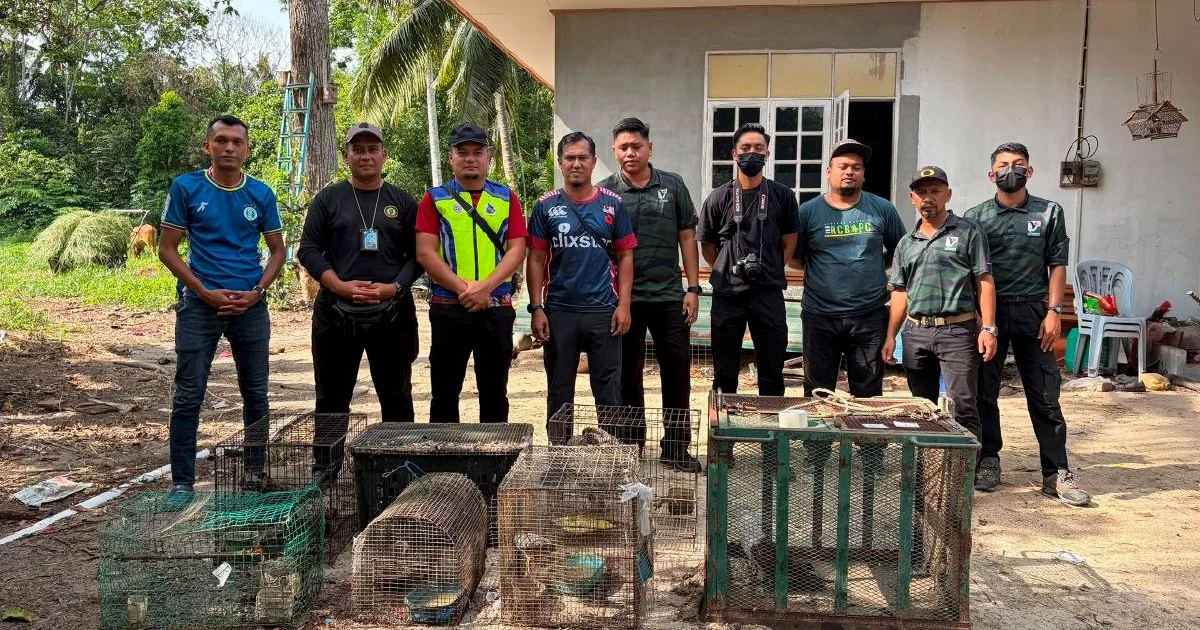
Wildlife enforcement officers have arrested an 18-year-old in Tumpat following a raid that uncovered an illegal cache of protected animals representing four distinct species with a combined estimated value of RM48,500. The operation underscores the persistent challenge Malaysia faces in combating the underground trade in endangered fauna, a problem that extends well beyond isolated incidents to represent a structured criminal activity that authorities continue to prioritise.
The teenager's apprehension marks another enforcement success for wildlife protection agencies, yet simultaneously raises questions about how young individuals become drawn into trafficking networks. The involvement of someone barely past the threshold of adulthood suggests that organised trafficking operations may be deliberately recruiting younger participants, either because they perceive reduced legal consequences for minors or because youth can navigate supply chains with less suspicion from enforcement personnel.
Protected wildlife trafficking remains one of Malaysia's most persistent environmental crimes, operating quietly alongside more prominent criminal activities that capture media attention. The four species recovered in this particular operation reflect the diverse targets of illegal traders, from reptiles to mammals and potentially birds, each commanding specific prices within underground markets that serve both local collectors and international syndicates. Understanding what drove demand for these particular creatures requires examining the intersection of exotic pet markets, traditional medicine use, and international wildlife smuggling networks that extend far beyond Malaysian borders.
The RM48,500 valuation attached to these animals provides insight into the economic incentives fuelling this trade. For comparison, such sums represent significant money for individuals operating at street level, yet constitute mere drops in the revenue generated by larger trafficking operations. The profit margins involved explain why enforcement represents such a challenging task—the financial reward structure creates powerful motivation for recruitment and persistence among criminal elements, particularly when penalties remain inconsistent across jurisdictions or enforcement capacity proves limited.
Tumpat, located in Kelantan on Malaysia's east coast, has featured in several wildlife-related enforcement operations in recent years, suggesting either concentration of illegal activity in the area or heightened enforcement presence. The location's proximity to major transport routes and ports potentially makes it attractive for trafficking operations seeking to move contraband towards distribution points or for export. Understanding the geographical patterns of wildlife crime helps authorities deploy resources strategically, though the problem's fluid nature means criminals frequently shift operations when enforcement intensifies in particular areas.
Malaysia's wildlife protection framework operates through several legislative instruments, most prominently the Wildlife Protection Ordinance, which establishes protected status for numerous native species and designates corresponding penalties. However, enforcement gaps persist between legislative intent and practical implementation, with resource constraints, corruption, and jurisdictional complexities sometimes limiting effectiveness. The arrest in Tumpat demonstrates that enforcement mechanisms can function, yet sporadic successes contrast with the apparent volume of illegal trading occurring across the country.
The Southeast Asian region occupies a critical position in global wildlife trafficking networks, serving simultaneously as source territory, transit hub, and destination market. Malaysia's position—geographically central within the region, with developed infrastructure and organised urban centres—makes it particularly attractive to trafficking syndicates. Wildlife confiscated in Malaysia often originates from other Southeast Asian nations, while Malaysian ports facilitate movement of contraband destined for markets in China, Vietnam, and beyond, making domestic enforcement efforts part of a much larger international challenge.
Protected species trafficking generates lesser attention than drug trafficking or human smuggling, yet conservation biologists warn that the ecological consequences run deep. Removing breeding populations from wild environments can drive species toward extinction, disrupting ecosystem functions and reducing biodiversity that sustains environmental services upon which human communities depend. The arrested teenager's actions, while seemingly individual, form part of a collective pressure on endangered populations that threatens irreversible loss of species and genetic diversity.
Public education campaigns have expanded in recent years to build awareness about wildlife protection laws and the environmental consequences of trading in protected animals. However, shifting attitudes—particularly among younger Malaysians who may perceive such trading as victimless compared to other crimes—requires sustained, age-appropriate messaging that connects abstract conservation concepts to tangible local outcomes. The teenager's arrest presents an opportunity for education highlighting that involvement in wildlife trafficking carries serious legal consequences regardless of age.
Enforcement agencies continue expanding inter-agency cooperation and cross-border intelligence sharing to address trafficking networks that respect no jurisdictional boundaries. The arrest in Tumpat likely involved coordination between multiple agencies including the Department of Wildlife and National Parks, local police, and potentially customs authorities, reflecting the collaborative approach increasingly adopted. However, such coordination remains inconsistent across regions, with some areas benefiting from well-resourced, coordinated operations while others lag considerably behind.
Moving forward, Malaysian authorities face the challenge of balancing enforcement rigour with addressing root causes driving supply and demand. Poverty that makes trafficking income attractive to young people, inadequate livelihood alternatives in certain communities, and consumer demand for exotic pets all require complementary policy responses beyond mere arrest and prosecution. The teenager's case illustrates both enforcement success and the broader systemic challenges underlying wildlife crime that demand solutions operating at multiple levels simultaneously.

