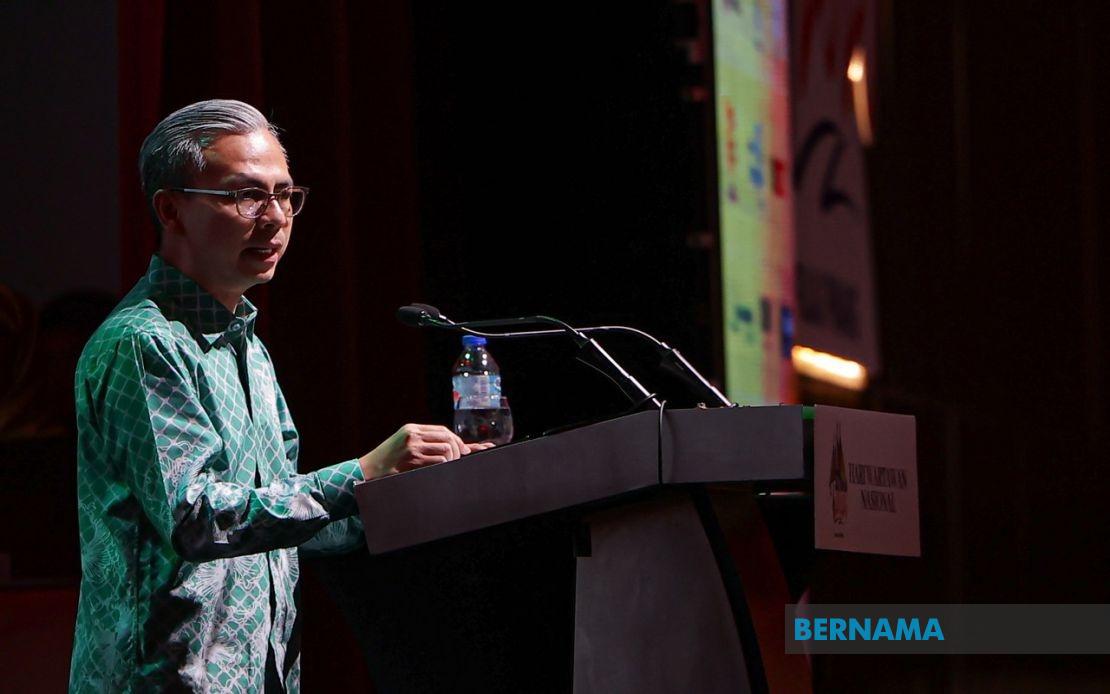
Telekom Malaysia has stepped forward as the newest strategic partner of Tabung Kasih@HAWANA, committing RM500,000 through its corporate social responsibility efforts to sustain welfare assistance for media practitioners and retirees across Malaysia. The telecommunications giant's involvement was unveiled during the National Journalists' Day 2026 Grand Finale in Butterworth, where Communications Minister Datuk Fahmi Fadzil highlighted the critical importance of private sector engagement in supporting the country's journalism sector.
The fund, which launched in April 2023, has already distributed RM2.26 million in financial assistance to 773 media professionals nationwide, demonstrating both the depth of need within the industry and the tangible impact such initiatives can deliver. TM's contribution represents a meaningful addition to this support network, though it underscores a broader concern facing Malaysia's media landscape. The voluntary withdrawal of major corporations from media spending reflects systemic pressures that cannot be solved by charitable interventions alone.
Minister Fahmi's remarks at the event carried a pointed message to Malaysia's business community, both government-linked companies and private enterprises. He explicitly encouraged firms to channel their advertising budgets toward local media outlets, framing such decisions as both corporate responsibility and commercial strategy. This dual appeal—emotional and economic—reflects government frustration at the advertising sector's dramatic contraction, which has seen annual media spending plummet from RM4.5 billion to approximately RM2 billion in recent years, a decline that fundamentally threatens the viability of newsrooms across the country.
The timing of TM's partnership is significant given the accelerating digital disruption of traditional media business models. Malaysian publishers have struggled to transition revenue streams away from print advertising toward sustainable digital offerings, while simultaneously competing with global tech platforms for advertising dollars and audience attention. Government initiatives like Tabung Kasih@HAWANA represent stopgap measures that provide immediate relief but cannot address underlying structural challenges within the industry.
Fahmi's call for corporate emulation of TM's approach reflects a recognition that government funding alone cannot sustain Malaysia's media ecosystem. The Communications Ministry appears to be pursuing a hybrid strategy: direct support through welfare funds, advocacy for increased corporate advertising investment, and technology-focused initiatives aimed at future-proofing journalism. However, this multi-pronged approach may prove insufficient without more fundamental interventions around digital revenue models and content monetisation strategies.
Beyond domestic support mechanisms, the ministry is also pursuing regional media strengthening through international collaboration. A memorandum of understanding signed between Bernama, Malaysia's national news agency, and TATOLI, Timor-Leste's counterpart, signals intent to deepen ASEAN-wide journalism cooperation. This initiative gains added significance given Timor-Leste's recent accession as ASEAN's 11th member, creating fresh opportunities for information exchange and professional development across Southeast Asian newsrooms.
The Project Sigma 2.0 initiative, led by Google Malaysia in partnership with the Malaysian Media Council and Malaysian Press Institute, represents another dimension of the government's strategy to enhance media sustainability. By focusing on technology and artificial intelligence training for journalists, the programme attempts to equip practitioners with skills relevant to the digital media environment. Yet such training initiatives, while valuable, operate at the margins of the deeper commercial crisis affecting traditional publishers.
Telekom Malaysia's involvement carries particular resonance given the company's dual role as both a major advertiser and digital infrastructure provider. As Malaysia's largest telecommunications firm, TM potentially wields significant influence over media purchasing decisions within corporate Malaysia. Whether this partnership signals a broader shift in corporate attitudes toward local media investment, or remains an isolated gesture of goodwill, will become apparent in coming months as other GLCs and private firms respond to Fahmi's implicit challenge.
The structural vulnerabilities in Malaysia's media sector have multiplied over the past decade, driven by global digital trends that have fundamentally disrupted historical business models. Local publishers compete not merely with each other but with international platforms offering superior targeting capabilities and data analytics. Against this backdrop, welfare assistance for individual practitioners, while humane and necessary, cannot substitute for systemic solutions addressing advertiser migration and audience fragmentation.
Minister Fahmi's emphasis on media integrity and credibility—the HAWANA 2026 theme—hints at an underlying government concern that media vitality matters for democratic discourse and social cohesion. When newsrooms face existential financial pressure, journalistic standards can erode, resources for investigative reporting shrink, and misinformation fills informational vacuums. This reality underpins the government's apparently acute interest in preserving institutional media capacity through multiple intervention channels.
The involvement of Prime Minister Datuk Seri Anwar Ibrahim at the HAWANA 2026 event, alongside Penang Chief Minister Chow Kon Yeow and senior Bernama leadership, signals high-level political attention to media sector challenges. This positioning suggests the government recognises that Malaysia's media sustainability represents a national priority extending beyond communications ministry remit. Whether such high-level engagement will translate into more comprehensive policy responses—such as regulatory reforms, digital infrastructure investment, or tax incentives for media innovation—remains to be determined.

