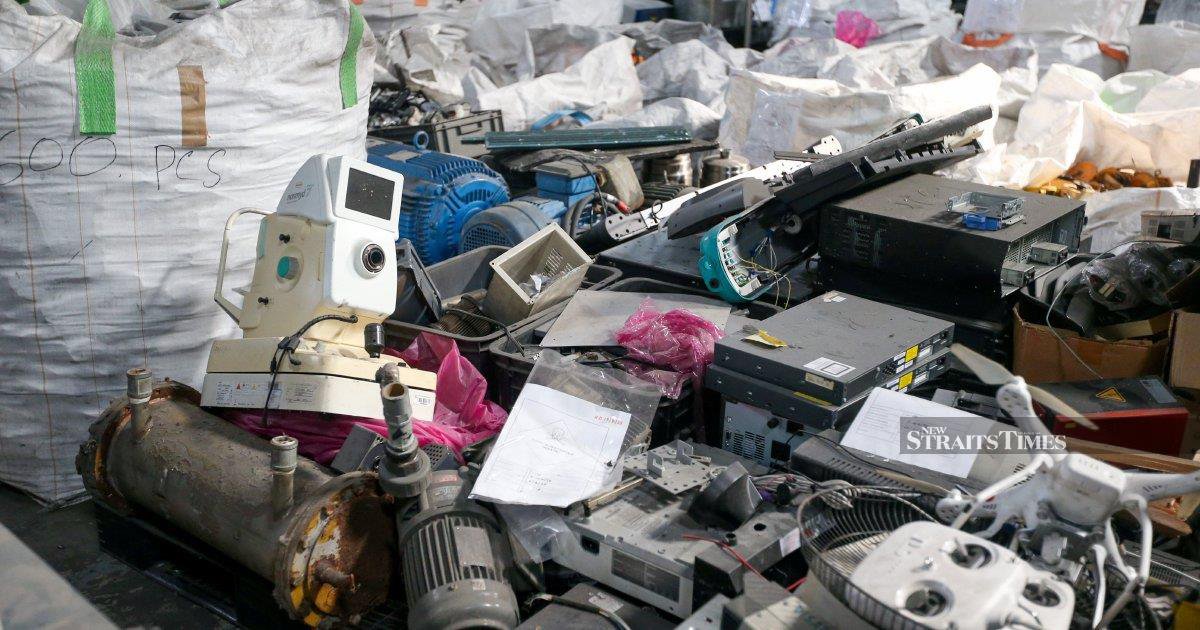
A significant development in law enforcement has emerged with the arrest of ten General Operations Force (GOF) personnel linked to an alleged extortion operation centred on an e-waste processing facility in Tasek Gelugor, Penang. The detention of the officers signals a serious breach of public trust, as it implicates those tasked with maintaining order in potential misconduct. The investigation underscores growing concerns about internal accountability within paramilitary units operating in Malaysia, particularly when allegations involve the abuse of authority to extract money or benefits from businesses.
The e-waste sector represents a critical intersection of environmental management and economic activity in Malaysia. As electronic waste accumulates from rising consumption of mobile devices, computers, and household appliances, processing facilities like the one in Tasek Gelugor serve an essential function in recycling valuable materials and preventing toxic components from contaminating landfills. The facility's vulnerability to alleged extortion highlights how legitimate operations, especially those in specialised or heavily regulated industries, may become targets for individuals exploiting their official positions. The implications extend beyond the immediate parties involved, affecting how industrial operators view their safety and operational security within the country.
Extortion cases involving law enforcement personnel are particularly damaging to public confidence in institutions. When those entrusted with protecting citizens instead allegedly use their authority to threaten or intimidate businesses, it undermines the rule of law and creates a chilling effect on legitimate economic activity. Small and medium-sized enterprises, which often form the backbone of Malaysia's industrial ecosystem, may become especially cautious about expanding operations or reporting other crimes if they perceive the authorities themselves as potential threats. This erosion of trust can have cascading effects throughout the regional economy, particularly in Penang where manufacturing and processing industries contribute substantially to local employment and tax revenue.
The GOF, formally the Pasukan Gerakan Khas (PGK) in Malay, operates across Malaysia performing internal security duties and general law enforcement operations. Personnel drawn from this force are stationed throughout the country to handle order maintenance and specialized security tasks. The arrest of ten officers from this unit suggests either a coordinated scheme or a broader pattern of misconduct that authorities felt compelled to investigate comprehensively. The scale of the operation under examination indicates this was likely not an isolated incident involving a single officer acting opportunistically, but rather a more systematic abuse that may have spanned weeks or months.
Investigators will need to establish the specifics of what demands were allegedly made and whether threats or violence were used to compel payment. Extortion differs from other theft crimes by involving coercion or intimidation as the means of obtaining money or property. If the arrested personnel were indeed leveraging their uniforms, access to intelligence, or capacity to create legal complications for the business, such actions would represent a profound misuse of state power. The investigation must also determine whether the scheme was sanctioned at any supervisory level or whether it represented rouge action by subordinate personnel.
For the e-waste processing industry in Penang and beyond, this incident raises uncomfortable questions about operational security and risk management. Factory owners and operators must navigate complex regulatory frameworks, environmental standards, and licensing requirements. If they simultaneously face threats from those supposed to enforce these regulations, the business environment becomes untenable. Other facilities may now reassess their security protocols and document interactions with law enforcement more carefully, potentially creating an atmosphere of defensive wariness that complicates legitimate regulatory work.
The timing and discovery of this alleged scheme deserves scrutiny. How the case came to light—whether through a formal complaint from the business, surveillance by anti-corruption authorities, or intelligence from within the GOF itself—will indicate whether Malaysia's internal accountability mechanisms are functioning effectively. If the facility's operators felt empowered to report the extortion, it demonstrates that channels exist for victims to seek redress. Conversely, if the investigation was initiated through a separate discovery, it suggests such schemes might otherwise go unreported due to victims' fear or distrust of the system.
This incident intersects with Malaysia's broader anti-corruption agenda. The Malaysian Anti-Corruption Commission (MACC) and other investigative agencies have intensified scrutiny of law enforcement personnel following various exposures of misconduct. The arrest of these ten officers reflects the state's stated commitment to rooting out abuse within its own institutions, though critics argue that enforcement remains inconsistent and that systemic reforms proceed too slowly. Each case that progresses to investigation and prosecution sends signals to the civil service about what conduct will not be tolerated.
Regionally, Malaysia's handling of this case will be observed by neighbouring countries and international observers monitoring governance standards in Southeast Asia. Countries throughout the region face similar challenges with law enforcement corruption, and responses to high-profile cases influence perceptions of institutional integrity. A thorough investigation and appropriate consequences for those found culpable would reinforce commitments to clean governance, while inadequate follow-through would reinforce scepticism about whether powerful institutions can truly police themselves.
For businesses in the e-waste and environmental sectors, as well as operators in other regulated industries, the resolution of this case will carry important lessons. It will signal whether they can expect law enforcement to function as a legitimate regulatory partner or whether coercive elements pose an operational risk. The e-waste sector itself is increasingly important as Malaysia positions itself as a leader in circular economy principles and sustainable manufacturing. Allowing such sectors to function with confidence in institutional integrity is essential to achieving broader environmental and economic goals.

