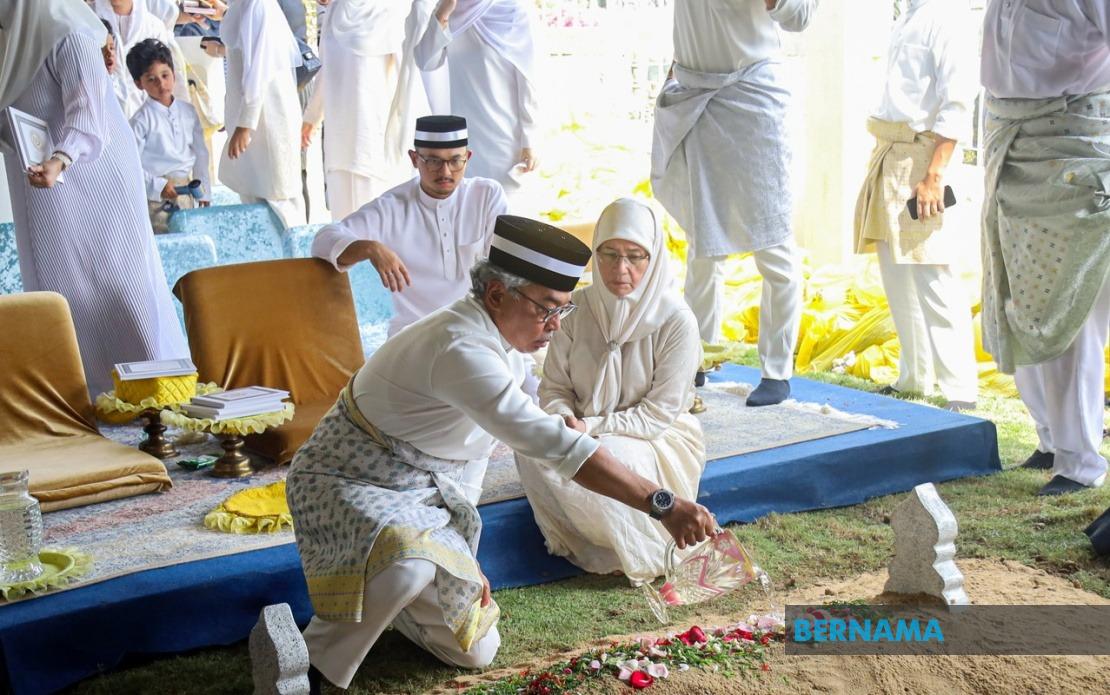
Tengku Datuk Seri Aishah, the elder sister of Pahang Sultan Al-Sultan Abdullah Ri'ayatuddin Al-Mustafa Billah Shah, was committed to the Royal Mausoleum in Pekan on Tuesday, following her death at a Kuala Lumpur hospital. The 69-year-old member of the Pahang royal household passed away at 9.25 pm on Monday, prompting a full state funeral befitting her standing within Malaysia's constitutional monarchy.
The burial ceremony drew senior figures from both the Pahang palace and the broader Malaysian political establishment. Al-Sultan Abdullah attended the interment alongside his consort, Tengku Ampuan Tunku Azizah Aminah Maimunah Iskandariah, and their son Tengku Mahkota Tengku Hassanal Ibrahim Alam Shah. The presence of the reigning sultan and his immediate family underscored the significance accorded to the occasion, reflecting both personal grief and the formal protocols governing royal state functions.
In addition to palace personnel, the funeral procession included notable figures from Malaysia's subnational political hierarchy. Melaka Yang Dipertua Negeri Tun Mohd Ali Rustam and Pahang Menteri Besar Datuk Seri Wan Rosdy Wan Ismail participated in the observances, demonstrating the cross-state coordination typical of major royal ceremonies. Their attendance signalled respect from the federal and state administrative apparatus, a customary acknowledgement when members of reigning families pass.
The funeral rites commenced at the Khalid bin Al-Walid Mosque in Jalan Padang Tembak, Kuala Lumpur, where prayers were conducted before the remains were transported from Subang Air Base to Pahang. This sequence reflects standard Islamic burial practices within the Malaysian royal context, where ceremonial protocols and religious observance intersect. The airborne transfer also reflects logistical arrangements routinely extended to high-ranking royalty and their immediate relations.
Upon arrival in Pekan at 1.25 pm, the cortège proceeded to Sultan Ahmad 1 Mosque, where additional prayers were performed following the zuhur congregational service. This layering of religious observance—prayers in Kuala Lumpur, then again in Pekan—reflects the spiritual dimensions of funeral proceedings within Islam, while also accommodating the geographic separation between the deceased's place of death and her place of burial. The repetition of these rites allowed the extended royal household and subjects in Pahang to participate meaningfully in the proceedings.
Following the mosque prayers, the remains were conveyed to the Royal Mausoleum adjacent to the mosque, where the interment ceremony proceeded with full honours. Pahang Mufti Datuk Dr Asmadi Mohamed Naim presided over the recitation of Yasin, followed by tahlil and additional prayers. These religious services, led by the state's senior Islamic ecclesiastic, conferred official religious legitimacy upon the proceedings while honouring the deceased's station within the Pahang royal lineage.
The moment when Al-Sultan Abdullah and Tunku Azizah individually scattered flowers and rose water upon the grave represented the culminating act of the funeral ceremony. Within Islamic tradition, such gestures by close family members carry profound emotional weight, particularly when the deceased is a sibling. The public performance of this intimate farewell, witnessed by government officials and members of the palace administration, balanced private familial grief with public ceremonial duty.
Tengku Datuk Seri Aishah's death marks another transition point within Malaysia's reigning families, institutions that remain central to the nation's constitutional framework. As the elder sister of the incumbent Sultan of Pahang, she represented a link to earlier generations of the royal household and carried institutional memory spanning decades of palace governance. Her passing inevitably prompts reflection on the generational succession and continuity within Malaysia's nine constitutional monarchies.
The funeral arrangements, from the initial prayers in Kuala Lumpur through the final interment in Pekan, exemplified the formal protocols governing royal deaths in contemporary Malaysia. These ceremonies serve multiple functions simultaneously: they provide a structured context for familial mourning, affirm the religious and cultural values underpinning the monarchy, and reaffirm the state's recognition of royal lineage through official participation. For Pahang specifically, the ceremony reinforced the continuity of dynastic succession and institutional stability that Malaysians associate with their constitutional arrangements.

