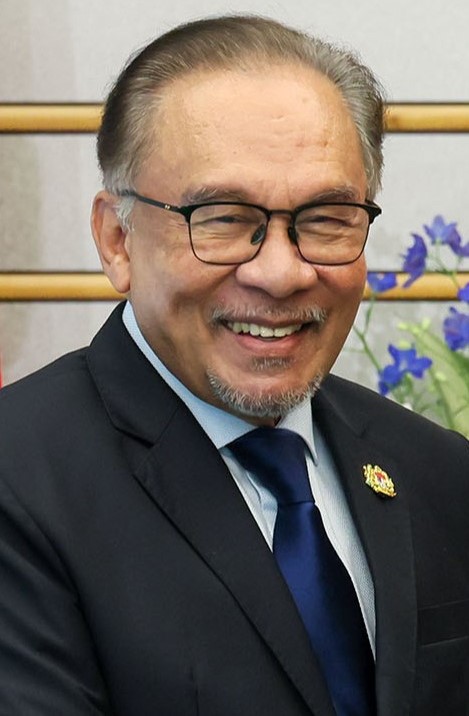
Tengku Datuk Seri Zafrul Tengku Abdul Aziz, a prominent figure in the Prime Minister's Office who serves as senior political adviser, has thrown his hat into the ring for the 16th General Election by proposing a candidacy in Selangor, Malaysia's most populous state and economic powerhouse.
The move signals a shift towards active electoral politics for a figure who has previously operated at the apex of the government's political machinery. Selangor, with its 22 parliamentary constituencies and status as the country's industrial and commercial heart, represents one of the most competitive battlegrounds in Malaysian politics. The state has consistently determined the direction of national government formation, making any candidacy there a high-stakes proposition.
Tengku Zafrul's entry into electoral politics carries implications for factional dynamics within the ruling coalition. As someone positioned close to the Prime Minister, his candidacy could strengthen the administration's representation in a state where government control is perpetually contested. Selangor's opposition-held status since 2018 has complicated federal-state relations, making the acquisition of parliamentary seats there strategically crucial for the national government's legislative majority.
The proposal underscores the competitive pressures facing Malaysian politicians even at senior advisory levels. Service in the Prime Minister's Office, while prestigious, does not guarantee electoral success or a predetermined seat allocation. The fact that Tengku Zafrul requires party approval and nomination machinery indicates that even high-ranking officials must navigate the complex web of constituency selection processes and party gatekeeping.
Selangor's political composition makes any candidacy there inherently significant for national representation. The state encompasses affluent urban areas, sprawling suburban constituencies with volatile voter bases, and satellite towns where demographic shifts regularly alter electoral calculations. Success in Selangor typically requires candidates with substantial local networks, community standing, and resources to manage diverse constituent interests across multiple competing priorities.
The timing of this proposal warrants attention to the broader political calendar and coalition positioning. General Elections in Malaysia are called at the discretion of the Prime Minister, usually within a five-year mandate period. Politicians typically crystallise their candidacy intentions well before official polls are announced, allowing parties to manage internal selections and allocate constituencies across competing claims. Tengku Zafrul's early signalling demonstrates the competitive nature of seat selection even among establishment figures.
For Malaysian political observers, the emergence of senior government officials as parliamentary candidates raises questions about the extent to which administrative and political spheres remain separate. Many democracies maintain clearer institutional boundaries between advisers and elected representatives. Tengku Zafrul's transition from advisory capacity to candidate status illustrates how Malaysian politics often conflates senior bureaucratic positions with electoral ambitions, creating potential tensions between administrative impartiality and partisan involvement.
The Selangor focus also reflects the state's outsized importance in national coalition-building. No government can govern Malaysia comfortably without substantial parliamentary representation from Selangor. The state's 22 seats represent approximately 8% of all parliamentary constituencies, making it disproportionately influential in determining which coalition achieves majority government. A single seat gained or lost in Selangor could theoretically alter the entire coalition mathematics at national level.
Historically, Selangor elections have showcased intense three-cornered or multi-cornered battles involving government, opposition, and occasionally independent candidates. The state's heterogeneous voter composition—spanning educated urban professionals in areas like Petaling Jaya and Shah Alam, working-class communities in industrial zones, and rural constituencies in outer districts—demands candidates capable of appealing across socioeconomic divides. Tengku Zafrul's appeal across such constituencies remains untested electorally.
The proposal also signals something about the succession planning and renewal within Malaysia's political establishment. Senior government advisers who successfully transition to electoral politics often enhance their political portfolios and secure medium-term political futures beyond their advisory roles. Electoral validation through constituency representation provides politicians with independent power bases, making them less dependent on prime ministerial patronage and more autonomous within party hierarchies.
From a Southeast Asian perspective, the willingness of senior government officials to seek direct electoral mandates reflects common patterns across the region's democracies, where the distinction between administrative and political roles frequently blurs. This contrasts with Westminster traditions where ministers typically maintain their parliamentary seats, but differs in the degree to which purely advisory positions translate into candidacy opportunities.
The Selangor candidacy proposal will now enter the party selection machinery, where Tengku Zafrul's position as a senior adviser may provide advantages but offers no guarantees. Selangor constituencies attract multiple aspirants, and party leadership must balance competing claims while considering electability, local support, and broader coalition positioning. Whether his proposal receives formal approval remains a matter for party deliberation and political negotiations that typically occur beyond public view.
Ultimately, this development reinforces the reality that Malaysian politics remains highly personalised and faction-driven, even at establishment levels. The ability to secure a candidacy in a competitive state like Selangor requires more than administrative rank—it demands political capital, constituent support, and party confidence that a candidate can translate government backing into electoral victory.