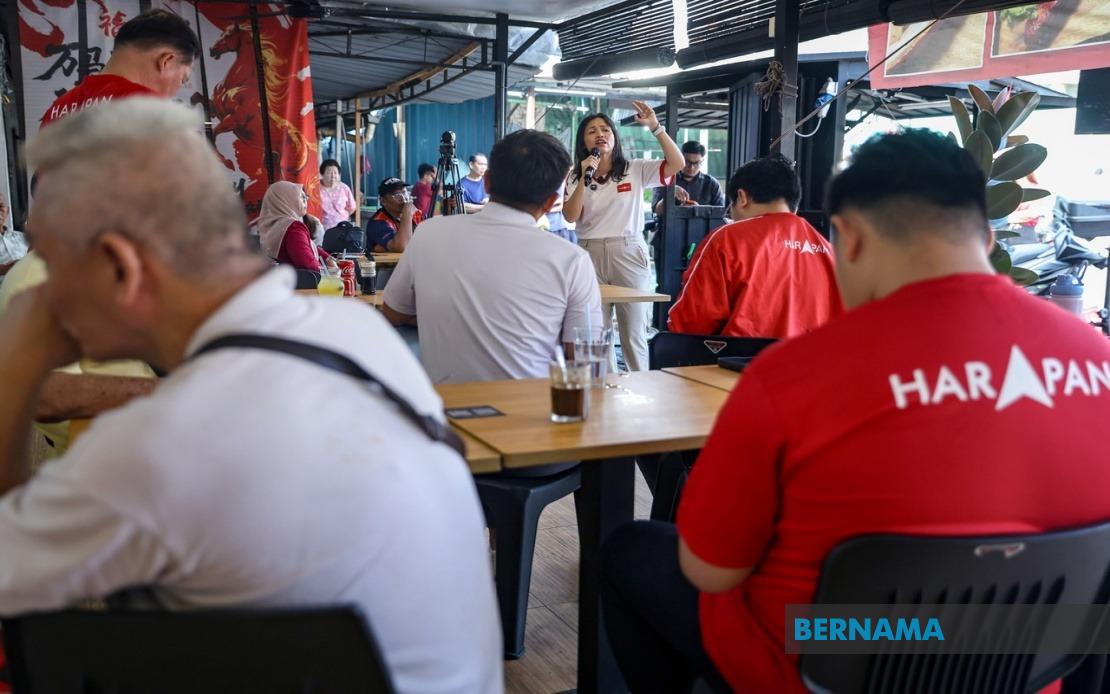
The Johor state election has triggered fresh controversy over the boundary between government business and political campaigning, with opposition figures challenging the Menteri Besar's conduct at a technical education event. At a gathering in Kulai on July 7, Johor DAP chairman Teo Nie Ching drew attention to what she characterised as a problematic blurring of roles at a Johor MARA TVET Roadshow held at the Inland Revenue Board Hall in Kluang on July 4, where Datuk Onn Hafiz Ghazi, the state's chief executive, had made an appearance.
The core allegation centres on whether students attending an ostensibly educational programme were then subjected to political messaging. According to Teo, who also serves as Deputy Communications Minister, the party has received formal complaints from parents and students asserting they received instructions to participate in the roadshow, with warnings that non-attendance would be recorded as absence. The troubling aspect, she contended, was that the event subsequently became a venue for canvassing votes for Barisan Nasional candidates, with the Menteri Besar allegedly identifying the BN contender by their ballot number and directly soliciting student support.
Teo's critique highlighted a tension between permissible government engagement and prohibited campaign activity. She drew a deliberate distinction: there exists no inherent problem with a government official participating in a government-sponsored educational initiative. The legitimate concern, she argued, arises when such platforms are repurposed for partisan political messaging. She posed a pointed question about whether a government agency's premises could lawfully host party political activities, suggesting that if the TVET roadshow was genuinely a government programme, it should have remained insulated from campaign work, and conversely, if it functioned as a political event, its use of public facilities warranted scrutiny.
To substantiate her position, Teo indicated that Pakatan Harapan possesses documentary evidence of the roadshow's stated objectives, official correspondence mandating student attendance, and video material purporting to capture the campaign-related statements made during the event. This accumulated documentation suggests the party views the matter as sufficiently serious to warrant escalation beyond mere political rhetoric. She also appealed to parental concern, invoking the perspective of mothers whose children were directed to participate in what they understood as an educational activity, only to encounter political pressure in that setting.
The incident reflects broader tensions surrounding election conduct in Malaysia, where the distinction between government communication and campaign messaging can become obscured during election periods. The question of whether students at an educational institution can be compelled to attend events that subsequently feature political messaging touches on issues of institutional autonomy, student freedom, and the proper use of government resources. For educational administrators, the situation underscores the delicate navigation required when government officials wish to engage with student populations during campaign periods.
Teo indicated that Pakatan Harapan candidates would determine appropriate follow-up measures, which could include filing a formal complaint with the Election Commission. This procedural option suggests the opposition believes the alleged conduct merits investigation by the body responsible for administering electoral rules. The Election Commission's response, should a complaint be lodged, could establish important precedent regarding what constitutes improper use of government-linked events for campaign purposes.
Beyond the specific incident, Teo also addressed broader governance tensions between Johor's state administration and the federal government. She took issue with recent comments by Onn Hafiz criticising federal policies as burdensome to residents, characterising such criticism as politically motivated blame-shifting. She contended that when policies prove popular, the state administration claims credit, but when they generate public discontent, they deflect responsibility to federal leadership, the opposition coalition, or specific parties like DAP and PKR. Her retort emphasised that major policy decisions require Cabinet approval, positioning the Menteri Besar's criticisms as factually misleading.
Lim Kit Siang, the veteran DAP leader present at the Kulai forum, brought the discussion to broader ideological terrain. He called upon Johor voters to reject what he termed racial politics and instead rally behind the "Malaysian Dream" framework, which he defined as anchored in principles of equality, fundamental freedoms, economic prosperity, and respect for human rights. His intervention shifted focus from the specific incident to the overarching contest of ideas that underpins the election, positioning the choice before voters as one between particularist and universalist visions of Malaysia's future.
Lim cautioned that constructing a genuinely united Malaysia constitutes a protracted endeavour incapable of realisation through a single electoral cycle. He urged voters to consolidate their backing for this inclusive vision rather than fragment their support across competing candidates or parties. This framing suggests that the election represents not merely a contest for state office but a test of whether Malaysians remain committed to a shared, multi-communal national project or will gravitate toward polarising alternatives.
The timing of the controversy carries significance within the broader electoral calendar. With early voting underway on July 7 and general polling scheduled for July 11, the allegations against the Menteri Besar emerge during the final stretch of the campaign, when voters are making their decisive choices. The Johor state election encompasses 172 candidates contesting 56 seats, making it a substantial electoral exercise that will shape the peninsula's political trajectory for the coming term. For Malaysian observers monitoring electoral fairness, the episode exemplifies the kinds of boundary disputes that routinely surface when campaign periods commence, particularly involving state machinery and resources.
The incident also resonates beyond Johor's borders, as it reflects nationwide concerns about the separation of government functions from campaign activity. Other states and the federal government face comparable pressures to ensure that official programmes, facilities, and personnel do not become instruments of partisan advantage. How the Election Commission addresses potential complaints from this matter could influence how similar situations are managed in future electoral contests across Malaysia, establishing norms about permissible conduct by government officials during campaign seasons.

