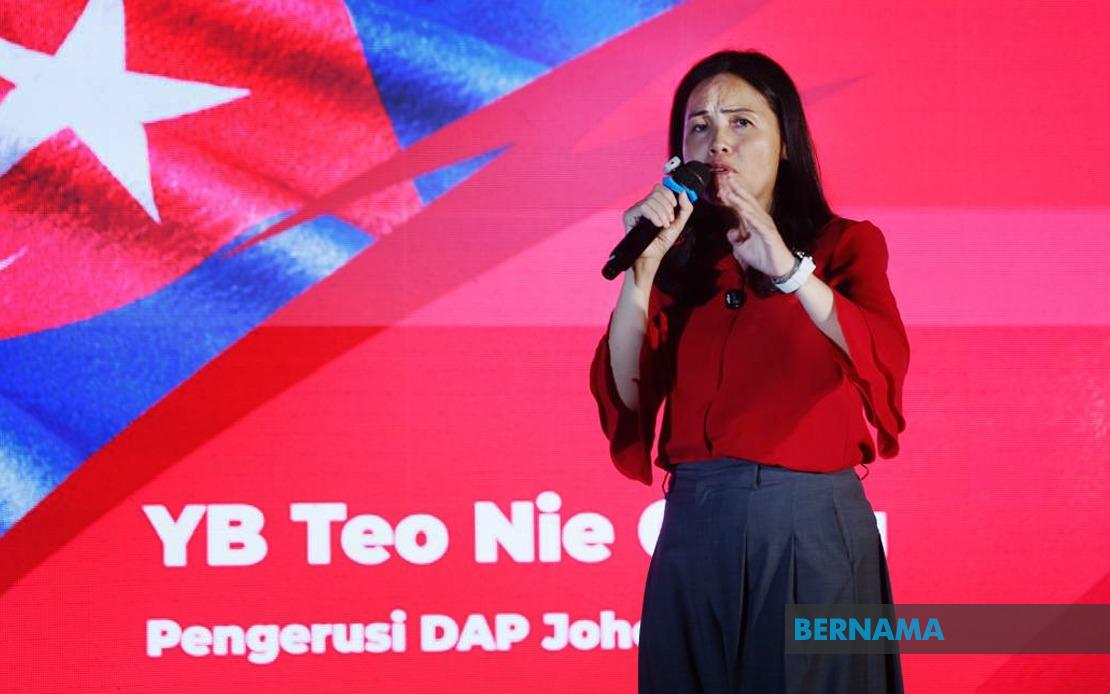
Johor's Democratic Action Party leadership has raised serious questions about the state government's plan to introduce appointed state assemblymen, with party chairman Teo Nie Ching warning that such positions could erode public confidence in democratic processes. Speaking at a campaign rally in Paloh on the eve of Saturday's state election, Teo expressed concern that individuals appointed without voter scrutiny would circumvent the democratic legitimacy that comes from ballot-box endorsement, potentially creating a precedent that weakens the transparency expected of elected institutions.
The controversy centres on legislative amendments passed by the Johor State Legislative Assembly on May 7, which authorise the appointment of up to five additional state assemblymen. While state authorities have framed the move as necessary to strengthen the assembly's overall capacity and representation, the mechanism has drawn scepticism from opposition figures who question both its necessity and its underlying motivations. Teo specifically pressed the state government to clarify who these appointees would be and under what criteria they would be selected, demanding greater transparency to preserve public trust in administration.
Teo's challenge carries particular weight given the complex political dynamics at play in Johor. The state government has relied substantially on support from the Pan-Malaysian Islamic Party (PAS) in recent elections, and critics worry that appointed positions could be used to reward allies or consolidate power without requiring electoral validation. By publicly asking "who will they be appointing," Teo was signalling to voters that the mechanism lacked sufficient clarity and could be open to patronage arrangements that bypass democratic norms.
As Deputy Communications Minister, Teo also defended the federal Unity Government's reform agenda, though she candidly acknowledged that the administration remains imperfect. She characterised the current government as undertaking systemic changes implemented gradually across multiple policy domains, particularly in education and social welfare, rather than pursuing sweeping overhauls that might prove disruptive. This measured defence suggests the government recognises public appetite for meaningful reform while cautioning against unrealistic expectations of rapid, comprehensive transformation.
Educational policy has emerged as a flagship area for the MADANI administration's claimed reforms. Teo highlighted the automatic admission guarantee for all SPM students achieving ten A-grades into matriculation programmes, a policy that theoretically removes barriers based on socioeconomic or ethnic background. Additionally, the government has expanded access to educational institutions for holders of the Unified Examination Certificate (UEC), a move that particularly resonates with Malaysian Chinese families and communities historically marginalised from mainstream educational pathways.
Funding increases for Chinese independent schools exemplify the government's approach to incremental institutional change. Allocations surged to RM20.16 million in the current fiscal year from RM12 million in 2019, representing a substantial 68 percent increase that symbolises both genuine material improvement and political commitment to serving specific constituencies. These figures matter beyond mere numbers; they signal the government's willingness to redirect resources toward educational institutions that reflect Malaysia's multicultural fabric, an especially resonant message in Johor where Chinese voters remain a significant electoral force.
The timing of these critiques and defences is strategically important, coming as Johor prepares for a pivotal election cycle. Approximately 2.7 million registered voters across the state are scheduled to cast ballots to select 56 state representatives on Saturday, making this contest a significant barometer of political sentiment in one of Malaysia's most electorally influential states. Both the Unity Government and its opponents recognise that the outcome in Johor will shape the trajectory of Malaysian politics beyond the state level, influencing perceptions of federal government performance and coalitional stability.
Teo's simultaneous questioning of governance mechanisms while defending the administration's policy record reflects the balancing act facing government-aligned figures. By acknowledging that the Unity Government "scores" less than perfectly but arguing that genuine progress has been achieved, she attempted to maintain credibility with reform-minded voters whilst preserving party loyalty and government cohesion. This rhetorical strategy assumes voters will reward incremental but genuine improvement over either inaction or the instability that might result from coalition breakdown.
The appointed assemblymen issue, however, threatens to undermine this messaging by appearing to contradict democratic principles that the government theoretically champions. Critics argue that creating unelected positions without clear, transparent criteria contradicts the openness and accountability that justify government authority in democratic systems. The opacity surrounding the appointments process suggests that even government supporters harbour doubts about the measure's legitimacy, explaining why state authorities have not publicly announced their selection criteria or identified prospective appointees.
For Malaysian voters, particularly those in Johor, the debate encapsulates broader questions about governance quality under the current administration. The government can point to demonstrable policy improvements in education and welfare, achievements that represent substantive gains for ordinary citizens. Yet these accomplishments risk appearing hollow if institutions themselves become less transparent or more prone to patronage manipulation. The challenge facing the Unity Government is therefore not merely delivering popular policies but doing so through mechanisms that maintain public confidence in institutional integrity.
The stakes extend beyond Johor's borders. How the state government implements and justifies its appointed assemblymen scheme will signal to other state administrations whether such mechanisms represent an acceptable governance innovation or a cautionary tale about creeping centralisation and reduced democratic accountability. For Peninsular Malaysia's federal government, managing these perceptions becomes crucial to maintaining the coalition confidence essential for national stability over the coming years.
As voters prepare for Saturday's election, the appointed assemblymen controversy demonstrates that electoral politics in contemporary Malaysia cannot be reduced to simple left-right or ethnic divisions. Instead, voters increasingly weigh institutional quality, transparency in governance, and the credibility gap between government rhetoric and actual practice. The election's outcome will partly reflect how successfully different political actors have navigated these competing demands.

