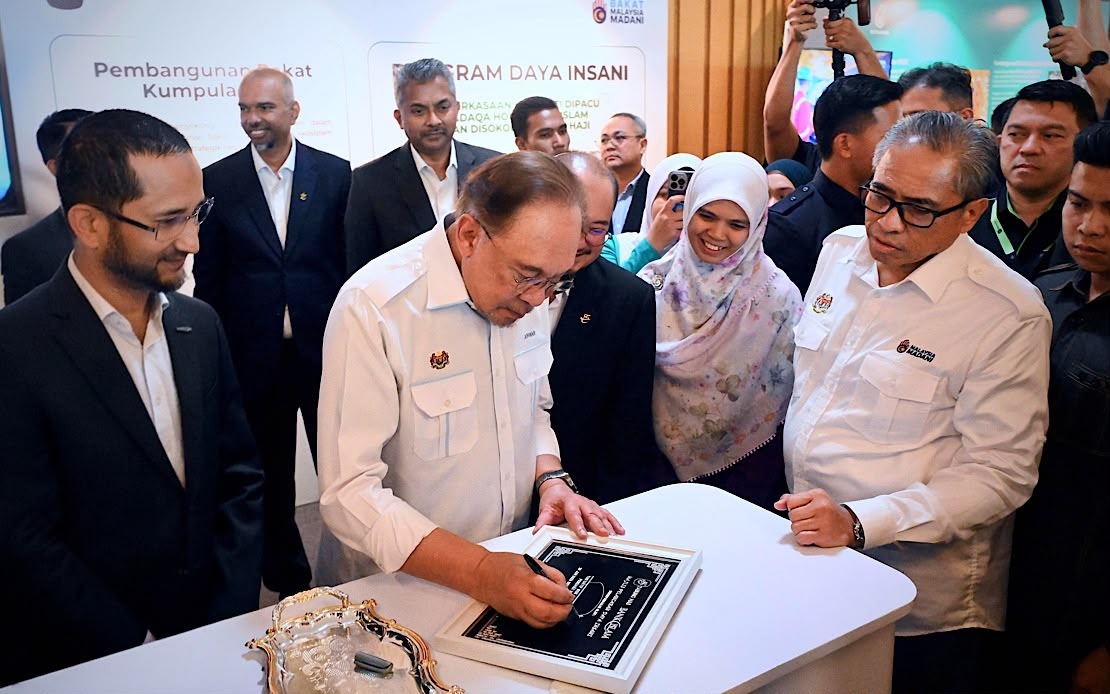
Tabung Haji (TH) and Bank Islam Malaysia Berhad have joined forces to establish a comprehensive youth empowerment initiative aimed at transforming economic prospects for vulnerable young people across Malaysia. The Asnaf Youth Development Programme for Inclusive and Sustainable Empowerment, known as DAYA INSANI, represents a significant commitment to human capital development with an initial allocation of RM1 million channelled through Bank Islam's social finance arm, Sadaqa House. The programme's launch came during Prime Minister Datuk Seri Anwar Ibrahim's rollout of the MADANI Talent initiative in Sendayan, Negeri Sembilan, underscoring government and institutional alignment around national talent development priorities.
The initiative targets a vulnerable demographic that has historically faced barriers to economic mobility. By combining structured skills development with industry exposure and guaranteed job placement pathways, DAYA INSANI addresses a critical gap in Malaysia's social safety net. The partnership recognises that asnaf youth and orphans require tailored support mechanisms beyond conventional training programmes to transition effectively into stable employment. This strategic approach reflects broader regional shifts toward inclusive economic models that acknowledge how investing in marginalised communities generates sustainable development returns.
The programme's reach extends across multiple high-demand sectors, each anchored by established institutional partners with proven training capacity. The Kulim Hi-Tech Park Skills Centre will develop technical workers capable of meeting manufacturing and industrial standards, while Kolej Universiti Bestari and Kumpulan Medic Iman Sdn Bhd collaborate to produce qualified professional nurses. The Malaysian Professional Accountancy Centre contributes expertise in accounting certification, and Showme Education specialises in therapeutic professional training. This diversified sectoral approach ensures participants can pursue pathways aligned with their aptitudes and market demand, rather than funnelling all beneficiaries into single career tracks.
TH Group Managing Director and Chief Executive Officer Mustakim Mohamad positioned the initiative within the institution's foundational philosophy regarding Islamic finance and community stewardship. He articulated that human capital development represents the most valuable long-term investment for the Muslim community, framing youth empowerment as religiously and economically coherent. This framing carries particular resonance in Malaysia's Islamic institutional context, where Tabung Haji functions simultaneously as a pilgrimage fund manager and a vehicle for Islamic social finance objectives. The narrative reflects how faith-based institutions increasingly integrate commercial operations with explicit social welfare mandates.
Bank Islam's participation through Sadaqa House demonstrates how commercial banks operationalise corporate social responsibility through dedicated social finance platforms. Raja Datin Paduka Teh Maimunah Raja Abdul Aziz, Bank Islam's Group Chief Executive Officer, emphasised the bank's conviction that systemic barriers rather than individual capability determine youth outcomes. This philosophical stance justifies institutional intervention and signals that the banking sector recognises its role in correcting market failures that leave low-income youth unable to access quality training. Such positioning may influence how other financial institutions structure their community engagement strategies across Southeast Asia.
The programme's existing cohorts reveal practical implementation momentum. A nursing diploma initiative begun in 2024 currently supports 19 enrolled students with one graduate already placed in employment, demonstrating functional job placement mechanisms. A technical training cohort at Kulim Hi-Tech Park commenced in June with 13 participants, with management targeting expansion to 100 participants in the near term. These measurable milestones suggest the programme has moved beyond conceptual planning into execution, though scaling to 100 participants represents significant capacity and funding expansion requirements. The trajectory indicates organisers view the RM1 million initial fund as seed capital requiring subsequent contributions to sustain projected growth.
Contribution mechanisms remain deliberately open to encourage ecosystem participation beyond government and the two anchor institutions. Corporate companies, institutions and individuals may now direct funds toward the DAYA INSANI initiative, creating distributed financing models that reduce dependency on single funders. This approach resonates with regional philanthropic trends emphasising collaborative social investment and stakeholder pooling. Malaysian corporations increasingly face investor and consumer pressure to demonstrate concrete social impact, making vetted programmes with institutional credibility and measurable outcomes attractive investment vehicles. The openness to contributions potentially unlocks corporate matching funds, employee giving programmes and foundation support that could substantially accelerate programme scaling.
The initiative's alignment with government talent development agendas enhances its institutional stability and policy support trajectory. By synchronising with the MADANI Talent framework, DAYA INSANI positions itself as complementary to national human capital strategies rather than as substitute or competing initiative. This coordination suggests the programme may benefit from government advocacy, regulatory support and potential policy integration that amplifies reach. For Malaysian policymakers concerned with youth employment, inequality reduction and skills alignment with economic transformation, institutional programmes demonstrating effectiveness in these domains provide evidence bases for scaling successful models.
TH's simultaneous collaborations with MyPAC and INCEIF University for accountancy and Islamic finance professional development indicate the programme extends beyond immediate employment toward long-term professional trajectory building. By anchoring training in professional certification frameworks, participants gain credentials with regional and potentially international recognition rather than localised certificates. INCEIF's global standing in Islamic finance education particularly positions participating youth for mobility within regional financial services sectors, addressing the reality that contemporary career trajectories increasingly transcend national boundaries. This elevation of training ambitions beyond domestic employment reflects recognition that sustainable economic mobility requires globally competitive credentials.
The programme's structure implicitly acknowledges how skills gaps interact with social disadvantage to perpetuate inequality. Asnaf youth face compounded barriers including limited family resources for training investment, restricted social networks providing employment access, and potentially inadequate foundational education. By integrating financial support, professional instruction and employer connections, DAYA INSANI attempts to address multiple constraint categories simultaneously. This comprehensive approach contrasts with siloed interventions targeting single barriers, suggesting institutional designers understand interconnected pathways out of poverty. For Malaysian policymakers and development practitioners, the model illustrates how social programmes increasingly require multi-sector coordination and bundled services rather than standalone initiatives.
The initiative carries implications extending beyond immediate participant outcomes toward broader institutional legitimacy questions in Malaysia's Islamic finance sector. Tabung Haji has faced governance scrutiny in recent years, making visible community benefit demonstrations strategically important for restoring stakeholder confidence. Similarly, Bank Islam operates within competitive commercial banking environments where social finance credibility differentiates market positioning. By implementing measurable, outcomes-focused youth empowerment programmes, both institutions generate evidence demonstrating that Islamic financial values translate into tangible community benefit. This legitimacy dimension remains partly implicit but carries weight in stakeholder perceptions regarding whether Islamic financial institutions authentically prioritise social welfare alongside commercial returns.
Sustainability considerations remain relevant for programme longevity beyond initial enthusiasm phases. The RM1 million allocation provides foundation funding but represents relatively modest capital when distributed across multiple training streams and expanding participant cohorts. Long-term viability requires either sustained commitment from existing funders or successful mobilisation of the announced open contribution mechanisms. Regional precedents suggest such programmes sometimes experience funding discontinuities as initial momentum fades. DAYA INSANI's explicit invitation for ongoing corporate and individual contributions suggests awareness of this sustainability challenge, though converting institutional interest into reliable funding streams historically proves demanding. The programme's success ultimately depends on demonstrating such compelling participant outcomes that funders view continued contribution as justified investment.
Looking forward, the DAYA INSANI initiative establishes a replicable model for how Islamic financial institutions can operationalise inclusive development objectives through strategic sectoral partnerships. Should the programme achieve projected participant numbers and employment outcomes, it could influence how other Malaysian and regional institutions structure youth empowerment initiatives. The clear sectoral focus, measurable milestones, institutional partnership architecture and open contribution mechanisms provide a template adaptable across different contexts and industry sectors. For Southeast Asian development practitioners observing how institutions navigate talent development challenges, the programme offers practical evidence regarding what institutional design elements facilitate scale and sustainability in youth empowerment initiatives.

