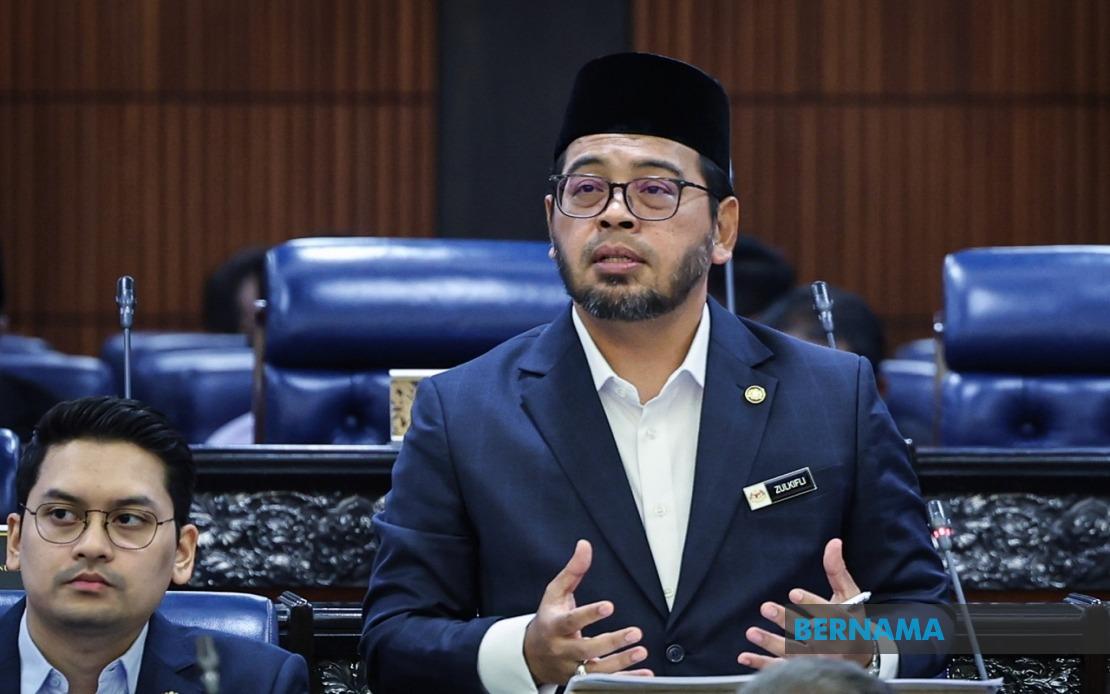
The financial catastrophe that engulfed Lembaga Tabung Haji (TH) need not have happened, according to Minister in the Prime Minister's Department (Religious Affairs) Dr. Zulkifli Hasan, had the institution responded promptly to regulatory alerts concerning its deteriorating financial health. Speaking during parliamentary debate on the Royal Commission of Inquiry report into TH's collapse, Zulkifli outlined how Bank Negara Malaysia issued five separate warning letters to TH leadership and the responsible minister between August 2014 and September 2016—a span of more than two years during which meaningful intervention could have arrested the decline.
The minister's assertion places fresh emphasis on a critical timeline in TH's downfall: early warning signs were clearly visible to financial regulators long before the institution required a government bailout. Had management heeded BNM's guidance in 2014, Zulkifli suggested, the problem could have been contained without cascading into a full-blown crisis requiring state intervention. Instead, TH's asset-liability position deteriorated progressively, widening the deficit to roughly RM10 billion by the end of 2018—the point at which the government felt compelled to step in to prevent systemic fallout that could have threatened broader financial stability and endangered millions of pilgrims' savings.
According to Zulkifli, BNM's supervisory role over non-bank financial institutions like TH required the central bank to monitor developments continuously and raise concerns when red flags emerged. However, the minister noted with evident frustration that while TH formally acknowledged BNM's concerns through correspondence and discussions, the institution's actual conduct demonstrated that these warnings received insufficient weight in decision-making. The pattern suggests a disconnect between rhetorical acceptance of regulatory guidance and substantive implementation of corrective measures—a distinction that would have serious implications for Malaysian financial regulation and institutional accountability.
One particularly troubling aspect of TH's governance failure involved the declaration of dividends at a time when the institution's liabilities exceeded its assets, a practice that directly contravened Section 22 of the Tabung Haji Act. This occurred in tandem with the distribution of hibah payments—religious grants made to depositors—that were not calibrated to reflect TH's actual financial condition. These practices persisted until 2017, meaning that even as BNM issued its warnings and the central bank's monitoring revealed deteriorating fundamentals, TH continued distributing funds to pilgrims in ways that depleted capital reserves and masked the underlying insolvency. For a faith-based institution managing savings for Muslim pilgrims, such practices represented a betrayal of the trust placed by millions of Malaysian contributors.
The RCI report, which examined TH's operations and collapse, endorsed the view that the institution should never have received an unqualified audit certificate. Rather, matters flagged by auditors should have been classified as non-compliance issues, warranting a qualified audit opinion that would have signalled serious governance problems to stakeholders and regulators. This technical accounting matter carries profound implications: a clean bill of health from auditors may have emboldened TH management to dismiss BNM's concerns as conservative regulatory caution rather than recognizing them as urgent signals of institutional malfunction. The failure of audit processes to communicate the true state of TH's finances represents a secondary governance breakdown that compounded the primary failure of management and boards to respond to regulator warnings.
Zulkifli provided assurance that the government is pursuing a comprehensive remedial agenda to prevent recurrence. Amendments to the Tabung Haji Act 1995 will be fast-tracked to strengthen governance frameworks already partially implemented. Forensic auditing of investments identified in the RCI report as problematic has commenced, with investigators examining specific transactions where losses were incurred or assets deployed imprudently. The government has also endorsed proposals to establish a Multi-Agency Task Force that would systematically investigate each investment flagged as at-risk, allowing authorities to recover assets where possible and identify individual accountability for poor decisions.
The minister's framing of the government's response emphasizes four pillars: investigation, enforcement action, asset recovery, and legal-regulatory strengthening. This approach reflects lessons from institutional failures across Southeast Asia and globally, where post-crisis reforms typically focus on both retrospective accountability and prospective institutional redesign. For TH specifically, the emphasis on investigation and enforcement signals that criminal or civil liability may follow for individuals whose decisions contributed to the RM10 billion deficit. Asset recovery efforts, meanwhile, suggest authorities are pursuing legal action to recoup losses from questionable investments, though the likelihood of full recovery is unclear given the years elapsed since problematic transactions occurred.
The parliamentary debate on the RCI report engaged 39 members across more than ten hours of discussion, reflecting the significance of TH's collapse in Malaysian politics and public consciousness. The pilgrim fund holds symbolic weight extending far beyond its balance sheet: TH manages life savings accumulated by ordinary Malaysians pursuing the Islamic obligation of hajj, one of the five pillars of Islam. The institution's failure represented not merely a financial scandal but a betrayal of religious trust and a breach of state responsibility to safeguard institutions entrusted with managing resources of profound spiritual importance. Parliamentary engagement suggests that political will exists to pursue accountability and reform, though whether this translates into effective enforcement and genuine institutional transformation remains an open question.
Dewan Rakyat Speaker Tan Sri Johari Abdul noted that a third session on the TH report remains scheduled for October, providing additional opportunity for parliamentary scrutiny and questioning. This staged approach allows lawmakers to examine specific aspects of the RCI findings and the government's proposed remedial measures in greater detail. The extended parliamentary engagement also signals that TH's collapse will not be quickly forgotten or minimized—a strong signal to other government-linked institutions and financial bodies that public oversight of their operations is active and sustained. For depositors whose savings suffered from TH's mismanagement, continued parliamentary attention may at least provide some assurance that their losses were neither ignored nor casually dismissed.
For Malaysian depositors and the broader Southeast Asian financial community, the TH case illustrates the consequences of regulatory warnings unheeded and governance processes that fail to translate audit findings into corrective action. The institution's collapse raises uncomfortable questions about the adequacy of central bank oversight of non-bank financials, the independence and effectiveness of audit functions, and board-level accountability for strategic decisions made amid clear signals of institutional stress. As TH undergoes restructuring and the government implements legislative and governance reforms, the outcomes will likely influence how other regional regulators approach oversight of faith-based financial institutions and government-linked entities managing public savings. The RM10 billion cost of the bailout represents not merely a fiscal burden on Malaysia's budget but a tangible measure of what inattention to early warning signs can ultimately extract from the public purse.

