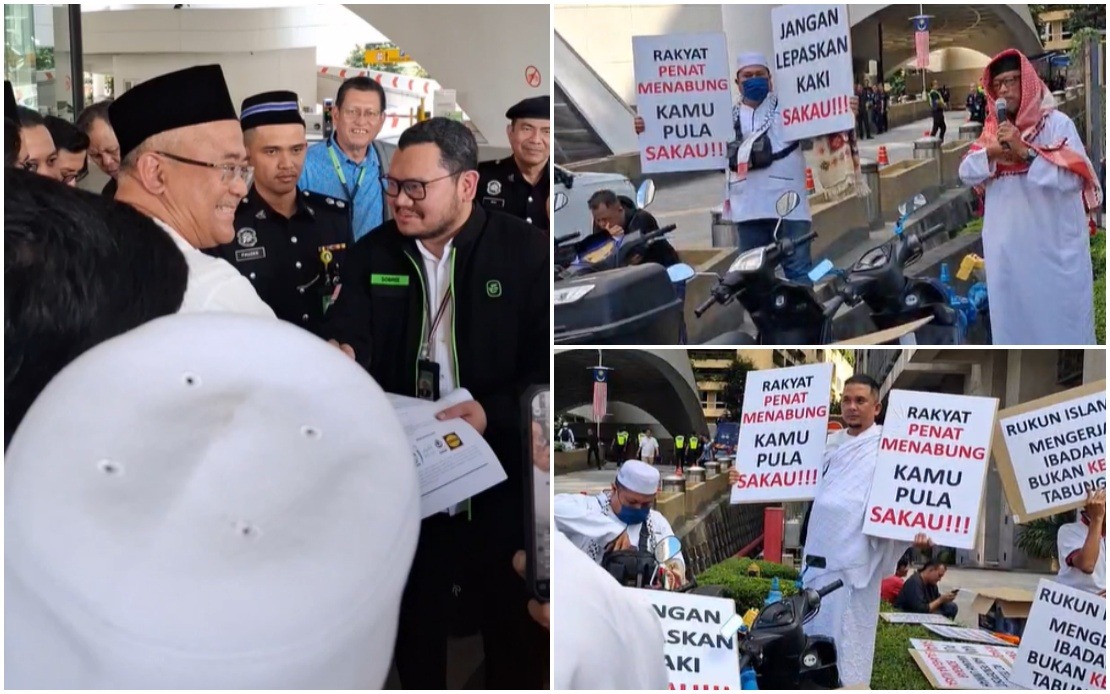
The investigation stemming from the Royal Commission of Inquiry into Tabung Haji's management must proceed with complete transparency and independence from political pressure, according to MADANI coalition leadership. Amir Zuhair Abdull Khalid, the chairman of MADANI, made this call during a solidarity gathering held at Menara TH in Kuala Lumpur, emphasizing that the integrity of the inquiry depends on allowing the Malaysian Anti-Corruption Commission and relevant authorities to conduct their work unimpeded.
The RCI examined Tabung Haji's governance and operations during the critical six-year period from 2014 to 2020, a timeframe that encompasses significant management decisions and policy shifts. The commission's report has identified several areas requiring formal investigation and potential legal remedies, touching on matters that extend far beyond routine administrative concerns. By directing attention to this formal channel, MADANI seeks to move the discourse away from political rhetoric toward evidence-based accountability mechanisms.
Amir Zuhair underscored that the fundamental stakes in this matter transcend conventional political divisions. Tabung Haji manages savings and investments belonging to millions of Muslim depositors who entrust the institution with their retirement funds and pilgrimage savings. Any mismanagement or irregularities strike at the core of fiduciary responsibility and public confidence in Islamic financial institutions. The public interest in ensuring these funds are properly safeguarded and appropriately deployed cannot be overstated, particularly given Malaysia's large Muslim population's reliance on such mechanisms.
During his remarks, the MADANI chairman explicitly cautioned against attempts to obstruct or delay the investigation process. He stated clearly that the government supports Prime Minister's commitment to pursue accountability through proper channels, and that all stakeholders must respect the institutional independence of investigative bodies. This stance reflects a broader push within the coalition to establish norms of institutional integrity and separation of powers, even when such principles might create temporary political discomfort.
The RCI's scope included examination of alleged political interference in governance decisions and the appointment procedures for board members, matters that raise questions about whether institutional autonomy was compromised during the period under review. These specific findings suggest that governance failures may have extended beyond operational mismanagement to include structural problems affecting the organization's independence. Such structural weaknesses, if confirmed through investigation, would require comprehensive remedial action beyond simple personnel changes.
Amir Zuhair articulated a critical legal principle: determinations of guilt and responsibility belong exclusively to Malaysia's courts following proper investigation and prosecution. He rejected the notion that public declarations or political positioning could substitute for judicial determination. This insistence on due process reflects an understanding that credible accountability requires following established legal procedures, gathering evidence, allowing for defense, and permitting impartial adjudication. Short-circuiting these processes, regardless of political intent, ultimately weakens rather than strengthens accountability.
The MADANI coalition has framed its position as supporting government action while resisting any temptation to use the inquiry for partisan advantage. This balancing act distinguishes between legitimate scrutiny of governance failures and opportunistic political exploitation of institutional crises. By publicly warning against interference while voicing support for investigation, MADANI appears to be signaling that accountability should transcend factional interests.
Meanwhile, HIKAM and the Coalition of Islamic Non-Governmental Organisations have submitted ten formal demands addressing the RCI findings. These demands encompass immediate legal action against those implicated in wrongdoing, recovery of financial losses and misappropriated assets, implementation of the RCI's specific recommendations for institutional reform, and sustained governance improvements under the current administration. The breadth of these demands indicates that stakeholders expect comprehensive rather than cosmetic responses to the commission's findings.
HIKAM's membership includes several significant Islamic civil society organizations: WADAH, IKRAM, HALUAN, and ABIM. This coalition represents grassroots Islamic activism and community interests rather than governmental institutions, lending considerable weight to their demands for thorough accountability measures. Their participation signals that Muslim civil society is invested in ensuring that Islamic financial institutions meet elevated standards of governance and stewardship.
The submission of formal demands alongside cautionary statements about investigation independence reflects a sophisticated understanding of accountability dynamics. These groups recognize that announcing expectations publicly can help insulate investigations from behind-the-scenes pressure while creating benchmarks against which government performance can be measured. For Malaysian readers accustomed to concerns about selective enforcement and political manipulation of institutions, such transparency-focused advocacy addresses legitimate anxieties about whether accountability processes function fairly.
The Tabung Haji situation carries implications extending beyond a single institution. How Malaysia's authorities handle the RCI findings and subsequent investigation will signal commitment to institutional independence and equitable application of accountability standards. Southeast Asian observers watching institutional development across the region will note whether Malaysia can subordinate short-term political considerations to longer-term governance credibility.
For the millions of Malaysian Muslims dependent on Tabung Haji, the investigation's outcome will determine whether their savings remain adequately protected and whether institutional reforms can prevent recurrence of identified problems. This personal stake makes transparent, credible investigation not merely a political requirement but a fundamental obligation to vulnerable depositors who have placed trust in the institution.

