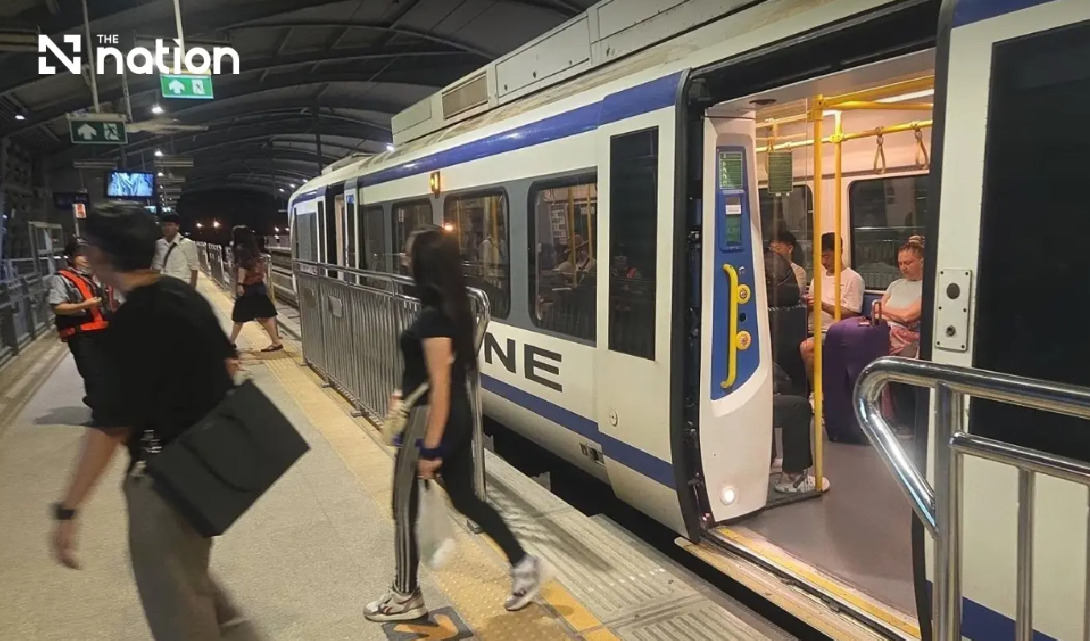
Bangkok's critical Airport Rail Link finally restored full passenger services late Wednesday evening after engineers successfully diagnosed and repaired a track switch malfunction that had crippled the system throughout the day. The State Railway of Thailand, SRT Electrified Train Company and Asia Era One announced that normal operations between Phaya Thai and Suvarnabhumi stations resumed at 10.07pm following intensive technical work by railway specialists. The breakdown highlighted vulnerabilities in one of Southeast Asia's busiest airport transport corridors, which handles hundreds of thousands of daily passengers connecting to Suvarnabhumi Airport.
The disruption originated at the Khlong Tan maintenance depot, where a faulty track switch at the turnback point had compromised the line's ability to manage traffic flows. Engineers identified the defective assembly as the source of the operational failure, but the resolution required more than simply fixing the component. A train that had become lodged within the system was also obstructing normal movements, preventing the railway from cycling trains through the maintenance facility as scheduled. Clearing this obstruction proved essential to restoring the broader operational rhythm that the Airport Rail Link depends upon to maintain its published timetable.
The scale of the mobilisation underscored the strategic importance of the Airport Rail Link within Thailand's transport infrastructure. SRT governor Anan Phonimdeang revealed that the deputy transport minister had personally instructed the railway authority to coordinate across all relevant agencies and restore normal service as urgently as possible. This intervention from the transport ministry reflected the severity of the situation—airport rail connections represent critical economic arteries, and prolonged outages create cascading disruptions affecting tourists, business travelers, and ordinary commuters. Rail-system specialists from both public sector agencies and private operators worked continuously throughout the day to address the crisis.
Though engineers succeeded in restoring evening service, the incident has triggered a comprehensive technical investigation that will extend beyond the immediate repairs. The State Railway, its electrified train subsidiary, and Asia Era One have committed to determining the precise underlying causes that led to the switch malfunction. This distinction matters considerably: identifying whether the failure resulted from manufacturing defects, inadequate maintenance protocols, design flaws, or accumulated wear will shape future preventive strategies. Simply replacing a broken component without understanding why it failed risks repeating the same disruption weeks or months hence.
Asia Era One's response has already moved beyond damage control into systematic improvement. The company confirmed that the track-switch assembly underwent rigorous inspection and repair in accordance with established operational safety standards, conducted under SRT's direct oversight. However, the operator recognises that reactive repairs alone do not suffice. Plans are now advancing to completely replace the problematic switch assembly at the depot's turnback point—treating this not as a one-off fix but as an opportunity to upgrade the infrastructure. The company is simultaneously evaluating other sections of the network considered potentially vulnerable to comparable failures, suggesting that the investigation may reveal broader systemic weaknesses rather than an isolated component breakdown.
Contingency planning has become a secondary focus as the operator works to prevent recurrence. Asia Era One intends to review and strengthen its backup timetables and alternative operating procedures, aiming to reduce the impact should similar disruptions occur in future. This reflects international best practice in transport management: modern operators maintain detailed contingency plans that allow partial or modified service to continue even when primary systems fail. The goal is not merely to restore full service after incidents but to minimise passenger impact by maintaining degraded service options when major components malfunction. Enhanced contingency protocols could prove particularly valuable during peak tourist seasons when the Airport Rail Link operates near capacity.
Passenger safety remained intact throughout the incident, according to the operators—a critical assurance that suggested the problem was operational rather than structural. The Airport Rail Link serves one of Asia's major aviation hubs, and any hint of safety compromise would trigger far more severe consequences than operational delays. The fact that the issue involved maintenance-facility infrastructure rather than mainline track or train systems meant that services could be suspended and repaired without exposing passengers to hazardous conditions. This distinction matters for public confidence: commuters need to understand that disruptions reflect logistical problems rather than fundamental safety failures.
The Airport Rail Link operates within a demanding schedule that shapes how maintenance challenges cascade. The system runs daily from 5.30am until midnight, with the first departures from both Phaya Thai and Suvarnabhumi stations at 5.30am and final services leaving at midnight. Six trains constitute the standard fleet, supplemented by two additional vehicles deployed during peak-demand periods. This relatively modest number of trains means that any obstruction within the maintenance depot creates immediate bottlenecks—removing vehicles from circulation prevents the operator from cycling fresh trains through maintenance and deployment procedures. Wednesday's obstruction therefore had outsized operational consequences relative to the size of the train fleet.
For Malaysian readers and broader Southeast Asian travelers, the incident illustrates broader challenges facing regional transport infrastructure as airports and cities expand faster than maintenance capabilities. Thailand's Airport Rail Link represents a significant investment in modern transit technology, yet it remains vulnerable to component failures that neither advanced engineering nor high-traffic volumes eliminate entirely. The incident also reflects how critical airport connections have become in regional economies: disruptions that might have seemed inconvenient a decade ago now register as genuine crises affecting tourism revenues, business operations, and airline scheduling. The multilayered response by Thai authorities—involving ministry-level intervention and coordinated public-private action—reflects this elevated importance.
The investigation findings will likely contain lessons applicable across Southeast Asia's expanding airport rail networks. Malaysia, Singapore, and other regional economies have invested heavily in similar systems, and understanding how Bangkok's Airport Rail Link failed provides valuable guidance for operators managing comparable infrastructure. Whether the problem stemmed from design issues, maintenance gaps, or material specifications, the technical conclusions will circulate through industry channels and influence how other regional operators assess their own vulnerabilities. Asia Era One's commitment to systematic improvement rather than merely restoring previous conditions represents the kind of forward-thinking approach that elevates entire regional networks.

